Florida Whole-Home Dehumidifier Cost for 2026 Remodels
Florida homes can feel damp even when the central AC runs all afternoon. If you're pricing a remodel in 2026, the whole-home dehumidifier cost usually falls between $1,500 and $3,500 installed. Larger Southwest Florida homes and new construction can reach $3,000 to $4,500.
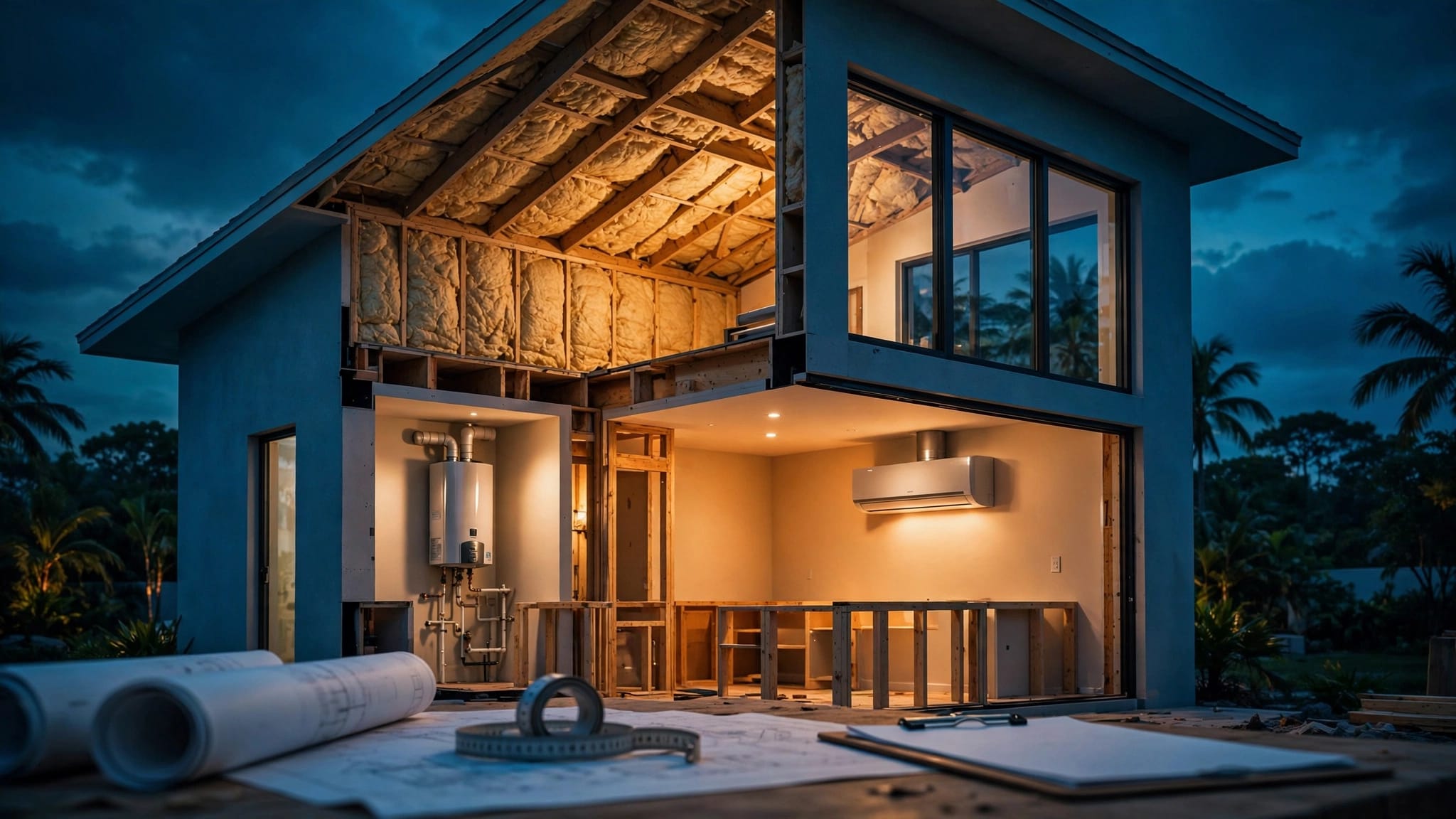
The appliance itself is only part of the budget. Ductwork, electrical access, condensate drainage, system capacity, and installation location can change the final price. Planning the equipment while walls and ceilings are open may prevent expensive retrofit work later.
Whole-home dehumidifier cost ranges for Florida remodels
For many Florida homes, a realistic 2026 budget is $1,500 to $3,500 for equipment, labor, and standard HVAC integration. Local estimates vary because a simple add-on installation is much different from a custom installation in a large home.
Southwest Florida pricing can run higher than national averages. Published estimates from Cape Coral contractors place many complete installations around $2,200 to $3,500. Other Florida HVAC pricing guides list $3,000 to $4,500 for new homes, while complex projects can exceed $4,500.
| Project situation | Typical 2026 installed cost | What affects the price |
|---|---|---|
| Existing HVAC with easy access | $1,500 to $3,500 | Standard unit and minor connections |
| New Southwest Florida home | $3,000 to $4,500 | Larger capacity and planned duct integration |
| Difficult retrofit | $4,500 to $6,500 | Duct changes, electrical work, or limited access |
| Equipment only | $1,200 to $3,500 | Capacity, controls, and manufacturer |
These ranges are planning numbers, not guaranteed bids. Homewyse estimates a January 2026 starting range of about $2,774 to $3,285 per whole-house dehumidifier installation. National sources are sometimes lower. Angi lists approximately $1,300 to $2,800 installed, while Bryant gives a broader total of $2,000 to $3,800.
The difference comes down to local labor rates, the home's layout, and how much work is included in the quote. A Florida remodel estimate should separate the equipment price from ductwork, electrical, drainage, permits, and finish repairs.

What affects the price of a whole-home dehumidifier?
The biggest cost differences usually come from the installation conditions rather than the brand name on the cabinet.
Existing HVAC and ductwork
A whole-home unit generally connects to the existing HVAC system, but every home needs a different layout. The installer may need to modify the return or supply duct, add transitions, install a dedicated drain, or create a new service platform.
A straightforward installation might add $500 to $1,000 in labor. More involved work can add $1,500 to $3,000, especially when the duct system needs major changes. Electrical work can raise the price again if the current panel or circuit layout doesn't support the new equipment.
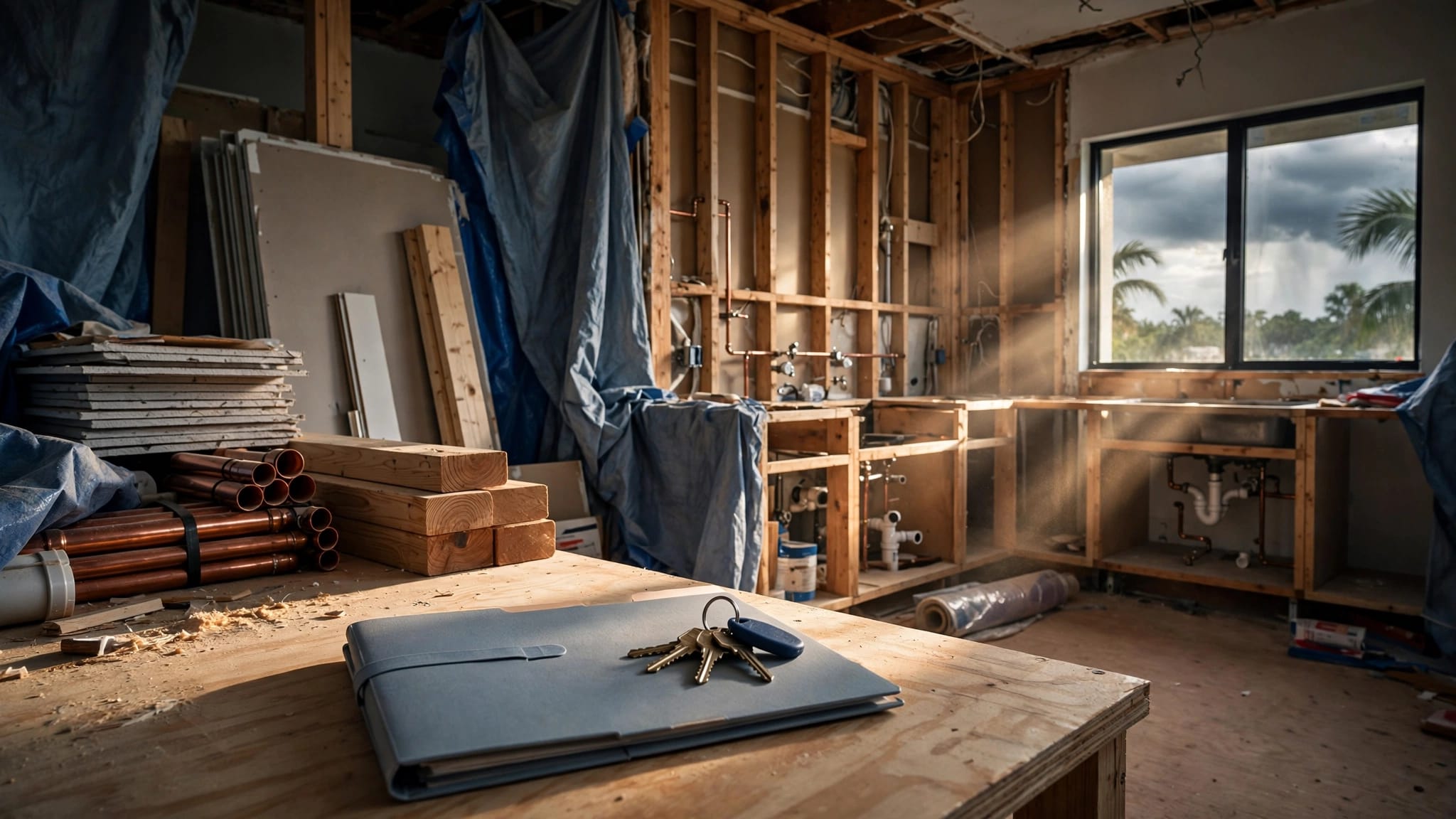
Access also matters. An attic with a stable platform and nearby drain line is easier to work in than a tight crawl space or finished ceiling. If drywall, cabinets, tile, or insulation must be removed and repaired, those costs belong in the remodeling budget.
Unit size and moisture load
Dehumidifiers are rated by the amount of moisture they can remove. HomeGuide lists common installed ranges of $1,500 to $2,900 for 70 to 80-pint units, $1,700 to $3,200 for 90 to 100-pint units, and $1,900 to $3,500 for 120 to 200-pint systems.
Square footage helps determine capacity, but it isn't the only factor. A coastal home in Naples, Cape Coral, or Fort Myers may have a different moisture load than an inland property of the same size. Ceiling height, insulation, air leakage, occupancy, pool areas, and the existing AC system also affect the calculation.
An oversized unit can cycle poorly, while an undersized unit may run constantly without reaching the desired humidity level. The HVAC contractor should calculate the load instead of choosing equipment based only on the home's square footage.
Remodel timing and installation access
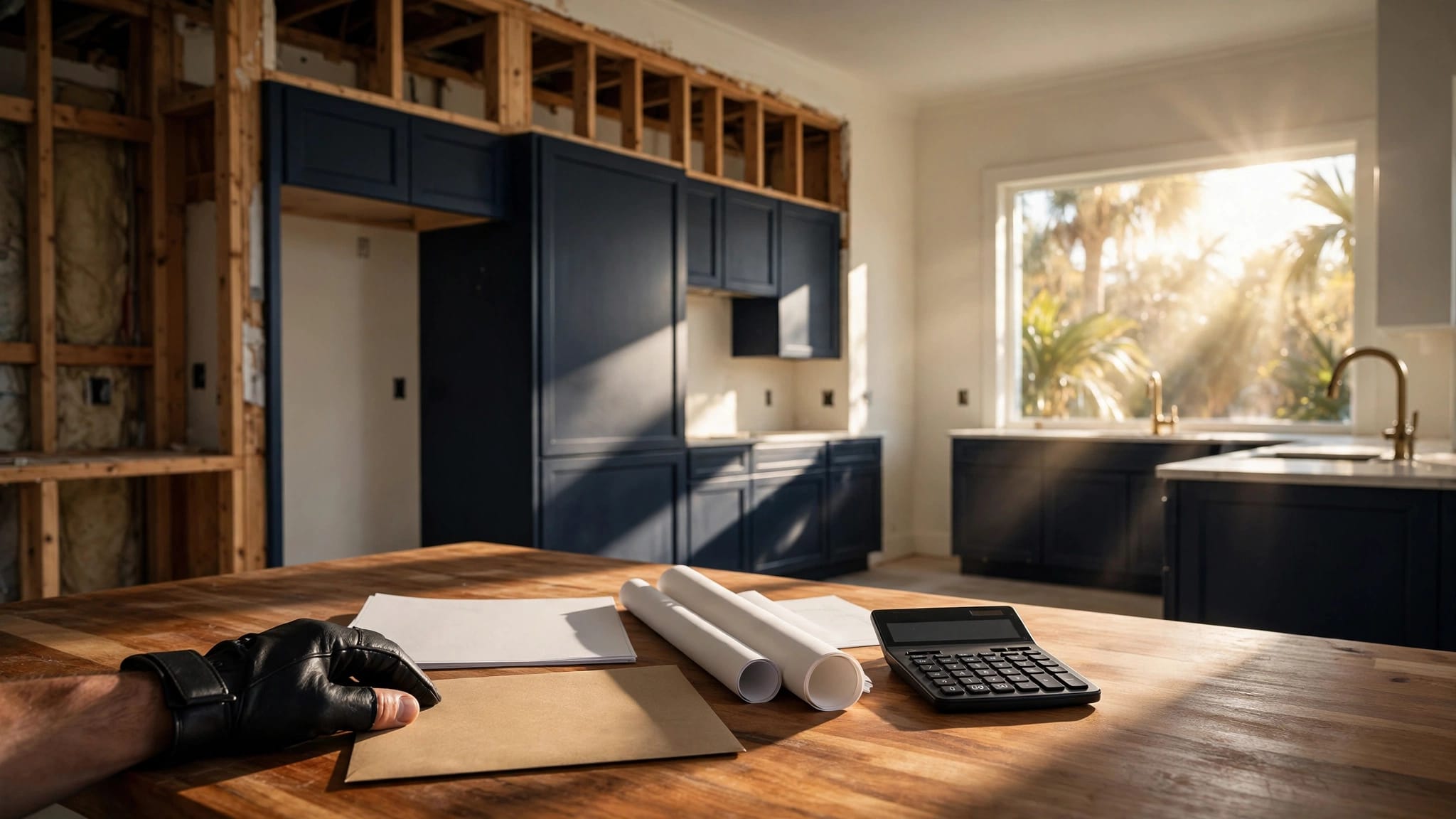
A kitchen or bathroom remodel creates a useful opportunity to coordinate HVAC work. When ceilings are already open, the contractor can route drain lines, install duct changes, and provide electrical access with less demolition.
Custom-home construction offers even more flexibility. The dehumidifier can be included during HVAC design, with space reserved for service access and a proper condensate drain. That planning can also prevent conflicts with recessed lighting, kitchen soffits, bathroom exhaust fans, and attic insulation.
During a whole-home renovation, HVAC work should appear on the schedule before drywall and finish installation. If your project includes several rooms, review the Southwest Florida remodeling schedule early so mechanical work doesn't become a late change order.

How to budget for the system during a remodel
A dehumidifier is an HVAC expense, but it can affect several parts of a remodeling plan. For example, a kitchen renovation may require cabinet adjustments if ductwork runs through a soffit. A bathroom project may need coordination around drain lines, exhaust ventilation, or a ceiling access panel.
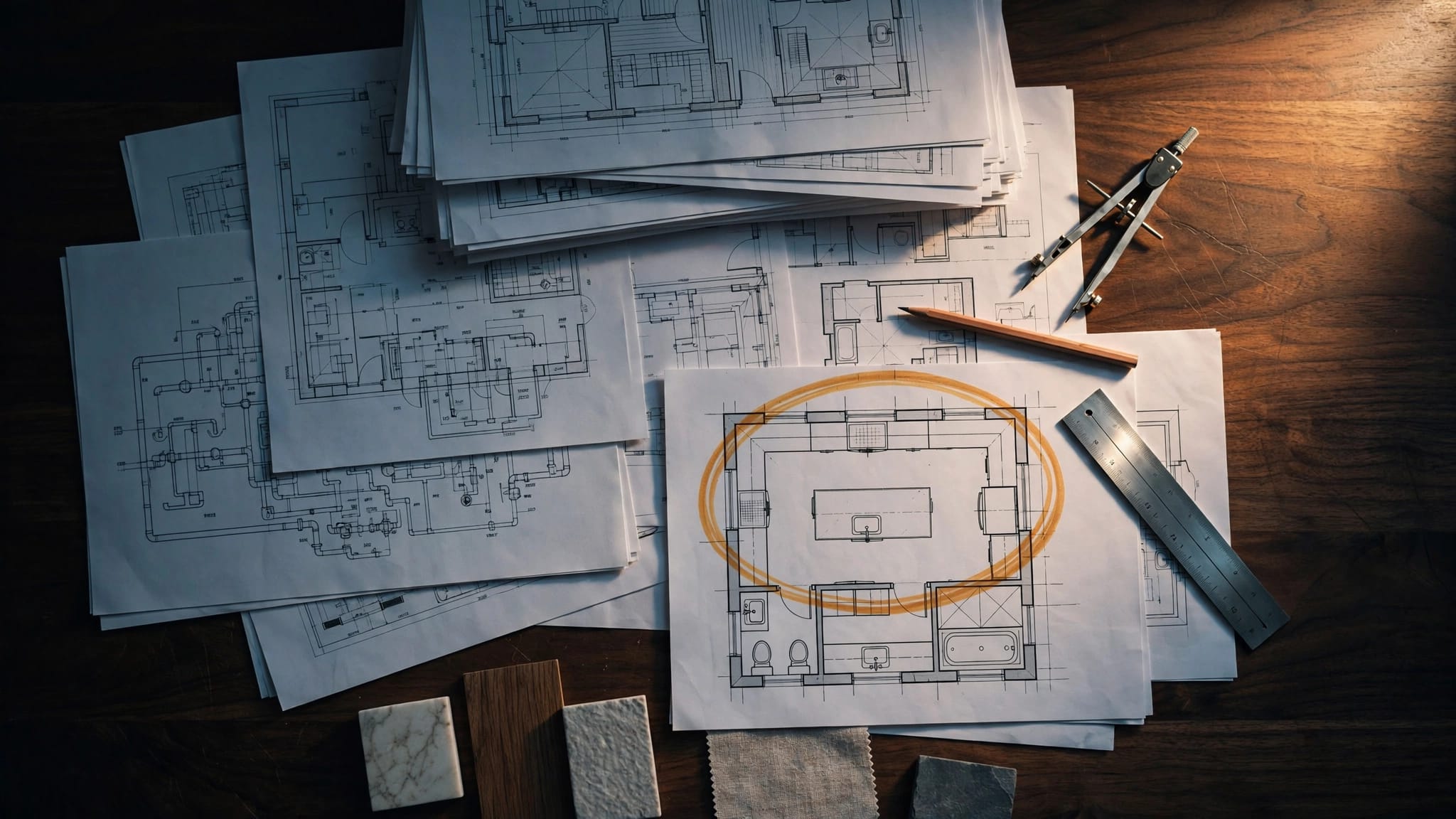
Ask your builder to show the whole-home system as its own line item. The estimate should identify the equipment, installation labor, duct modifications, electrical work, condensate drainage, controls, and any drywall or finish repairs. This makes it easier to compare bids and prevents a low initial price from hiding missing work.
New construction often provides the cleanest installation path because the HVAC design can account for humidity control from the beginning. In an existing home, the installer may need to work around finished ceilings, built-in cabinetry, trusses, and older ductwork. That is why the same equipment can produce very different project totals.
Operating expenses also deserve attention. One industry estimate places annual electricity costs between $200 and $800, with routine maintenance around $50 to $200 per year. Actual costs depend on runtime, humidity levels, equipment efficiency, filter condition, and local utility rates.
For a kitchen, bath, addition, or custom-home project in Southwest Florida, you can Get a Free Estimate that accounts for the remodel scope and the required HVAC coordination.
What should a Florida installation quote include?
A useful quote should tell you exactly what the contractor will install and what happens if the existing system needs changes. Look for these details:
- The manufacturer, model, moisture-removal capacity, controls, and warranty should be listed.
- Labor should state whether the price includes startup, testing, and removal of old equipment.
- Ductwork should describe each new connection, transition, damper, or return-air modification.
- Electrical work should identify the circuit, disconnect, wiring, and panel changes if needed.
- Drainage should explain where condensate will go and how the line will be protected from clogs.
- The proposal should identify who handles permits, inspections, access panels, drywall repairs, and finish work.
A low equipment price can become expensive when the quote excludes duct transitions, electrical work, or a condensate drain.
Ask whether the contractor will measure indoor humidity after installation. The system should operate with the home's AC controls and maintain the selected humidity setting without creating unnecessary cooling cycles.
You should also ask where technicians will access the unit for filter changes and service. A dehumidifier hidden behind finished construction may look tidy, but poor access can increase maintenance costs later.
Before signing, review your remodeling contract in Southwest Florida. The agreement should state who supplies the equipment, who pulls permits, how changes are approved, and whether the dehumidifier is included in the fixed project price.
When does a whole-home system make sense?
A whole-home dehumidifier can make sense when the AC keeps the temperature comfortable but the home still feels damp. Other warning signs include musty odors, condensation on supply vents or windows, sticky floors, and indoor humidity that stays high after the AC shuts off.
The equipment won't correct a roof leak, plumbing leak, poor bathroom ventilation, or major air-sealing problem. Those issues need attention first. An HVAC contractor should also check whether the existing AC is oversized, because a system that cools the home too quickly may not run long enough to remove enough moisture.
Many homeowners target indoor humidity near 45% to 55%, although the right setting depends on the house and occupants. A properly sized unit can help maintain that range during Florida's wet season without forcing the thermostat lower than necessary.
For a custom home, humidity control is easiest to plan as part of the original mechanical design. For a remodel, the best value usually comes when the team can combine dehumidifier installation with other planned HVAC, electrical, ceiling, or drywall work.
Conclusion
For most Florida remodels, the whole-home dehumidifier cost in 2026 is about $1,500 to $3,500 installed. Larger Southwest Florida homes, new construction, and projects with extensive duct or electrical changes may reach $3,000 to $4,500 or more.
The strongest way to control the budget is to define the full installation scope before work begins. When equipment, access, drainage, controls, permits, and finish repairs appear in the same plan, your humidity solution is less likely to become an expensive surprise.