Florida Impact Fees for Custom Home Construction
A beautiful homesite can look affordable until the first permit and fee estimates arrive. Florida impact fees may add thousands of dollars to a custom home budget, but the amount varies by location and project details.
The applicable local government establishes or administers these one-time charges for growth-related public facilities. Fees can differ by Florida county, city, school district, utility service area, special district, home size, and project details.
Before committing to a lot or finalizing plans, separate impact fees from construction, site work, building permit costs, utility connection charges, mobility fees, and other development charges. Verify current amounts, exemptions, credits, and payment timing with the applicable government office or a qualified Florida construction professional.
Key Takeaways
- Florida impact fees are one-time, growth-related charges that may fund roads, schools, parks, fire services, emergency medical services, and other eligible public facilities.
- There is no single statewide residential fee. The amount depends on the exact parcel, county, city, school district, utility service area, special district, home size, use category, effective date, credits, and exemptions.
- Keep impact fees separate from building permits, utility capacity or connection charges, mobility fees, assessments, and private site costs such as clearing, drainage, fill, wells, septic systems, and driveways.
- Before buying a lot or finalizing plans, request written fee schedules, confirm payment timing, and investigate credits tied to prior structures, paid fees, meters, or other documented development history.
- Include verified fees and a contingency in the pre-construction budget. Compare homesites by all-in feasibility rather than purchase price alone.
What Florida impact fees pay for
Impact fees are one-time charges associated with new development. The revenue supports eligible growth-related public facilities and helps address infrastructure needs created by population growth.
Depending on the program, those public facilities may include roads, schools, parks, fire stations, law enforcement facilities, libraries, and emergency medical services.
The revenue supports capital facilities, not routine operating expenses. Eligible costs may include certain infrastructure projects or land acquisition, but only when authorized by the applicable program.
A new home may add traffic to nearby roads, create demand for school seats, and require more public-safety capacity over time.
One fee category can become several charges
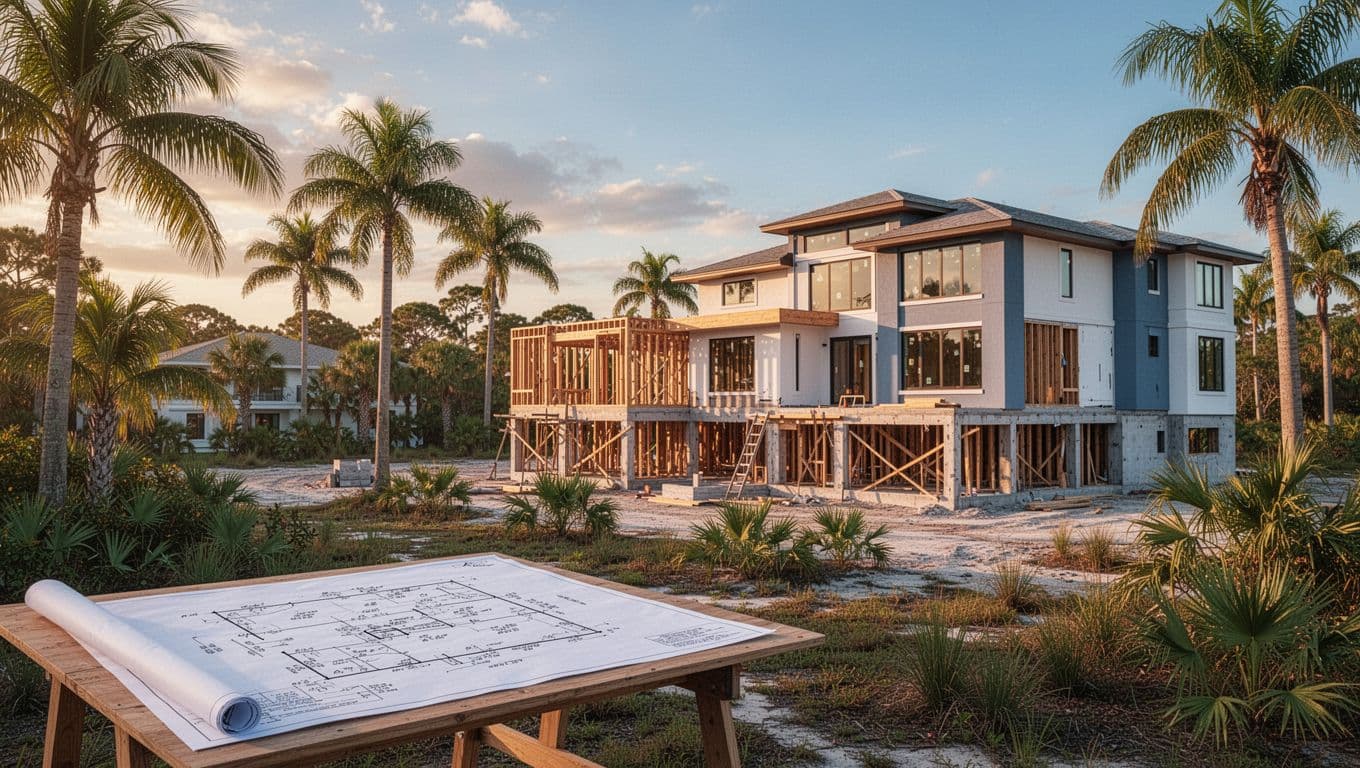
Depending on the address, provider, and service area, a local government or special district may list separate charges for:
- Transportation impact fees or roadway capacity charges
- School impact fees
- Parks and recreation
- Fire, EMS, law enforcement, or government buildings
- Water and wastewater capacity, if charged separately by the provider
A single-family custom home may trigger only some categories, and a special district may use a separate schedule for its service area. The applicable categories depend on the property address, provider, and local code.
These fees are tied to new growth
A homeowner doesn't receive a personal service in exchange for an impact fee. The charge helps fund shared public capacity required as an area grows.
An impact fee should have a rational nexus, meaning it relates reasonably to the demand created by the project and the facilities funded with the revenue.
That distinction matters when you review an estimate. Private site costs, including a longer driveway, fill, drainage work, or a new septic system, are separate from impact fees.
The Florida Impact Fee Act sets limits on local charges
Florida Statutes section 163.31801 is commonly called the Florida Impact Fee Act. It doesn't create one statewide fee schedule. Instead, counties, municipalities, and each qualifying special district adopt their own programs, studies, accounting procedures, and schedules under state standards.
Each local government must base a fee on demonstrated need. It must also show a rational nexus between new development, added demand, and the public facilities, including capital facilities, funded by the charge.
Studies, separate accounts, and public notice
For fees adopted or increased after July 1, 2026, a local government must use the applicable demonstrated-need study and most recent localized data available within four years of the update. If a fee increases, the new study generally must be adopted within 12 months after the study begins. Check the study and data against the current statute and local ordinance, including the rational nexus supporting the charge.
Impact-fee revenue must be tracked separately from general revenues in the applicable accounting fund. Administrative charges must reflect actual costs, and the money can't become a general revenue source for unrelated expenses. Review the annual financial report and other official accounting records to trace collections and expenditures, especially when a special district administers the fee.
Before a new or increased fee takes effect, the adopting authority must give at least 90 days' notice. That window can matter if your design and permit application are close to an announced effective date.
Under the current framework, an increase above 25% must be phased in through four equal annual installments. These phase-in limitations apply to increases, while the adopting authority may reduce, suspend, or eliminate a charge without waiting through the notice period. Review the increase's rational nexus and calculation before budgeting for the revised rate.
A new or increased fee generally can't apply to a current or pending permit application filed before its effective date, unless it lowers the applicant's overall mitigation costs or impact fees. A development order or vested-rights issue may affect the analysis, and any extraordinary circumstances exception must be supported by the current statute or ordinance, not ordinary budget pressure. Confirm the written rules with the local government before relying on a projected rate, and ask a qualified professional to apply current law to your project because this overview isn't legal advice.
Impact fees are different from permits and utility connection charges
Homeowners often use "fees" for every cost paid before residential construction begins. That can hide a major gap in the budget. Impact fees are only one category.
| Charge | What it commonly covers | Who usually sets it |
|---|---|---|
| Impact fee | Growth-related public facilities and capacity, including school impact fees where applicable | County, city, school district, or special district |
| Building permit fee | Plan review, inspections, and permit processing | Local building department |
| Utility capacity or connection charge | Physical connection or capacity for water and sewer service | Utility provider or local authority |
| Transportation impact fees | Road capacity and transportation improvements under an adopted impact fee program | County, city, or other local government |
| Mobility charge | Transportation improvements under a local mobility program | City, county, or mobility agency |
| Assessment | A defined local improvement or district obligation | Government or district |
| Private site costs | Driveway, clearing, drainage, and other work on the lot | Owner, contractor, or private provider |
A utility provider may charge a capacity or connection fee, even when the statute's impact-fee rules don't apply to that water or sewer charge. Likewise, a permit fee covers review and inspection work, not a share of future road or park construction.
A transportation program may also involve a separate "proportionate share" obligation tied to a project's effect on a specific roadway. It isn't the same as a standard impact fee. Development approval or a transportation condition may create separate mitigation costs.
Avoid one-number estimates
A seller, online listing, or early builder estimate may quote "impact fees" as one total. Ask whether the quote includes city, county, school, fire, utility, mobility, meter, and other development charges.
For example, a quote may omit one of those charges. It may also assume a particular home size or prior credit on the lot.
What determines your custom home's fee amount
No statewide residential number applies to every project. Florida impact fees can vary sharply by county, incorporated city, unincorporated area, and utility service area because each jurisdiction plans for different infrastructure needs.
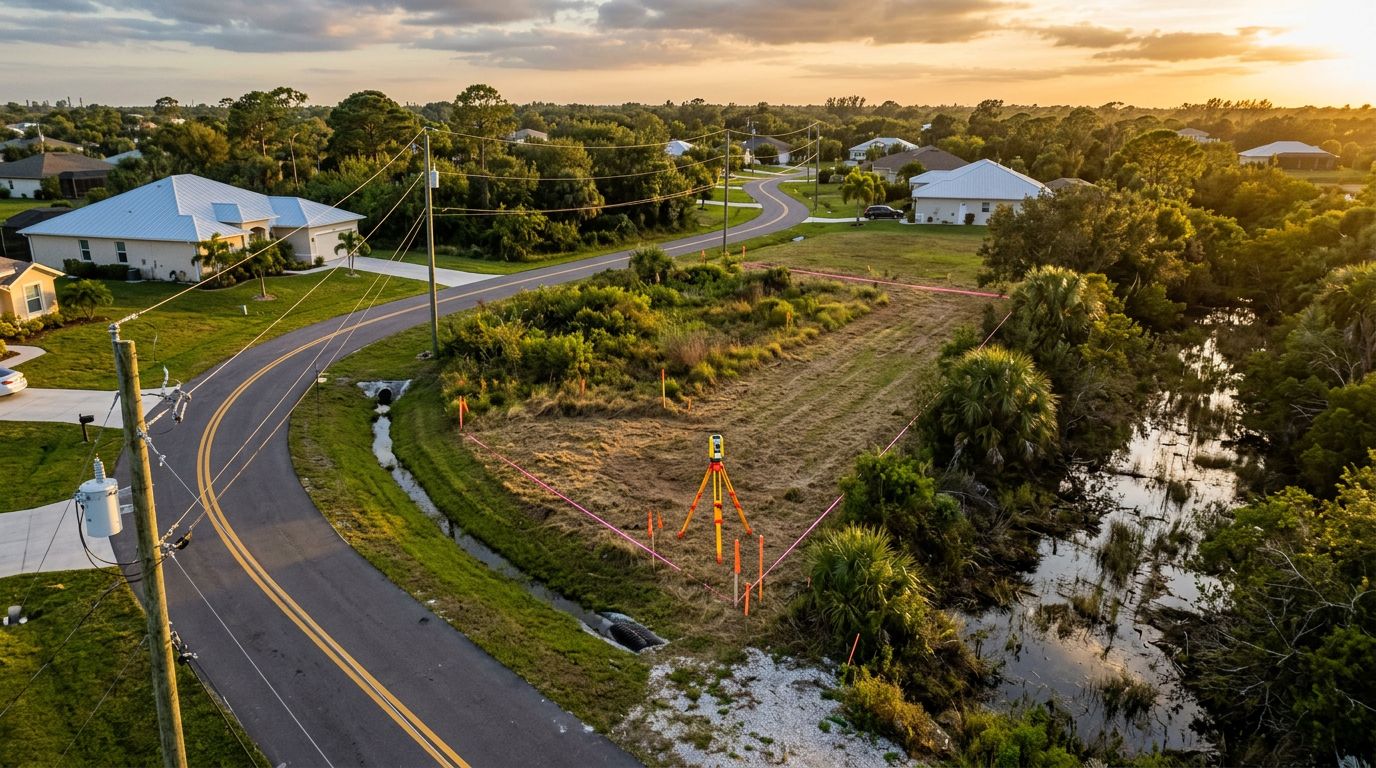
The lot address comes first. Confirm the property's governing jurisdiction with the local government before estimating fees. An address may also fall within a special district with separate fire, utility, or other service boundaries.
Home size, bedroom count, and use category
Some schedules classify residential construction by housing type alone, such as a detached single-family residence. Others sort homes by square footage, bedroom count, land-use category, or estimated person trips.
A larger home doesn't always produce a higher charge. The answer depends on the local schedule. Cape Coral's fire and rescue ordinance offers one limited example, using a residential dwelling unit distinction at 30,000 square feet. Confirm any threshold or local classification against the current ordinance.
The type of development permit, proposed use, or approval history may affect how a local department classifies the project. Adding bedrooms, a guest suite, a detached dwelling unit, or a home-based commercial use may also change the estimate.
The history of the parcel matters
A vacant lot is not always a blank slate for fees. A demolished home, prior residential or commercial use, old utility meters or service, or an expired permit can affect whether documented credits exist.
Before closing, request records for prior structures, prior permits, demolished improvements, paid impact fees, water and sewer meters or connections, and any credit agreements. Documentation matters more than a verbal assurance that the lot is "already paid."
When impact fees are usually due
Florida law bars a local government from collecting an impact fee before the building permit is issued for the property subject to that fee. In practice, each fee category may have a different payment deadline.
A county, city, utility provider, or special district may follow a different collection procedure. Some require payment at permit issuance, while others wait until a certificate of occupancy or utility connection. A development permit or another project approval may also affect the timing.
Treat the effective date as a budget deadline
Ask the permitting office or utility provider for the current written fee schedule. Confirm which date controls: application, issuance, payment, meter request, certificate of occupancy, or utility connection. No single trigger applies statewide.
Don't assume submitting plans locks in every fee. Ask what happens if the application is incomplete, the home is redesigned, a permit expires, or the utility request is delayed.
A builder who understands custom home construction in Southwest Florida can help coordinate these project milestones. Still, confirm rates and timing with the permitting office or utility provider. Verify both as of 2026, because an early estimate doesn't guarantee the final amount or due date.
Credits, refunds, and affordable-housing exceptions
A credit may reduce a new charge when a project replaces an existing use that generated demand for public facilities. Eligibility depends on the prior use, parcel, service area, timing, records, and applicable local ordinance. The responsible local government or special district reviews the request and may limit transfers between parcels, transfers to buyers, or credit periods.
A replacement home may qualify in one jurisdiction but not another. The parcel usually must be within the same fee jurisdiction or service area, and a prior development order may affect eligibility. Obtain a formal determination before demolition, permit issuance, or closing when possible.
Request impact fee credits in writing
Ask for a formal review if the lot previously held a house or another developed use. For impact fee credits, submit records early, including demolition permits, prior fee receipts, utility history, surveys, occupancy certificates, or title documents.
Florida law provides a process for refund or credit requests involving an alleged overpayment. The responsible local government must issue a written approval or denial within 30 days. If approved, the payor then has 30 days to elect a refund or credit.
Affordable housing relief is local
Florida law allows counties, municipalities, and authorized districts to offer an exception or waiver for qualifying projects. That permission doesn't mean every custom home qualifies. It also doesn't automatically remove utility connection fees, school charges, mobility fees, permit fees, or other development charges.
For example, Collier County's code includes exemptions for some publicly owned residential housing. Water, sewer, and educational public facilities remain outside that exemption. Check the applicable ordinance rather than assuming a local program covers every fee category.
How fees change the value of a homesite
For a custom-home buyer, impact fees are part of the land cost, even if payment occurs months after closing. Ignoring them can make a lot appear less expensive than it really is.
Builders and developers often use residual land value analysis as a planning estimate, not an appraisal, guaranteed savings figure, or legal conclusion. They start with the realistic completed value of the home, then subtract construction costs, soft costs, financing, site work, utility extensions, seawalls, drainage, well and septic work, fees, overhead, contingency, and an appropriate margin. The amount left is what the project can support for the land.
A simple residual land value example
In this hypothetical example, newly confirmed fees add $18,000. If other assumptions remain unchanged, the lot's supported value falls by roughly $18,000. The buyer must then reduce another cost or accept a higher total investment. Actual amounts vary by county, city, service area, home size, and project details.
The same logic applies to road extensions, seawall work, clearing, fill, well and septic installation, and off-site utility improvements. A lower purchase price may still be warranted when a parcel carries heavy development costs.
For this reason, compare lots by all-in feasibility , not by asking price alone. A parcel with existing utility service and documented credits can be more economical than a cheaper vacant lot.
Southwest Florida schedules require address-level checks
Southwest Florida homeowners should expect different fee combinations in Lee, Collier, and Charlotte counties, plus incorporated cities. A county, city, school district, utility provider, fire authority, or special district may administer a charge based on the property's service area. Countywide school impact fees may apply even when a city has separate transportation, parks, public-safety, or other charges. These assessments generally support public facilities serving new development.
Check the current fee schedule from the relevant local government in Lee, Collier, or Charlotte County, or from the applicable city, before budgeting. A property may also fall within another special district with separate requirements. Published figures are not project quotes, and amounts may vary by exact address, jurisdiction, service area, home size, project details, effective date, credits, exemptions, and payment timing.

Cape Coral and Collier County examples
Cape Coral and Collier County illustrate why an address-level review matters. Cape Coral's municipal materials may list per-unit fees for residential recreation, fire, or rescue services.
Collier County may publish residential charges with multiple effective dates and separate service areas. Rates can change, so confirm the source document and applicable date before relying on an estimate.
Treat neither example as a quote for your project. Confirm current rates, effective dates, service areas, payment deadlines, exemptions, and credits with the county, city, school district, utility provider, or a qualified local professional.
Build impact fees into the pre-construction budget
Ask your builder for a line-item allowance before you sign a construction contract. The allowance should identify verified amounts, estimates, assumptions, effective dates, payment deadlines, credits, exemptions, and contingency, rather than present a single guaranteed total. Impact fees are one possible public-capacity cost tied to capital facilities, not a replacement for private site work.
A practical budgeting checklist
- Confirm the exact parcel jurisdiction and service areas before comparing lots. Identify the local government, county, city, school authority, fire authority, utility provider, and any applicable special district.
- Request current written amounts and residential construction fee schedules from the county, city, school authority, fire authority, utility provider, and any other applicable district. Note every effective date.
- Provide the preliminary floor plan, square footage, bedroom count, use details, and site address for a project-specific estimate. Give the same information to each builder when comparing proposals.
- Keep impact fees separate from building permits, plan review fees, utility capacity charges, meter costs, septic or well work, mobility charges, and private site improvements.
- Ask whether a prior home, demolition, existing meter, or former use creates a credit or exemption.
- Hold a contingency until the permit office confirms final amounts and payment deadlines.
- Save paid receipts, credit determinations, utility letters, and permit records with the property file.
A detailed allowance gives you a better basis for comparing lots, builders, and construction approaches. It also reduces the chance that a late fee invoice disrupts selections or site work.
Questions to ask before you buy or permit
Bring these questions to conversations with a land seller, architect, builder, utility provider, and permitting office:
- What is the current written fee schedule for this exact parcel, and when does the next change take effect?
- Which local government sets county or city charges, and which school district, fire authority, special district, or utility service area is responsible for each charge?
- How do home size, square footage, bedroom count, use category, or an accessory dwelling unit affect the estimate?
- Are there prior structures, development rights, water or sewer capacity, or a prior meter tied to the parcel?
- Which amounts are impact fees, and which are separate building permit fees, utility connection charges, or capacity charges?
- Are mobility fees, assessments, and other development charges billed separately from impact fees?
- Are school, transportation, parks, fire, or EMS charges included, and who bills each one?
- When is each charge due, and which date determines the applicable rate?
- Do documented credits transfer to a replacement home or new owner, and what paperwork is required?
- Is the property eligible for any local waiver, deferral, or affordable-housing exemption, and what rules or deadlines apply?
Before relying on any estimate, confirm current 2026 rates, credits, exemptions, rules, and deadlines with the applicable authority or a qualified Florida construction professional.
For a project in Cape Coral, Fort Myers, Naples, Punta Gorda, or nearby communities, Get a Free Estimate before finalizing your lot or construction budget. A site-specific estimate can flag fee and infrastructure questions while there is still time to adjust the plan, but it isn't a final government determination.
Frequently Asked Questions
Are Florida impact fees the same throughout the state?
No. Counties, cities, school districts, utility providers, and special districts may establish different charges and schedules. The applicable amount depends on the property's exact address, service areas, home details, and current effective dates.
What is the difference between an impact fee and a building permit fee?
An impact fee helps fund eligible growth-related public facilities and capacity. A building permit fee generally covers plan review, inspections, and permit processing, while utility connection charges and private site costs are separate expenses.
When are Florida impact fees usually due?
A local government generally cannot collect an impact fee before the building permit is issued for the property. The specific payment deadline may be at permit issuance, certificate of occupancy, utility connection, or another stated milestone, so confirm the written rules for each fee category.
Can a prior home or existing utility service reduce impact fees?
Possibly. A documented prior structure, paid fee, existing meter, or former use may support a credit, but eligibility depends on the local ordinance, service area, records, timing, and parcel history. Request a formal written determination before relying on the credit.
How should I budget for impact fees when building a custom home?
Ask for a line-item estimate that identifies each fee, assumption, effective date, payment deadline, credit, exemption, and contingency. Confirm the amounts with the responsible county, city, school authority, utility provider, special district, or a qualified Florida construction professional before finalizing the lot or construction budget.
Final thoughts on planning for impact fees
These charges don't have to become a surprise. Verify them by parcel address, and identify every county, city, school, utility, and district charge. Separate these charges from permits and utility connection costs.
Document possible credits and exemptions, and retain a contingency for changes. Amounts aren't guaranteed. Confirm current rules, payment timing, and exemptions with the responsible local government or a qualified Florida construction professional.
A well-priced homesite supports the full project, including public charges, private site work, and the home you want to build. Clear numbers early make every later decision easier.