Kitchen Workstation Sinks for Southwest Florida Homes
A kitchen sink can either slow down the room or keep everything moving. For homeowners who cook often, host family, or want cleaner counters, kitchen workstation sinks turn the sink area into usable prep space.
These sinks include built-in ledges that hold accessories such as cutting boards, colanders, drying racks, and serving trays. In Southwest Florida homes, the right model also needs to handle humidity, mineral deposits, frequent cleanup, and the realities of a coastal kitchen remodel.
Why Kitchen Workstation Sinks Work in Busy Homes
A workstation sink does more than wash dishes. Its integrated accessories let you chop, rinse, drain, and dry above the basin, which keeps food scraps and water contained.
That matters in open kitchens, where the sink often faces the island, dining space, or living room. Instead of spreading prep work across the counter, you can keep the mess in one defined zone.
More room for meal preparation
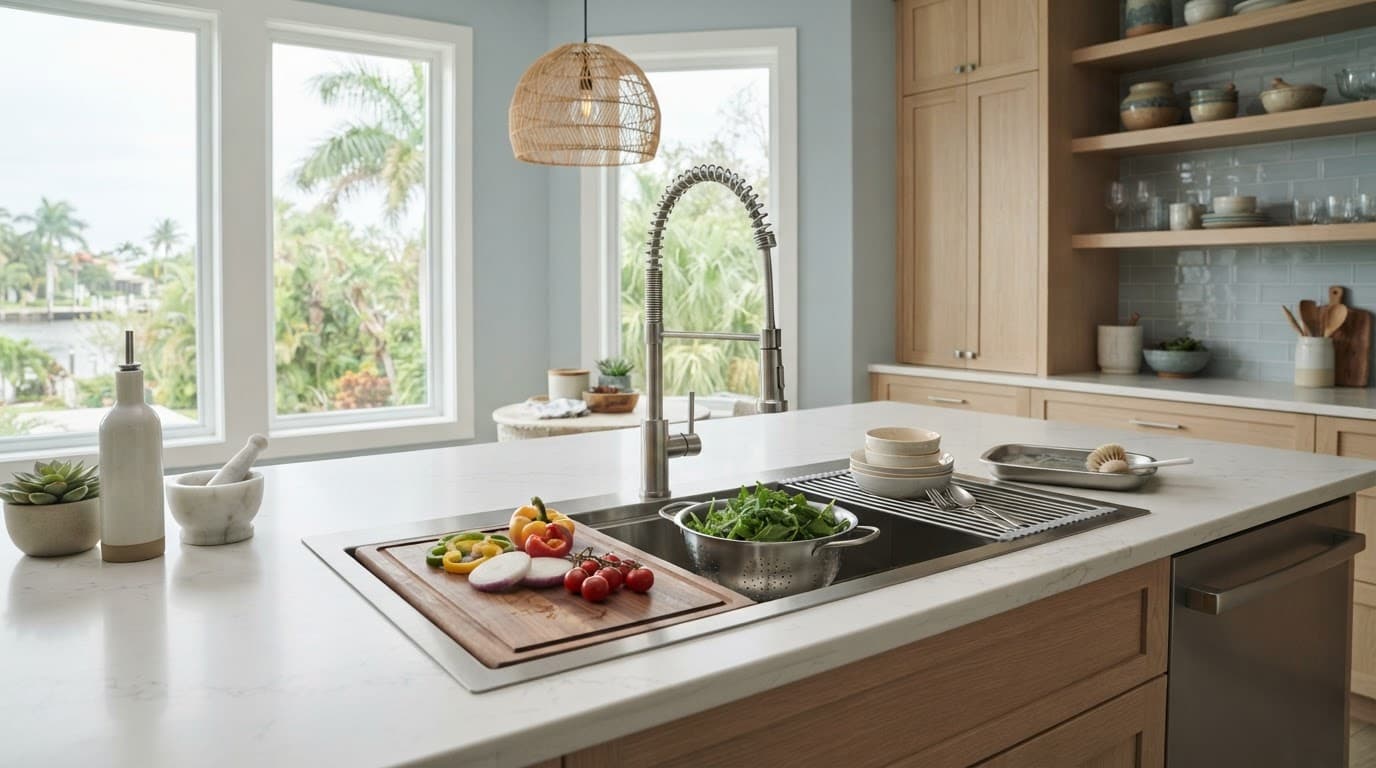
In a smaller kitchen, every stretch of countertop has a job. A fitted cutting board creates another sturdy surface without adding a rolling cart or crowding the island.
You can rinse shrimp in a colander, slide it aside, and prep vegetables over the sink. That setup is especially useful when the kitchen has limited counter space beside the range.
A large single-bowl model also handles sheet pans, oversized stockpots, and roasting pans better than many divided sinks. The extra width gives you space to wash without soaking the whole work area.
Easier cleanup after entertaining
Southwest Florida kitchens often become the gathering point after a beach day, golf outing, or dinner with neighbors. A drying rack over the basin keeps plates and glassware off the counter while water drains directly below.
Some workstation sinks include a small prep bowl or colander that can hold ice for canned drinks. Others use a roll-up rack for rinsed produce or air-drying cookware. Choose accessories you will reach for weekly, not extras that will live in a drawer.
A workstation sink earns its space when its accessories remove a daily bottleneck, such as a cramped prep area or a counter crowded with drying dishes.
Materials That Hold Up to Humidity and Salt Air
Material affects appearance, maintenance, noise, and long-term durability. Although salt air tends to affect exterior surfaces first, homes near the water with open windows can bring salty moisture indoors. High indoor humidity also keeps damp cloths and pooled water from drying quickly.
Stainless steel remains a practical choice
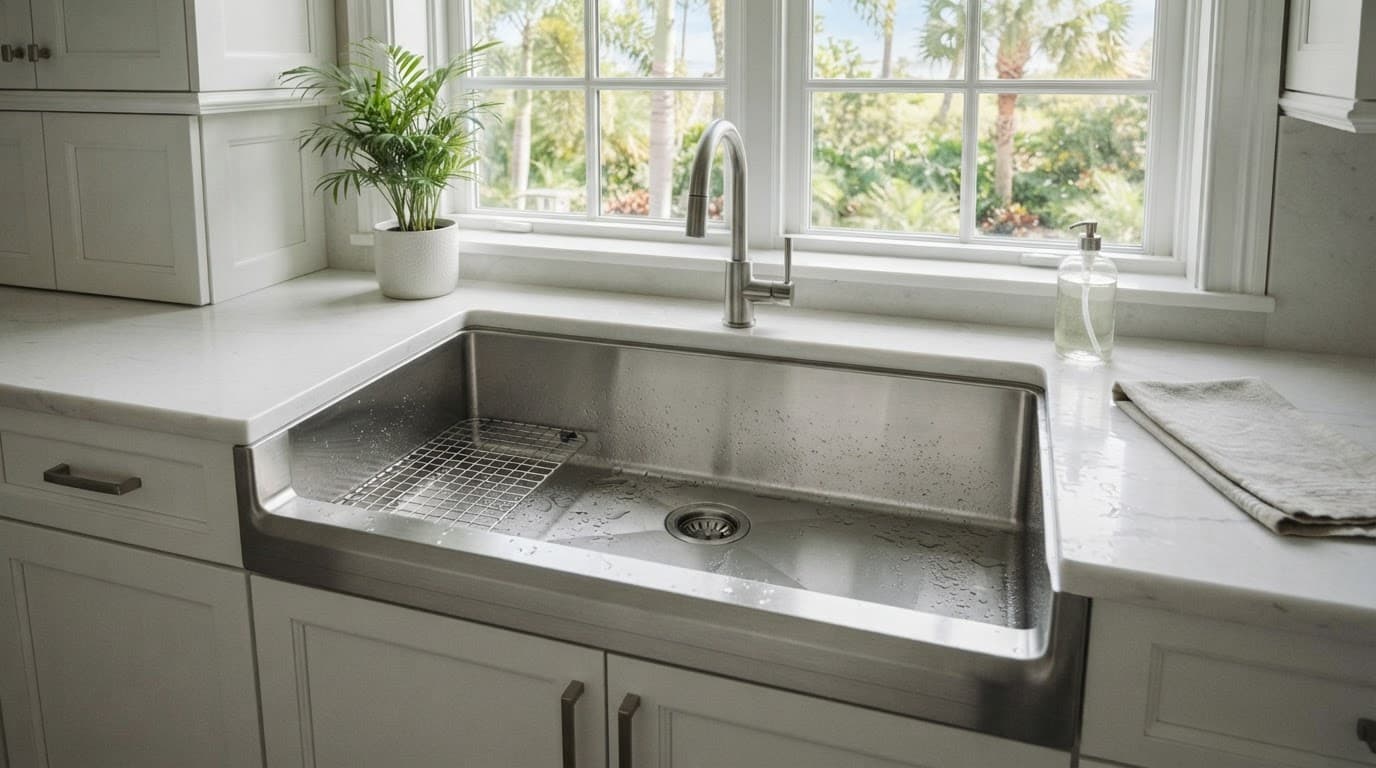
Quality stainless steel is popular because it resists rust, tolerates heat, and works with nearly any cabinet color or countertop. Look for a sink made from corrosion-resistant 304 stainless steel, with a sound-deadening coating or pads on the underside.
A heavier gauge helps the basin resist dents and reduces the hollow sound of running water. Brushed finishes are forgiving because they hide fine scratches and water spotting better than glossy surfaces.
Still, stainless steel needs basic care. Don't leave salty water, bleach, or wet cast-iron cookware sitting in the basin. Rinse the sink after cleanup, then dry it with a soft towel when mineral marks become noticeable.
Composite and fireclay need a closer look
Granite-composite sinks offer a matte, stone-like finish in black, gray, cream, and other warm neutrals. They can be a good match for coastal-inspired cabinetry, but their size, weight, and manufacturer cleaning rules vary. Confirm that the cabinet base can carry the sink and that the color won't show hard-water residue.
Fireclay sinks create a classic apron-front look, especially in white kitchens. However, they are heavy and can chip if a pan strikes the surface. Their accessory options may also be more limited than those for stainless workstation models.
For homes near Gulf beaches, pair any sink material with a quality faucet finish rated for interior use. Wipe faucet bases and handles regularly, since mineral deposits collect in seams long before they become obvious.
Choose the Bowl Layout Before Choosing Accessories
The sink's working dimensions matter more than the number of accessories in the box. Measure the largest pan you wash, consider your usual cooking habits, and decide whether a garbage disposal belongs in the plan.
Single-bowl sinks suit large cookware
A single large basin is often the most flexible choice for cooks who use full-size baking sheets, Dutch ovens, or oversized platters. It also gives cutting boards and colanders a longer, uninterrupted track.
Many kitchen workstation sinks use a deep single bowl, usually around 9 to 10 inches. Depth helps contain splashing, but a very deep basin can feel uncomfortable for shorter household members. The countertop height, sink depth, and your reach should work together.
Double bowls separate tasks
A divided sink can help when one person washes while another rinses produce or fills a pot. However, each bowl becomes narrower. Large pans may need to be angled, and workstation accessories have less open space underneath.
Low-divide sinks offer a middle ground. Their center partition sits lower than the rim, so water can move between bowls when needed. They can work well for homeowners who want separation but don't want to give up the ability to wash a wide skillet.
Before ordering, place a few of your most-used pans in a taped outline on the counter. It is a simple way to see whether the bowl width will feel generous or restrictive.
Drainage and Cleaning Matter in Florida Kitchens
A good workstation sink should drain without leaving a shallow puddle around the drain. Look for a basin with a gently sloped bottom, a well-placed drain, and a removable bottom grid if you want to protect the surface from cookware.
Keep mineral buildup from becoming a constant chore
Water mineral levels vary across Southwest Florida, yet many homes see white spots on faucets, sink walls, and dish racks. Wiping the basin dry after a heavy cleanup prevents most spotting before it hardens.
For stainless steel, use a mild dish soap and soft sponge for daily cleaning. A diluted white vinegar wipe can loosen mineral residue, but rinse it well afterward. Keep vinegar away from natural-stone countertops, since acid can dull or etch some stone surfaces.
Avoid steel wool, harsh scouring powders, and leaving cleaning products in the basin. They can scratch finishes or leave residue that causes discoloration.
Plan the drain components as a system
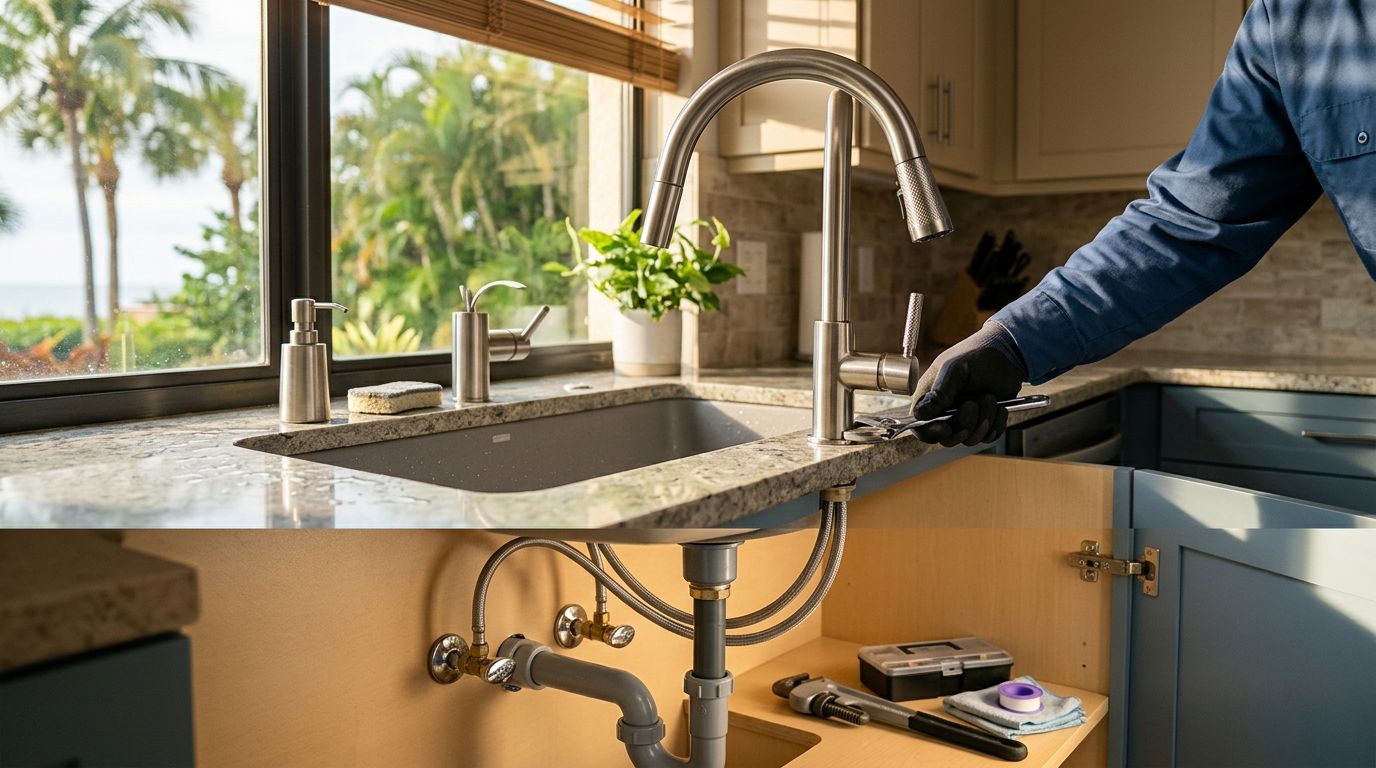
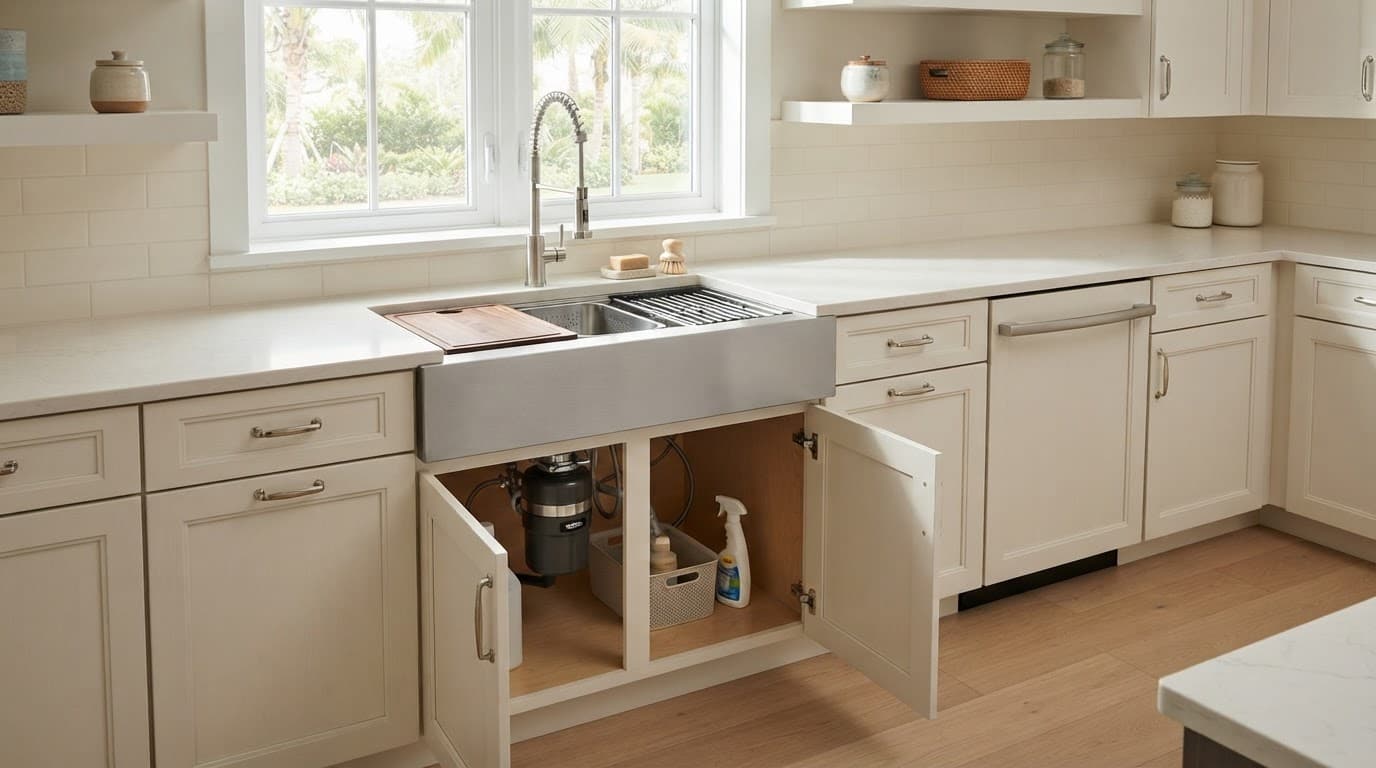
A rear drain can free up more usable space in the cabinet below. That extra room may matter if you want a pullout trash bin, water filter, instant hot-water tank, or storage for cleaning supplies.
However, the plumbing still needs room for the P-trap, shutoff valves, disposal, and dishwasher connection. If you are replacing an existing sink, confirm that the new bowl depth will not interfere with those components.
Cabinet Fit and Countertop Compatibility Come First
A sink may look perfect online and still be wrong for the cabinet or existing counter opening. The sink specification sheet should guide the installation, not the other way around.
Match the sink to the base cabinet
Manufacturers list a minimum cabinet width for each model. A sink can fit inside a cabinet opening while still leaving too little room for mounting hardware, drawer boxes, or plumbing. Apron-front sinks may require the cabinet face frame to be cut and reinforced.
Undermount workstation sinks need secure support beneath the counter. A heavy composite or fireclay model may require added framing. The cabinet floor and adjoining structure should carry the weight, especially when the basin is full of water and cookware.
A professional kitchen plan checks these details before cabinets and countertops arrive. For broader help with layouts, materials, and installation coordination, explore Southwest Florida kitchen remodeling.
Know what your countertop can accept
Replacing a drop-in sink with an undermount model often requires a new or modified cutout. Quartz, granite, and marble need a fabricator to assess whether the existing opening can be adjusted without weakening the slab.
Laminate counters present another concern. Their exposed core must remain sealed against moisture, especially around an undermount opening. In many cases, a drop-in sink with a finished rim is the safer choice for an existing laminate top.
Also check faucet-hole placement. Workstation sinks sometimes sit farther forward or have tighter rear clearance than a standard sink. Your faucet needs enough room to operate without striking the backsplash or window trim.
Build the Sink Zone Around How You Use the Kitchen
The sink should support the room's traffic pattern. In a remodel, place it near the dishwasher and trash pullout so cleanup follows a natural sequence. If you cook frequently, keep it close enough to the refrigerator and cooktop for easy prep.
Give accessories a home when they are not in use
Workstation accessories save space only if they are easy to store. A deep drawer near the sink can hold extra racks, cutting boards, and colanders. Avoid squeezing them into a crowded lower cabinet, where they will be forgotten.
Choose a faucet with a pull-down spray head and a finish that matches your maintenance habits. Brushed nickel and brushed stainless tend to disguise fingerprints and water spots better than highly polished finishes. A high arc helps fill pots, although it needs clearance below window trim and upper cabinets.
Include the sink early in the remodel schedule
Sink selection affects cabinet sizing, counter templates, plumbing rough-in, and accessory storage. Order it before final cabinet drawings and well before countertop fabrication. A late change can force revisions that add time and cost.
The broader Southwest Florida kitchen remodel process also includes material lead times, site preparation, and installation sequencing. Early decisions give the project team more room to solve fit issues on paper rather than during installation.
If you are weighing a new sink as part of a larger renovation, Get a Free Estimate for an onsite discussion of your kitchen's layout, cabinetry, and existing plumbing.
A Practical Upgrade for a Hardworking Kitchen
Kitchen workstation sinks are most useful when the sink area already carries much of the household's prep and cleanup. The right bowl size, durable material, drain layout, and cabinet support will make the accessories feel natural instead of fussy.
For Southwest Florida homes, a well-planned sink zone also stands up better to humidity, mineral residue, and the demands of regular entertaining. Select the sink early, check every surrounding dimension, and let your daily routines guide the final design.