Southwest Florida Site Preparation Costs for Custom Homes
A beautiful floor plan can't fix a difficult homesite. In Southwest Florida, site preparation costs can change a custom home's budget long before the foundation crew arrives.
A clean, accessible lot with nearby utilities may need modest work. A low parcel with dense vegetation, wetlands, poor soil, or distant sewer service can require a much larger investment. The goal is to price the land and the work together, not as separate decisions.
Site Preparation Costs: What the Work Includes
Site preparation turns raw land into a buildable homesite. The scope starts with understanding the parcel, then clearing, shaping, and servicing it to match approved plans.
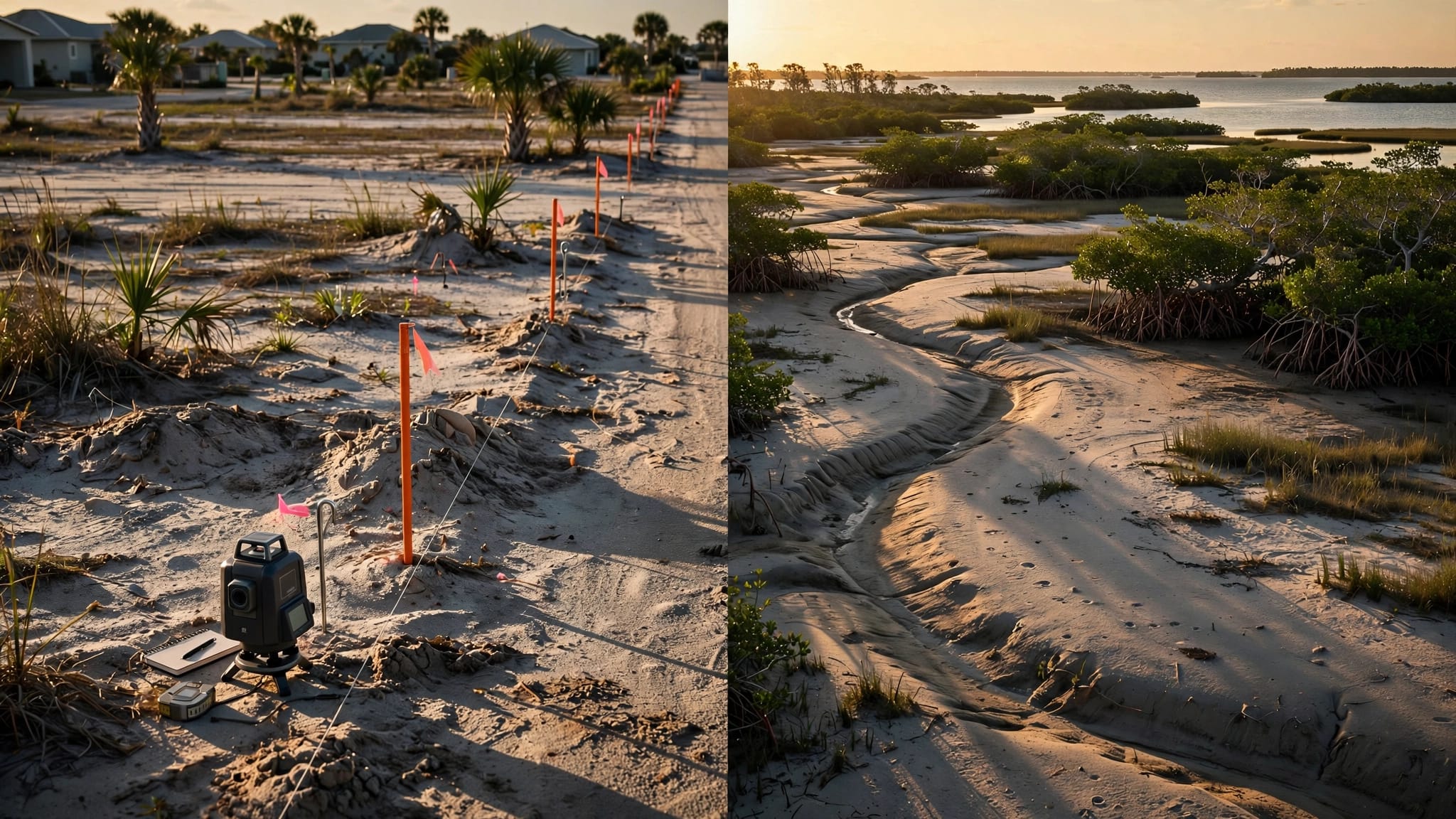
Clearing vegetation and creating access
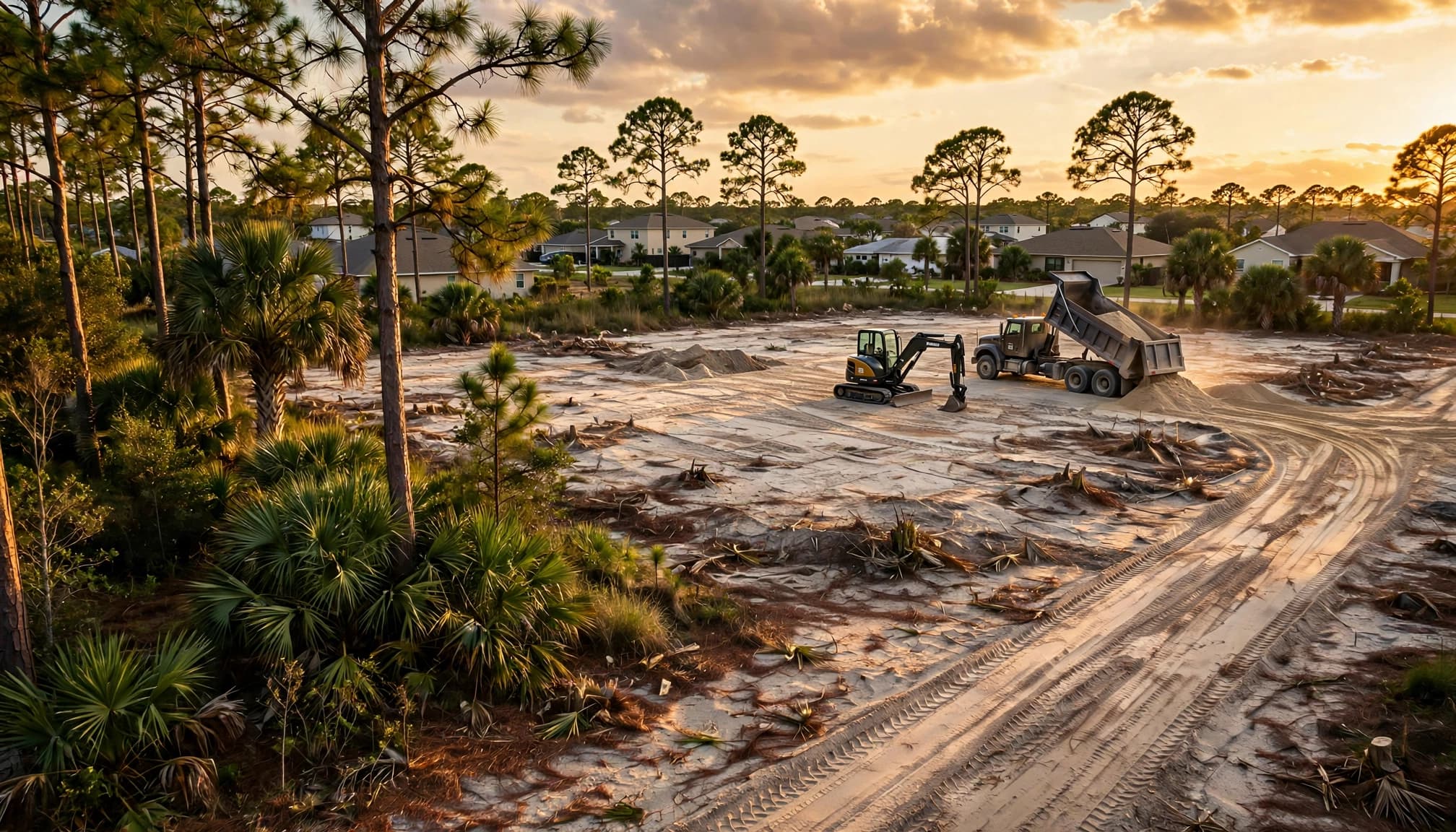
Crews may remove brush, palmettos, trees, stumps, old fencing, debris, and unsuitable surface material. Dense lots cost more because equipment needs room to work and debris must be hauled away.
A construction entrance, temporary driveway base, culvert, or stabilized access route may also be needed. Narrow roads, gated communities, soft shoulders, and limited turning space can raise mobilization and hauling costs.
Protected trees, mangroves, and vegetation near wet areas need review before anyone clears the lot. Clearing first and asking later can create expensive corrections.
Building the pad and managing water
After clearing, the contractor grades the site, removes unsuitable material, places approved fill where needed, and compacts the building pad. The work may also include swales, berms, drainage piping, erosion control, and rough grading for a driveway or future pool area.
A site plan should account for the home's finished floor elevation, roof runoff, adjacent properties, drainage easements, and allowable impervious coverage. Pavement, patios, pool decks, and driveways can all affect stormwater design.
The Lot Conditions That Change the Budget
Two lots on the same street can have very different site work needs. County location matters, but physical conditions often drive the largest changes in cost.
Lot size, vegetation, and equipment access
Larger parcels don't always cost more per acre. However, a small lot can still be difficult if it has heavy vegetation, a canal edge, tight side access, or neighboring homes close to the work area.
Basic land clearing in the Naples and Southwest Florida market often falls around $1,500 to $5,000 per acre as a preliminary estimate. That number can climb with mature trees, stump removal, disposal requirements, or restricted access. A standalone tree-removal allowance is best determined after an onsite review because species, diameter, location, and permitting all matter.
Soil, groundwater, and required fill
Southwest Florida's sandy ground does not mean every lot has the same bearing conditions. Organic layers, loose prior fill, saturated soil, and seasonal high groundwater can affect pad preparation and foundation recommendations.
A geotechnical report can identify soil density, organic material, groundwater conditions, settlement risk, and recommended fill or foundation work. Ask whether the testing covers the house footprint, driveway, pool, and other heavy improvements.
A dry lot visit doesn't prove that seasonal groundwater will stay low. Civil and geotechnical findings should guide excavation, drainage, fill, and foundation decisions.
For many custom homes, imported fill is one of the largest unknowns. The total depends on the finished floor elevation, lot elevation, compaction requirements, truck access, and the volume of fill needed after excavation.
Preliminary 2026 Site Work Planning Ranges
The figures below are preliminary planning estimates , not published government fees or contractor quotes. They help homeowners compare lots and set early allowances, but every parcel needs a site-specific civil or contractor estimate.
| Site work item | Preliminary planning range | What can move the price |
|---|---|---|
| Clearing and debris hauling | $1,500 to $5,000 per acre | Vegetation density, trees, stumps, hauling |
| Grading and excavation | $2,500 to $9,000 | Access, groundwater, soil removal, pad design |
| Fill dirt delivered and spread | $6,000 to $25,000+ | Required elevation, fill volume, haul distance |
| Basic drainage work | $1,200 to $4,000 | Swales, pipes, outfalls, stormwater requirements |
| Survey and elevation checks | $500 to $2,500 | Parcel size, boundary issues, added stakeout work |
| Septic system, if required | $6,000 to $17,000+ | Site evaluation, system size, soil and drainfield limits |
| Driveway and access work | $2,000 to $12,000+ | Base material, culverts, paving, right-of-way rules |
A relatively clean, serviced lot may require roughly $15,000 to $25,000 in civil and physical site work. A wooded or low lot needing clearing, fill, drainage, and access work can land around $25,000 to $55,000 . Wetland-adjacent, coastal, utility-limited, or heavily engineered parcels may reach $40,000 to $80,000 or more before construction begins.
Those ranges do not include the home's foundation, building permit, impact fees, design fees, or all utility capacity charges.
County Fees and Utility Charges Need Their Own Allowance
Physical site work is only part of the pre-construction budget. Permit fees, impact fees, inspections, utility capacity charges, and connection costs are separate line items.
Lee County, Cape Coral, and Fort Myers
In Lee County, published water and wastewater capacity charges have scheduled increases through 2028, with changes taking effect each May 5. A 2026 fee compilation lists total single-family impact fees in unincorporated Lee County at about $16,229.75 , though the exact amount depends on the utility service area, fire district, and property location.
Cape Coral, Fort Myers, and unincorporated Lee County may follow different fee structures. Never apply a countywide number to a city parcel without written confirmation from the governing agency and utility provider.
Collier County and Naples
Collier County requires applicants to verify water and sewer availability before moving forward with impact-fee planning. For a commonly sized residential unit under 5,000 square feet with no more than four toilets, Collier's published schedule lists a $4,411 water impact fee and a $4,081 wastewater impact fee for 3/4-inch service.
The county also lists a $300 informal wetland jurisdictional determination for a single-family parcel up to five acres. If wetlands will be cleared, filled, or disturbed, the permitting path involves the Florida Department of Environmental Protection.
Charlotte County, Sarasota County, Punta Gorda, and Sanibel properties need address-specific review. Utility providers, municipal rules, environmental constraints, and special districts can change the numbers significantly.
Flood Zones, Wetlands, and Drainage Can Expand the Scope
Flood zone status does not automatically make a lot unbuildable. It does mean the home's elevation, drainage path, fill strategy, and permitting need more careful coordination.
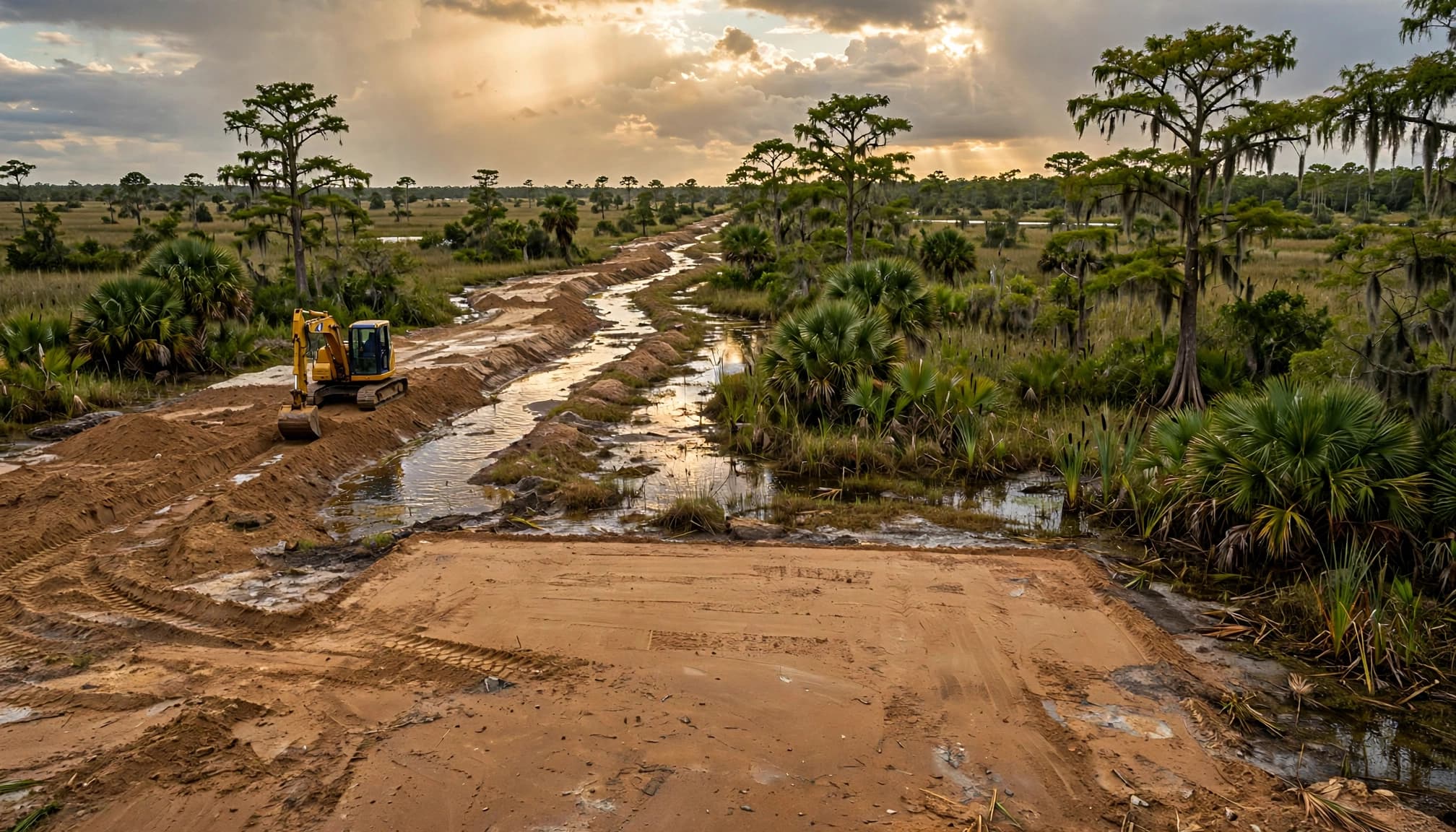
Drainage must work beyond the building pad
A raised pad without a drainage plan can push water toward a neighbor, roadway, or wetland area. Civil plans may call for swales, retention areas, driveway culverts, catch basins, or grade adjustments to direct stormwater properly.
Low-lying properties near canals, bays, rivers, and coastal areas may need more fill and more detailed engineering. High groundwater can also affect excavation, dewatering, septic design, and compaction.
Wetlands and septic require early review
Wetland flags on a survey or aerial map are not enough to set a construction budget. The boundary, buffer conditions, proposed home location, and access route all affect the usable area of the lot.
When public sewer isn't available, septic planning must begin early. The tank and drainfield need a workable location that respects the house, driveway, pool, easements, property lines, surface water, and stormwater features. A written utility availability letter can prevent costly assumptions about sewer, water, electric, gas, and internet service.
Build a Better Budget Before You Buy or Permit
The strongest budgets separate verified fees from allowances. They also state what information is still pending, such as soil borings, environmental review, final utility letters, or drainage design.
Start with Southwest Florida lot due diligence before committing to a parcel. Surveys, geotechnical testing, environmental screening, preliminary site plans, and utility research can reveal costs that aren't visible during a quick showing.
Ask for a line-item site estimate
A useful site estimate should identify clearing limits, tree work, hauling, fill assumptions, compaction, drainage features, driveway access, utility trenching, septic allowances, permits, and exclusions. It should also explain who is responsible for engineering and which fees remain subject to agency confirmation.
Compare proposals by scope, not by the lowest total. One contractor may include fill spreading and compaction while another only prices trucked material. Similarly, a drainage allowance may cover rough swales but exclude engineered structures or offsite connection work.
If you're planning a new build in Cape Coral, Fort Myers, Naples, Punta Gorda, or Sanibel, a Southwest Florida custom home builder can help connect the lot findings to the home's actual design and construction plan.
Keep a contingency for verified unknowns
Hold a contingency until utility letters, final plans, impact fees, and environmental requirements are confirmed. Site conditions can change after clearing begins, especially where buried debris, unsuitable soil, or standing water appears.
Keep surveys, reports, permits, paid receipts, utility correspondence, and approved change orders in one project file. If the project uses construction financing, the lender may request these documents along with plans, specifications, and a detailed budget.
For a parcel-specific review, Get a Free Estimate and ask for an onsite discussion of the land, house plan, access, and expected site work.
A Clear Homesite Plan Protects the Whole Project
Accurate site preparation costs come from the property itself, not a generic price per square foot. The land's elevation, soil, vegetation, water management needs, and utility access all shape the real number.
A detailed early review gives you room to adjust the house placement, driveway, drainage plan, or purchase decision before construction funds are committed. That preparation protects both the budget and the home built on top of it.