How to Size Cabinet Pulls for Wide Kitchen Drawers
Wide drawers change the hardware math. The cabinet pulls wide drawers need are usually longer than those on nearby drawers, but a long bar can look awkward if its scale ignores the cabinet front.
Before drilling, measure the finished drawer front, compare center-to-center dimensions, and test the layout with painter's tape. A few minutes of mock-up work can prevent a row of misplaced holes. The right size should feel comfortable in your hand and look balanced across the kitchen.
Choosing the Cabinet Pulls Wide Drawers Need
Start with the drawer front width , not the drawer box or cabinet opening. A 36-inch drawer front may have a slightly different finished measurement after the cabinet overlay, reveals, and end panels are accounted for.
Most homeowners begin with a pull that measures about one-third of the drawer width between screw holes. This proportion gives wide drawers enough visual weight without covering most of the front. It also creates a useful starting point when you compare several hardware sizes.
The measurement listed by hardware manufacturers is usually the center-to-center distance , often written as CTC. It measures the space between the two screw holes. The overall pull length includes the end posts and may be several inches longer.
For example, an 8-inch pull may have an 8-inch center-to-center measurement but an overall length closer to 9 inches. Both measurements matter. The CTC measurement determines drilling, while the total length affects the appearance and clearance around the drawer.
Use these ranges as starting points rather than strict rules:
| Finished drawer width | Common starting CTC range | Typical approach |
|---|---|---|
| 18 to 24 inches | 5 to 8 inches | One centered pull |
| 27 to 30 inches | 8 to 12 inches | One pull, or two smaller pulls for heavy use |
| 33 to 36 inches | 10 to 16 inches | One long pull or a balanced pair |
| 42 to 48 inches | 14 to 24 inches | One oversized pull or two coordinated pulls |
A modern kitchen may use a pull closer to half the drawer width, especially on a slab-front cabinet. A traditional kitchen may use shorter pulls or two cup pulls on a wide drawer. Cabinet style, drawer depth, and neighboring hardware should guide the final decision.
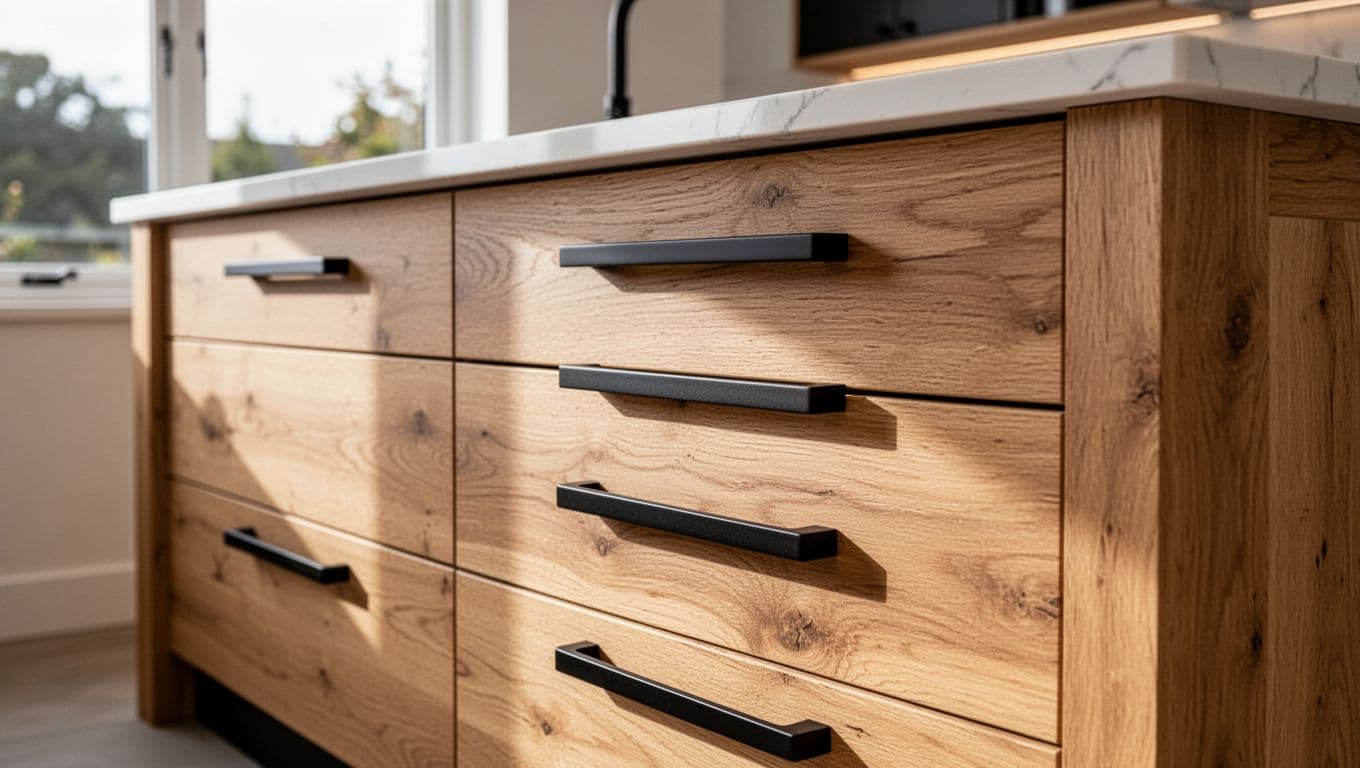
Center-to-center size tells you where to drill. Overall pull length tells you how much visual space the hardware occupies.
One Long Pull or Two Smaller Pulls?
A single long pull is the cleanest choice for many wide kitchen drawers. It gives the front one strong horizontal line and lets you open the drawer from the center. This approach works well with flat-panel doors, minimalist kitchens, and contemporary custom cabinetry.
Long pulls also spread hand pressure across the drawer front. That can feel comfortable on a wide drawer filled with cookware, although the pull itself doesn't determine the drawer's weight capacity. The drawer slides, box construction, and mounting method handle that job.
For a 30-inch drawer, an 8 to 12-inch pull often looks proportionate. On a 36-inch drawer, a 12 to 16-inch pull can create a stronger architectural line. A 42-inch or 48-inch drawer may support a 16 to 24-inch pull, depending on the cabinet design and the hardware collection.
Two smaller pulls make sense when the drawer is unusually wide, deep, or heavy. They reduce the need to reach toward the center and can suit kitchens with furniture-style cabinetry. They also work well when the rest of the room uses pairs of handles on large doors or drawers.
To place two pulls, divide the drawer front into equal halves and center one pull in each half. On a 36-inch front, the pull centers might sit near the 9-inch and 27-inch points. Adjust those positions if the pull is unusually long or if the drawer has a decorative center detail.
Two pulls can look crowded on a 24-inch or 30-inch drawer. They may also compete with nearby door hardware. Lay out both options before ordering several sets.
The cabinet pulls wide drawers need should match the way the drawer is used. A shallow utensil drawer may need less hardware than a deep pot drawer, even when both fronts have the same width.
How to Measure and Test Pull Placement
A tape test gives you a better answer than judging hardware from a catalog photo. It lets you see the pull's scale against your actual cabinet color, door style, countertop, and surrounding appliances.
Use blue painter's tape, a pencil, a tape measure, and the actual hardware if you already have it. A cabinet hardware template can help later, but it shouldn't replace the visual test.
- Clean the drawer front. Dust and grease can keep tape from sitting flat and may affect your measurements.
- Measure the finished width and height. Find the center of the drawer front by dividing each measurement in half. Mark the centerline lightly on the painter's tape, not directly on the cabinet.
- Create a tape outline. Apply tape where the ends of the pull would sit. Mark the center-to-center points on the tape. If you are comparing sizes, make separate outlines for each option.
- Test a pair symmetrically. Divide the drawer into two equal sections, then place a tape outline at the center of each section. Step back and view the drawer from several points in the room.
- Check nearby alignment. Look at the pulls on adjacent doors and drawers. Confirm that the new hardware doesn't crowd an edge, hit a handle beside it, or interrupt a strong line across the cabinet bank.
- Open the drawer before drilling. Hold the actual pull in place, or use a temporary adhesive method that won't damage the finish. Check finger clearance and make sure the pull feels natural at the height where you installed it.
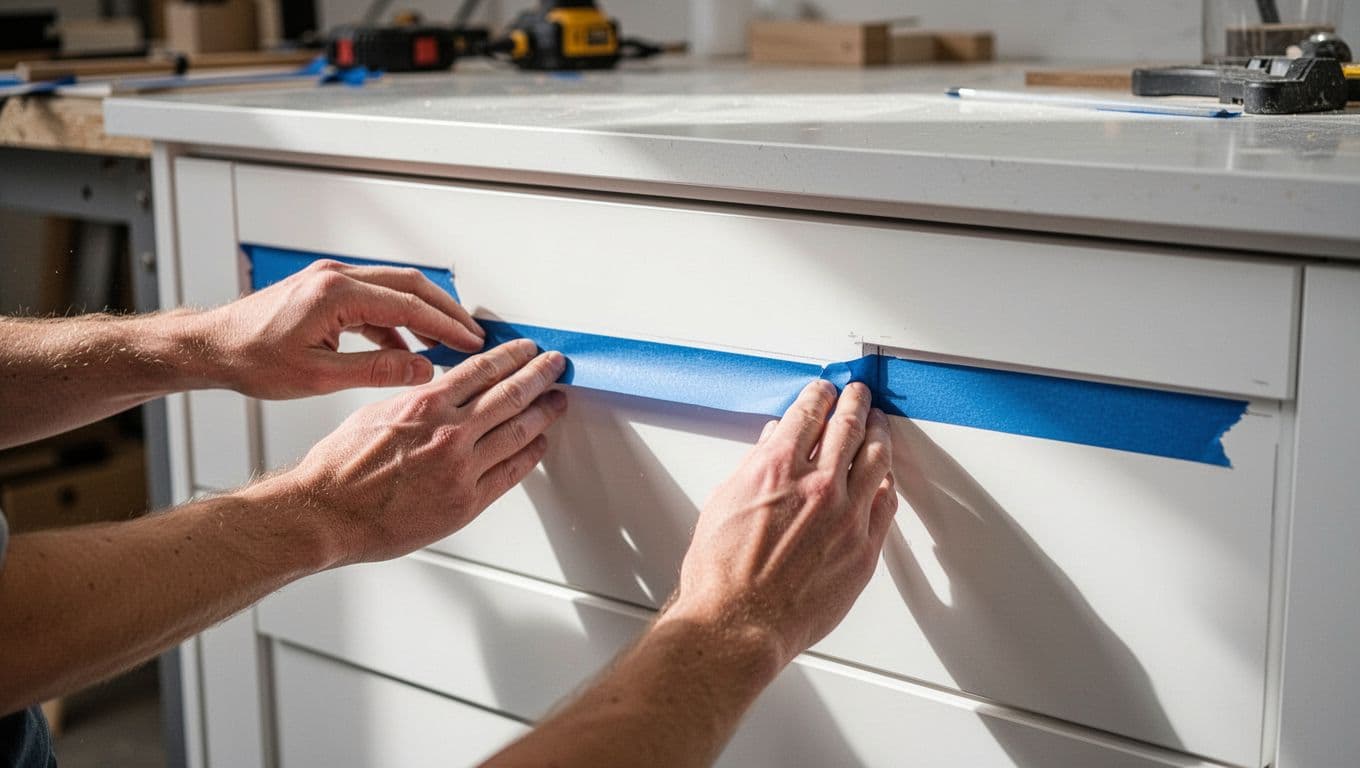
Test the entire row when several wide drawers sit together. A pull can look perfect on one front but appear uneven when the neighboring drawers are added. Tape helps you judge the complete composition before a drill touches the cabinet.
When you're ready, use a properly sized template and verify each measurement twice. Clamp or support the template so it doesn't shift. Drill through the finished face with controlled pressure, then install the screws without overtightening them.
Match Pull Size to Cabinet Style
Hardware should support the cabinet design instead of competing with it. Slab-front drawers usually have enough uninterrupted space for long bar pulls. A pull close to one-third or one-half of the drawer width can reinforce the clean lines of the door fronts.
Shaker drawers require more attention to rails and center panels. Center the pull on the drawer front unless the cabinet design calls for another consistent alignment. If the drawer front has a narrow center panel, an oversized pull may extend beyond the panel and look disconnected from the surrounding doors.
Cup pulls and bin pulls create a more traditional look. On a very wide drawer, two smaller cup pulls can make the front feel balanced. However, their shorter grip may feel less comfortable on a deep drawer filled with heavy pots.
Finish matters too. Black, brass, bronze, nickel, and stainless finishes can all work, but the shape and thickness should also relate to the other hardware. A thin 18-inch bar beside small, delicate door pulls may feel out of scale even when the measurements are correct.
Check the pull's projection, or the distance it extends from the drawer face. You need enough room for your fingers without creating an obstacle in a busy walkway. Product specifications vary, so review the manufacturer's dimensions before placing a large order.
For cabinet pulls wide drawers use every day, comfort deserves the same attention as appearance. A pull that looks good but gives your fingers no room will become irritating quickly.
Common Sizing Mistakes to Avoid
The most common mistake is choosing hardware by overall length instead of center-to-center size. A pull may look like the right length but have screw holes that don't fit your preferred layout.
Other problems often come from skipping the full-cabinet mock-up:
- A pull is centered on the drawer box instead of the finished front, so it looks off after installation.
- Two pulls are placed by eye, which creates a small but visible difference between the left and right sides.
- A long pull extends too close to the drawer edges or overlaps a decorative rail.
- The selected pull matches the drawer width but clashes with shorter hardware on nearby doors.
- A deep drawer receives small hardware that doesn't provide enough finger clearance.
- The installer drills before confirming the pull's screw length and the thickness of the drawer front.
In a new kitchen, ask for the cabinet elevations or hardware layout before fabrication. This gives you a chance to review spacing beside appliances, corner cabinets, and other drawer banks. It also helps prevent a hardware order based on guessed measurements.
Plan Pull Sizes During Your Kitchen Remodel
Cabinet hardware works best when you choose it alongside the drawer layout, not after the cabinets arrive. Wide drawers may be designed for trash storage, cookware, baking sheets, or pantry items, and each use can affect the preferred pull style.
If your project includes new cabinets or a changed layout, kitchen remodeling services can coordinate drawer widths, cabinet details, and hardware placement before installation. That planning matters even more for custom kitchens, where a few inches can change the right pull size.
For a remodel or new build, bring your preferred hardware style to the design meeting. If you have a particular pull in mind, provide its product sheet so the cabinetmaker can account for the center-to-center measurement, screw length, and projection.
If you need help planning a new drawer layout or custom kitchen, Get a Free Estimate to discuss the project with the Sozio Building Company team.
Conclusion
The right pull for a wide kitchen drawer depends on proportion, comfort, drawer use, and the hardware around it. Start with a center-to-center size near one-third of the drawer width, then compare a single long pull with two smaller pulls when the front is especially wide or heavy.
Measure the finished drawer front, mark the layout with painter's tape, and view every option before drilling. When you test the complete cabinet run instead of one drawer alone, the final hardware feels intentional and balanced. That small preparation keeps wide drawers looking polished and working comfortably for years.