How to Read a Remodeling Contract in Southwest Florida
Southwest Florida weather puts extra pressure on every remodel. Heat, humidity, salt air, and storm rules can turn a small contract gap into a big headache.
A remodeling contract Florida homeowners sign should do more than list a price. It should explain the work, the money, the permits, and what happens when plans change.
If you slow down and read it line by line, you can spot problems before they start. That matters whether you're remodeling a kitchen, updating a bath, or planning a larger custom project.
Start with the scope of work, not the total price
The scope of work is the heart of the contract. It tells you what the contractor will build, remove, replace, or install.
Read that section before you look at the final number. A low price can hide a vague scope, and vague scope often leads to disputes.
Look for room names, finish levels, fixture brands, and demolition details. If the contract says "new cabinets," that is too thin. It should say what style, what grade, and who chooses them.
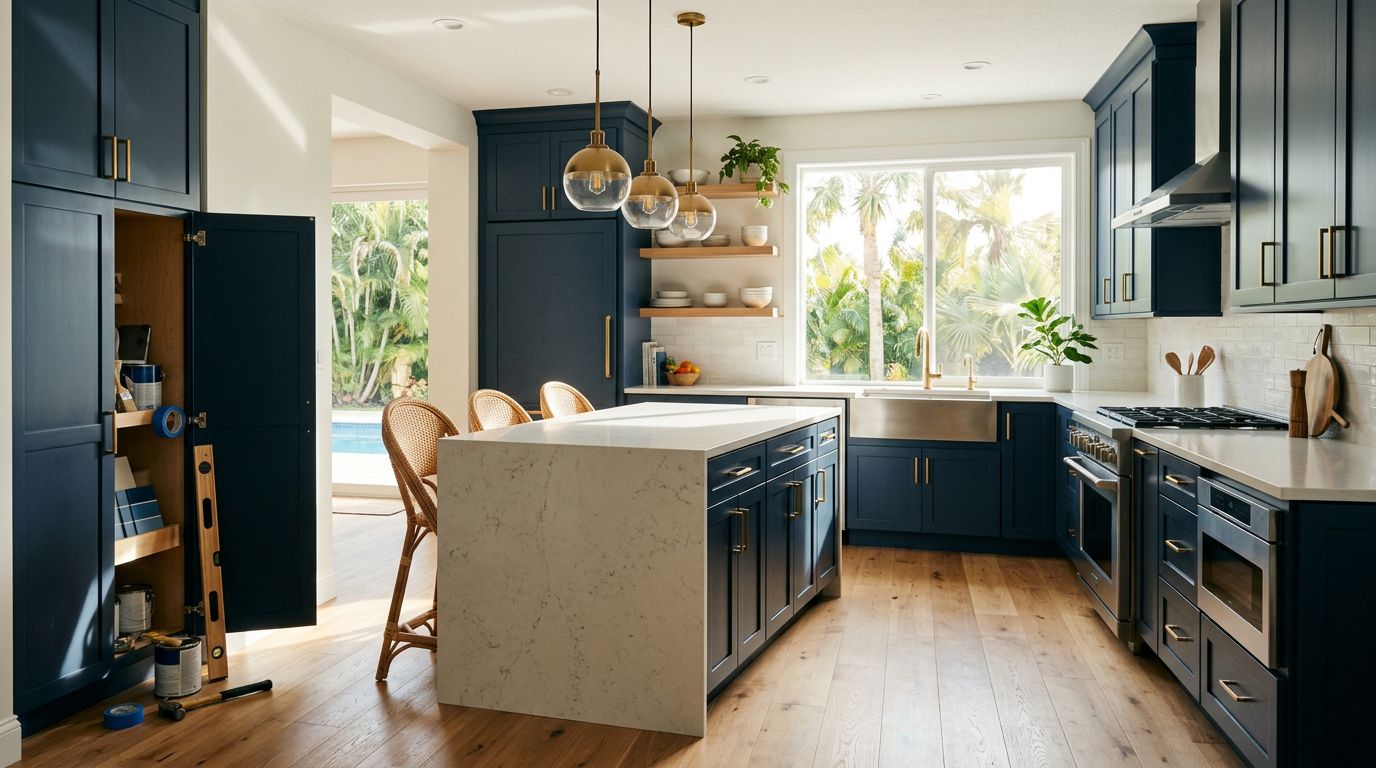
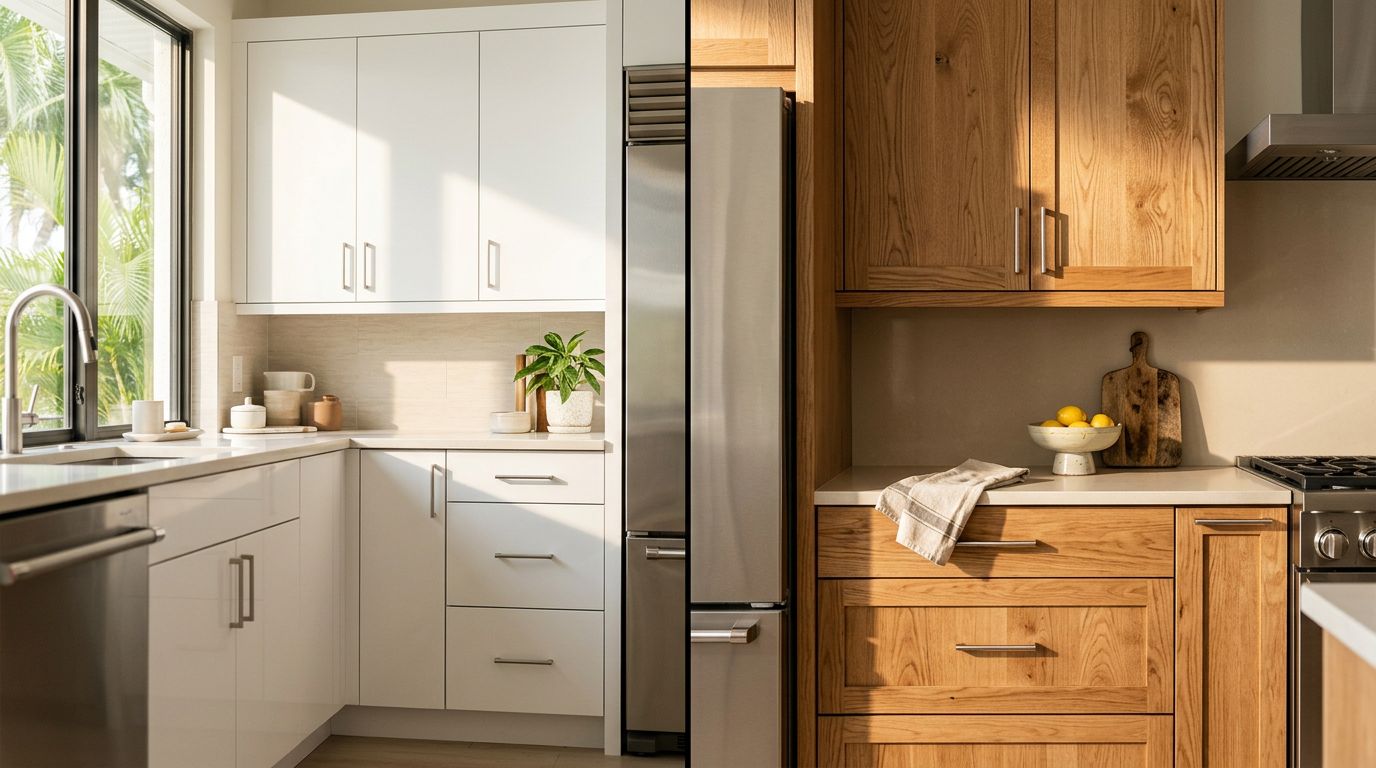
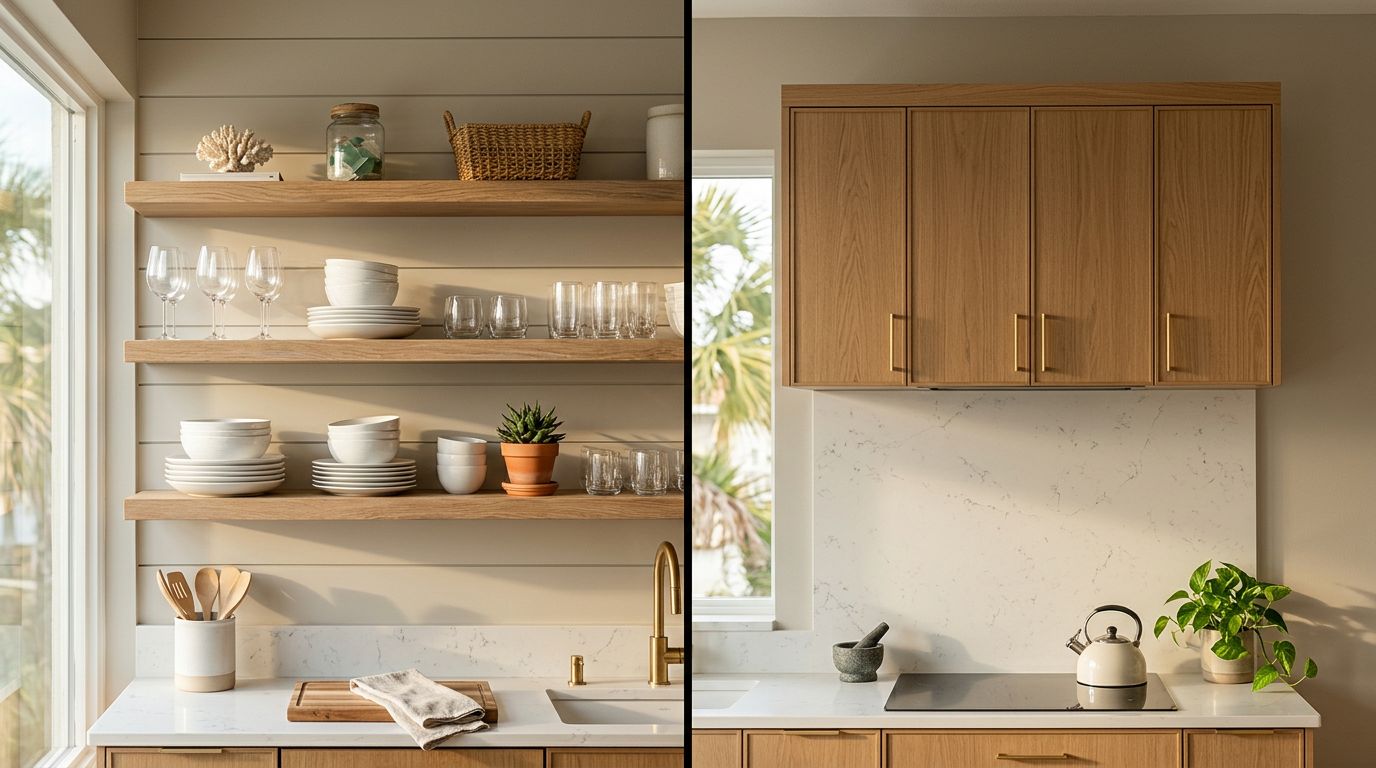
For a kitchen project, the contract should match the choices you already made. If you are comparing plans for custom kitchen renovations in Fort Myers, the agreement should name the cabinets, countertop material, fixtures, and appliances, or spell out the allowance for each.
The contract should also cover cleanup, debris removal, and protection for existing surfaces. If the crew damages nearby flooring or walls, the agreement should say how that gets handled.

If the scope leaves room for guesswork, it leaves room for arguments later.
A strong scope reads like a clear job plan. You should know what is included, what is excluded, and what counts as extra.
Verify licensing, insurance, and permit responsibility
This part protects you before work starts. A polished proposal means little if the contractor is not licensed or insured for the job.
Start with the Florida license information. The number should match the business name on the contract, and the work type should fit your project. A contractor who can do a simple repair may not be right for a full addition or major structural change.
Ask for proof of insurance, not just a verbal promise. You want to see current general liability coverage and workers' compensation coverage when it applies. If a worker gets hurt on your property and coverage is missing, the problem can land in your lap.
Permit language matters too. In Southwest Florida, many kitchen, bath, addition, electrical, plumbing, and structural jobs need permits and inspections. The contract should say who pulls the permits, who pays the fees, and who schedules inspections.
A good agreement makes this plain. A weak one can bury permit responsibility in a short line that nobody notices.
A contractor's license number is useful only if it matches the company and the work being done.
If the contract says the homeowner is responsible for permits, ask why. Sometimes that is fine, but it should be clear and intentional. You should never guess.
Understand payment schedules and change orders before work begins
Money terms deserve the same attention as the price itself. In fact, they matter more.
A solid contract ties payments to progress. That means you pay when a clear stage is finished, not just because time has passed. If the schedule asks for a large upfront payment, ask what it covers and when materials are ordered.
Look for these payment details:
- Deposit amount : This is the money due at signing. It should be explained in plain terms.
- Progress draws : These are payments tied to completed stages, such as demo, rough-in, or cabinet install.
- Final payment : This should come after the work is finished and the punch list is handled.
- Allowance items : These are budget placeholders for things you have not picked yet, such as tile or light fixtures.
An allowance is not a fixed price. It is an estimate. If the products you choose cost more, you pay the difference.
Change orders need equal care. A change order is a written approval for extra work, deleted work, or a revised material choice. It should show the added cost, any credit, and whether the timeline changes.
Never rely on a text message or a phone call for a change. If it affects money or schedule, get it in writing.
This table can help you scan the common terms faster.
| Contract term | Plain meaning | What to verify |
|---|---|---|
| Scope of work | The exact work being done | Rooms, finishes, and exclusions |
| Allowance | Budget placeholder for undecided items | Is the amount realistic? |
| Payment milestone | A payment tied to a finished stage | Is the stage clearly defined? |
| Change order | Written approval for a change | Price, time impact, and signatures |
| Permit responsibility | Who handles permits and inspections | Names, fees, and scheduling |
The takeaway is simple. If the contract is vague about money, ask for a cleaner version before you sign.
Make sure the materials and timeline are specific
Southwest Florida homes deal with moisture, heat, and storms. That means materials matter as much as labor.
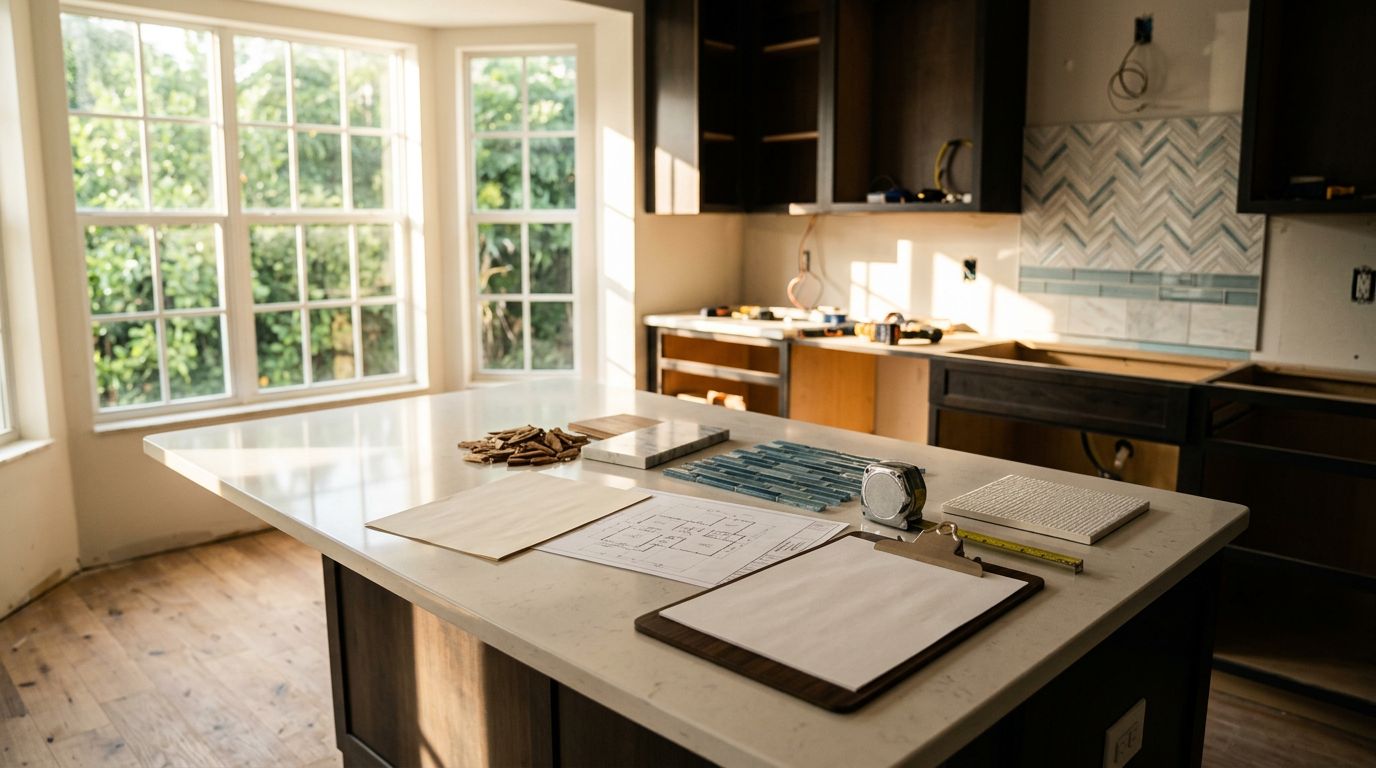
The contract should name the main products when possible. Cabinets, countertops, flooring, tile, windows, plumbing fixtures, and paint all have specs. If the contractor only writes "standard materials," you may not like the final result.
Ask for brand names, model numbers, or minimum quality descriptions. If a selection is not final, the contract should show the allowance amount and the approval process.
The timeline needs detail too. Look for a start date, estimated completion date, and any known delays that could affect the schedule. Weather, inspections, back-ordered items, and permit review can slow a job in this part of Florida.
That does not mean the schedule should be loose. It means the contract should explain how delays are handled. If the contractor falls behind, you should know whether they owe updates and how they communicate changes.
For larger remodels or additions, ask what happens if hidden damage appears after demolition. In older homes, that can happen with subfloors, framing, wiring, or plumbing. A fair contract says how those surprises are priced and approved.
Ask these questions before you sign
A quick review can save months of trouble. Use this checklist before you put your name on the page.
- Does the contract list the full scope of work in plain language?
- Is the contractor's Florida license current and correct for the project?
- Does the contract show proof of insurance?
- Does it clearly say who pulls the permits and pays the fees?
- Are payment milestones tied to real progress?
- Are allowances listed for items you have not chosen yet?
- Does every change order require written approval?
- Are the materials, finishes, and fixtures named clearly?
- Is the start date and estimated completion date written down?
- Does the agreement explain cleanup, debris removal, and final walk-through items?
If you are still gathering bids, Get a Free Estimate so you can compare written scopes instead of comparing guesswork.
A contract should answer your questions before work begins. If it leaves you more confused, ask for a revised copy.
When to bring in a Florida construction attorney
Some contracts are simple. Others are loaded with clauses you should not try to decode alone.
Get a qualified Florida construction attorney involved if the project is large, the contract is long, or the payment terms feel uneven. That is especially smart for major kitchen remodels, additions, and custom home work where the money and schedule are both big.
Legal review is also smart if the contract changes after you thought it was final. A new page, a new paragraph, or a rushed signature can matter later.
An attorney can explain the wording in plain English and flag contract-specific risks. That is not overkill. It is careful planning.
Conclusion
A good remodeling contract is clear, specific, and complete. It tells you what will be built, who handles permits, how payments work, and how changes get approved.
That matters even more in Southwest Florida, where weather, materials, and inspections can affect the job. Read the agreement like it's part of the project, because it is.
When the contract is clean, the remodel has a much better chance of staying on track. When it is vague, small questions can grow fast.