Built-In Shower Bench Cost in Southwest Florida for 2026
A shower bench can improve comfort, safety, and storage, but it also adds more than the price of a slab or a few extra tiles. In 2026, the typical built-in shower bench cost in Southwest Florida is about $500 to $2,000 as an addition to a custom shower.
That range applies to many floor-supported or floating tiled benches. Premium stone, complex framing, extra waterproofing, larger dimensions, and difficult jobsite conditions can push the cost higher. Your final price also depends on whether the bench is part of a larger bathroom remodel, tub-to-shower conversion, or new custom home.
Key Takeaways
- A built-in tiled bench usually adds $500 to $2,000 to a Southwest Florida shower project.
- Prefabricated benches cost less, while stone, floating, and oversized designs cost more.
- Waterproofing is one of the most important cost factors in Florida's humid, wet climate.
- A complete custom shower with a bench often costs $8,000 to $15,000 or more .
- A detailed onsite estimate should separate the bench, waterproofing, tile, framing, glass, and permit-related costs.
What Does a Built-In Shower Bench Cost in Southwest Florida?
For most 2026 remodeling projects, a built-in shower bench adds approximately $500 to $2,000 to the shower price. This is an installed planning range for the bench itself, not the entire shower enclosure.
A basic floor-supported bench with standard tile may fall near the lower end. A floating bench requires stronger wall support and more careful waterproofing, so it often costs $800 to $2,000 or more. Larger benches, corner seating, heated surfaces, premium stone, and custom edges can raise the total.
The full shower project matters just as much. A standard custom tile shower in Fort Myers, Cape Coral, or Punta Gorda may cost about $6,000 to $10,000. Higher-end master showers often reach $10,000 to $15,000 or more once you add upgraded plumbing fixtures, glass, niches, specialty tile, and a built-in seat.
A tub-to-shower conversion can have a different starting point. In Southwest Florida, many conversions fall between $3,000 and $8,000, while a fully custom tiled conversion with a bench may reach $8,000 to $15,000 or more.
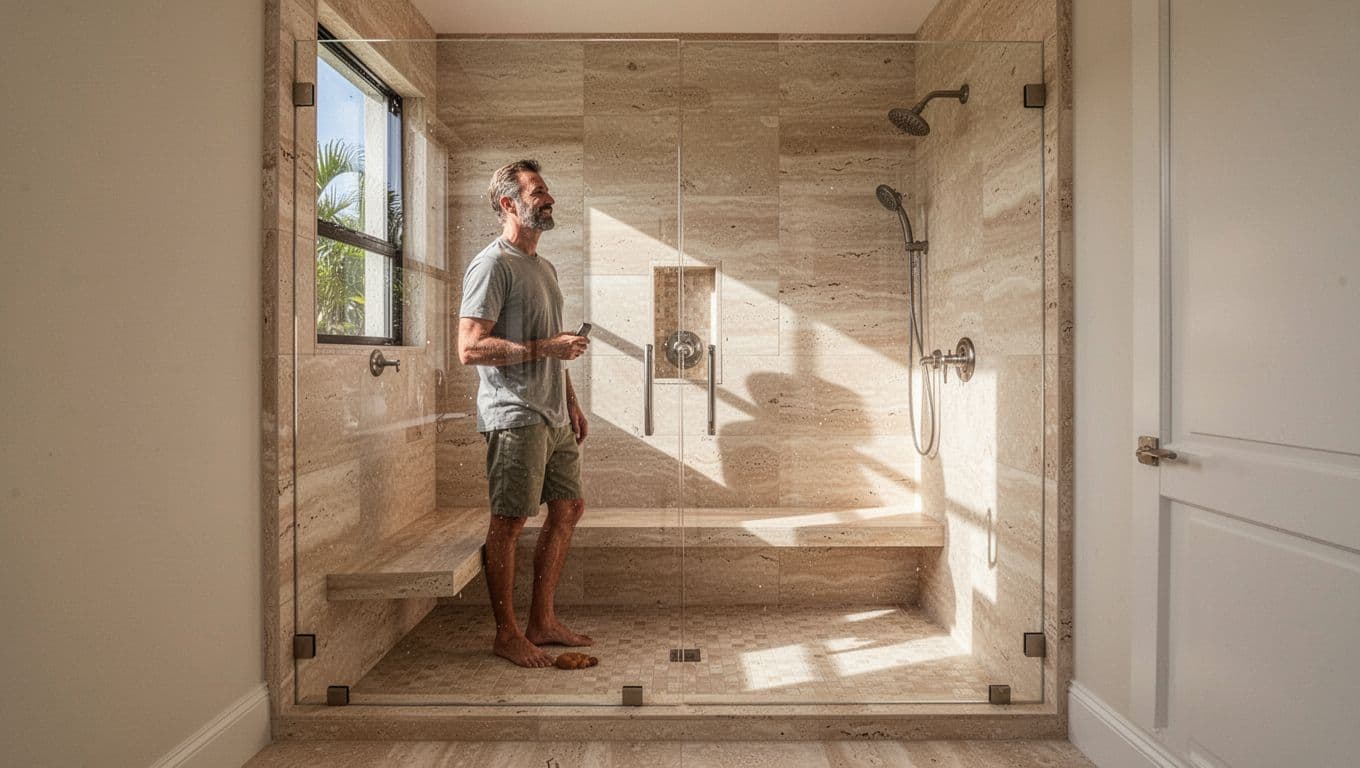
The bench design, tile, waterproofing system, and shower layout all affect the installed price.
These are realistic planning ranges, not guaranteed quotes . A contractor needs to inspect the bathroom, confirm the wall and floor conditions, review the design, and account for local requirements before setting a firm price.
Common Built-In Shower Bench Options and Installed Costs
The best bench type depends on the shower's size, construction, style, and intended use. The following ranges cover the bench addition during a larger shower installation.
| Bench option | Typical installed cost in Southwest Florida | Best suited for |
|---|---|---|
| Prefabricated seat | $250 to $500 | Budget-conscious remodels and simple layouts |
| Floor-supported tiled bench | $500 to $1,500 | Standard custom showers with available floor space |
| Floating tiled bench | $800 to $2,000+ | Modern designs and smaller showers |
| Solid-surface bench | $800 to $2,500 | Low-maintenance surfaces and fewer grout joints |
| Natural stone bench | $1,200 to $3,500+ | Premium bathrooms and matched stone interiors |
| Oversized or custom-shaped bench | $1,500 to $3,500+ | Large showers, dual-use seating, and specialty layouts |
A prefabricated seat may use foam or another waterproof core that installers cover with tile or a compatible finish. It can reduce framing time, but the design may offer fewer choices for size and shape.
Floor-supported benches usually cost less because they transfer weight to the shower floor. Floating benches attach to the wall structure, which can create a cleaner look and preserve some floor space. However, the framing and waterproofing must support the seat without stressing the tile or shower wall.
Solid-surface and stone seats have fewer grout lines than tiled benches. They can also require heavier support and careful cutting. In coastal homes, the material should tolerate moisture, cleaning products, and frequent use without staining or warping.
Why Southwest Florida Conditions Affect the Price
A bench is part of the shower's wet area, so installers must protect every surface beneath it. The seat top, front edge, side returns, wall connection, and corners all need a reliable waterproofing plan.
Florida's humidity adds pressure to the entire assembly. A small weakness around the bench can allow moisture behind the tile, where it may damage framing, drywall, or adjacent finishes. Repairs are much more expensive than installing the waterproofing correctly during the original remodel.
You can review local planning ranges for waterproofing a shower with a built-in seat before comparing contractor proposals. A larger shower with a curb, niche, or bench may require roughly $5,500 to $10,000 in waterproofing and related shower-base work, depending on the scope.
Coastal conditions also affect material choices. Homes near Naples, Sanibel, Fort Myers Beach, and Cape Coral may face salt air, high moisture, and more frequent use as seasonal residences. These conditions don't automatically require expensive materials, but they make durable tile, corrosion-resistant hardware, proper ventilation, and sound waterproofing more important.
Labor rates also vary across the region. Licensed trade labor, tile preparation, plumbing changes, electrical work, and finish carpentry can affect a quote. A project in an occupied home may take longer if crews need to protect furnishings, control dust, or work around limited access.
Permit and code requirements add another variable. Requirements can depend on the city, project scope, plumbing changes, electrical work, structural alterations, and whether the work affects a condominium or planned community. Ask whether permit fees, inspections, and plan revisions appear in the estimate.
A low bench price may exclude the work that protects it. Confirm that framing, waterproofing, tile installation, and final sealing are included.
How Bench Design Changes the Overall Budget
Size is one of the first design decisions that affects cost. A compact corner seat needs less framing and material than a full-width bench across the back wall. However, a very small seat may be uncomfortable or leave little room for movement.
Many homeowners choose a bench about 17 to 19 inches high, with a depth that allows comfortable sitting without making the shower feel crowded. The exact dimensions should match the user's needs, shower controls, door swing, and wall layout.
A sloped seat top helps direct water toward the drain. The front edge may need a finished trim piece, bullnose tile, stone cap, or solid-surface edge. Each detail adds labor and can change the final appearance.
Placement matters, too. A bench beneath a handheld shower makes rinsing easier. A seat near the shower entrance may work well for access, but it needs enough clearance from the door and water spray. If you want a recessed niche above the bench, the wall must accommodate both features without creating weak points.
A floating design can improve the visual space beneath the seat and may work well with large-format tile. Still, the wall behind it must have suitable framing. If the existing studs are poorly placed, the contractor may need to open the wall and add blocking before installing the bench.
A curbless shower can increase the project cost because the floor must slope correctly toward the drain. If you are comparing that layout, review curbless shower installation pricing. A curbless shower with a bench can become a larger structural and waterproofing project than a standard shower replacement.
What Your Shower Bench Estimate Should Include
A useful estimate should separate the major work instead of listing one vague total. Ask the contractor to identify the bench construction, waterproofing system, tile or slab material, edge treatment, labor, and cleanup.
The quote should also explain whether the price includes demolition and disposal. If the existing shower has water damage, mold, soft framing, or an uneven floor, repairs may add to the budget after demolition exposes the condition.
Tile selection can change the labor price. Small mosaic tile takes longer to install around corners and edges. Large-format tile may reduce grout lines, but it requires a flatter substrate and careful handling. Natural stone can require sealing and specialized cutting.
Confirm whether the estimate includes:
- Structural framing or wall blocking
- Waterproof bench substrate
- Membrane or surface waterproofing
- Sloped seat construction
- Tile, slab, or solid-surface finish
- Edge trim and grout
- Sealing and final cleanup
- Permit, inspection, and repair allowances where applicable
A bathroom remodeler should also discuss ventilation. An exhaust fan that moves moisture outside can help protect the shower and the rest of the bathroom. In Southwest Florida, ventilation becomes even more important when the bathroom stays closed for long periods.
If the bench is intended for aging in place, plan the layout before construction begins. Grab-bar blocking, a handheld shower, slip-resistant flooring, and a low-threshold entry are easier and less expensive to include during the initial build than after tile installation.
Ways to Control the Built-In Shower Bench Cost
You don't need to remove the bench to control the budget. Start by choosing a practical size that fits the shower instead of building a full-width seat without a clear purpose.
Standard rectangular designs usually require less labor than curved, angled, or wraparound benches. Matching the bench surface to the shower floor or using a readily available solid-surface slab can also reduce fabrication time.
Keep plumbing in its current location when possible. Moving drains, valves, or supply lines can cost more than the bench itself. The same principle applies to the shower footprint. Reusing sound walls and avoiding unnecessary layout changes may keep the project closer to the middle of the range.
Choose durable, readily available tile before selecting specialty imports. A well-installed porcelain tile can provide a clean, long-lasting finish without the cutting and sealing requirements of some natural stones.
Finally, compare complete scopes rather than isolated bench prices. One contractor may include waterproofing and framing, while another may list only the seat surface. The lowest line item isn't always the lowest project cost if essential work appears elsewhere.
For homeowners planning a larger bathroom upgrade, tub-to-shower conversion pricing can help place the bench within the full renovation budget. You can also Get a Free Estimate for an onsite review of your space and project goals.
Is a Built-In Shower Bench Worth the Investment?
A built-in bench can make daily showering more comfortable and provide a stable place to sit, shave, wash, or assist a child. It can also support future accessibility, especially when the design includes proper blocking for grab bars and a handheld shower.
The best value comes from building the seat correctly the first time. In Southwest Florida, that means treating waterproofing, support, slope, ventilation, and material selection as part of the bench design, not as optional add-ons.
A reasonable 2026 built-in shower bench cost is $500 to $2,000 for many tiled installations. Premium materials and complex construction can exceed that range, particularly within a high-end custom shower. Request a detailed estimate that shows the full scope, then choose the design that fits both your bathroom and your long-term needs.
Conclusion
The built-in shower bench cost in Southwest Florida usually falls between $500 and $2,000 as part of a larger shower remodel. Prefabricated seats can cost less, while floating designs, stone surfaces, oversized dimensions, and complex waterproofing can raise the total.
Your most important comparison is the complete installation, not the seat alone. A properly supported, sloped, waterproofed bench gives you comfort today and avoids expensive moisture problems later.