Appliance Cabinet Panels for Florida Kitchens That Last
A stainless refrigerator can become the first thing you notice in an otherwise beautiful kitchen. The right appliance cabinet panels let your refrigerator and dishwasher blend into the cabinet run, so the room feels calmer and more intentional.
For Florida homeowners, the choice goes beyond appearance. Humidity, daily dishwasher steam, coastal salt air, and strong sun can affect finishes, hardware, and panel edges over time. Start with the appliance plan, then build the cabinetry around the exact models.
Why appliance cabinet panels change a Florida kitchen
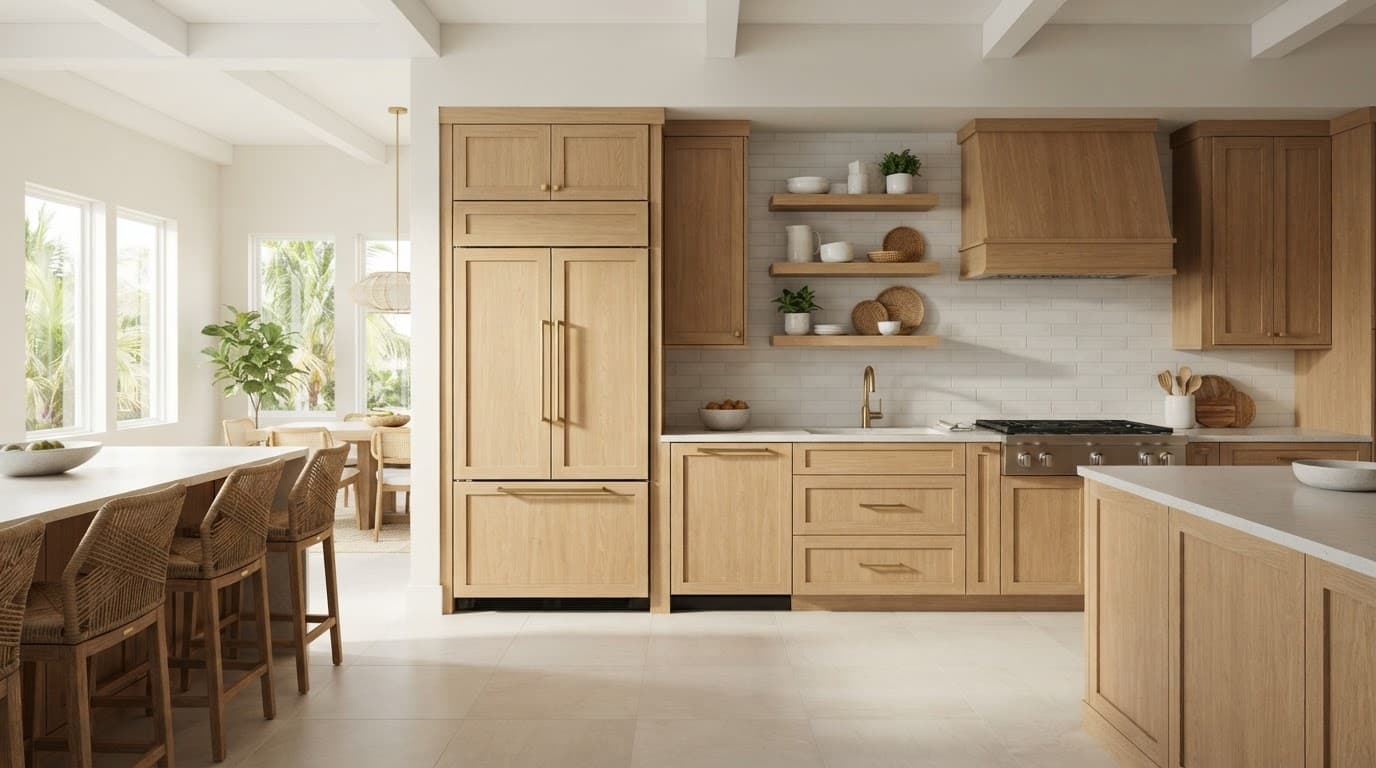
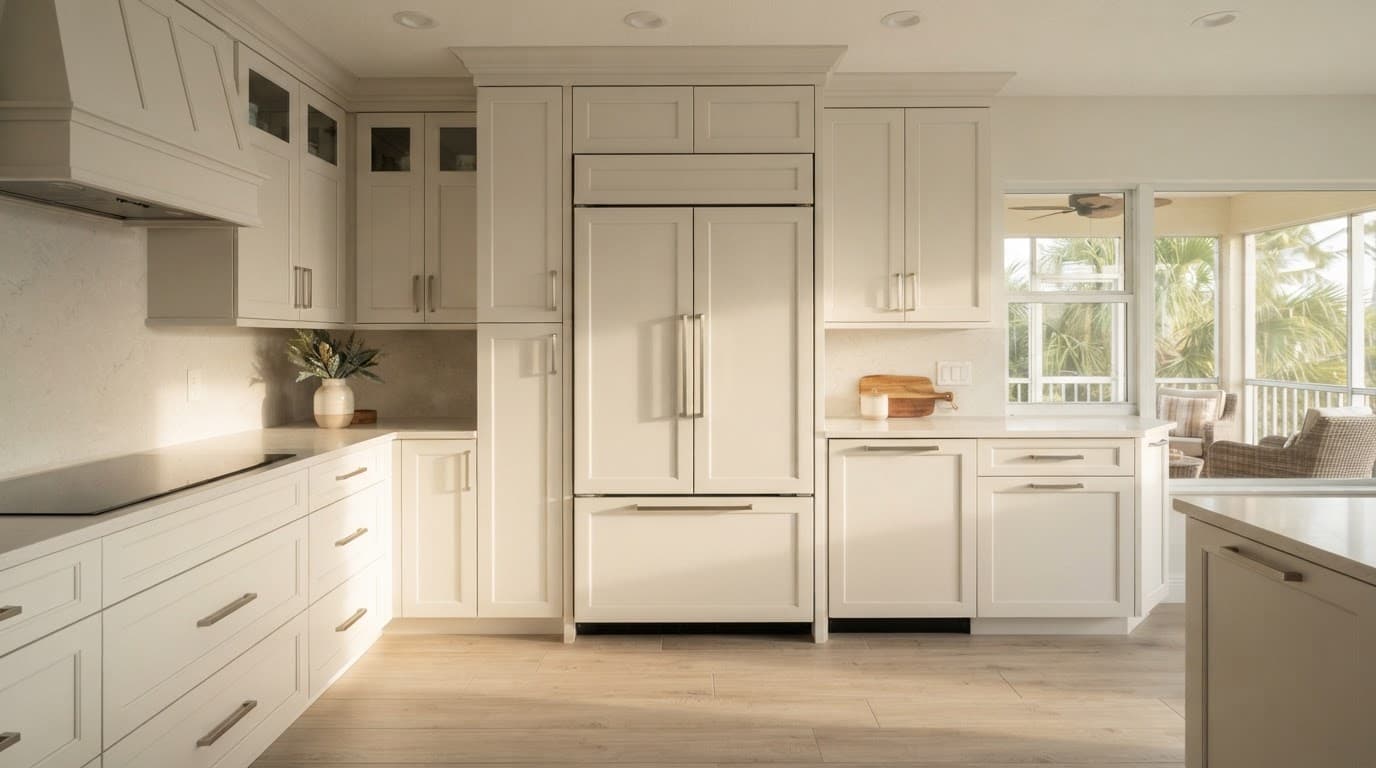
Cabinet panels cover the front of a panel-ready refrigerator or dishwasher with the same door style and finish used elsewhere in the kitchen. Instead of breaking up a long cabinet wall with visible metal, the appliances read as part of the furniture.
This approach works well in open kitchens, where appliances remain visible from a living room, dining area, or lanai. It also gives you more freedom with color. A soft painted finish, natural oak veneer, or deep stained wood can continue across the entire room.
The refrigerator reads as part of the cabinetry
A full-height refrigerator naturally draws the eye because of its size. A matching panel softens that visual weight and makes tall pantry cabinets feel more balanced.
Panel-ready refrigerator models include mounting points for a custom front. However, the cabinet panel is not a decorative afterthought. Its thickness, weight, handle placement, and clearances must match the manufacturer's installation instructions.
The dishwasher disappears at counter level
A panel-ready dishwasher creates a continuous lower cabinet line beneath the countertop. That small detail has a big effect in kitchens with an island, a large window wall, or a simple Shaker-style design.
Many dishwashers hide their controls along the top edge of the door. Still, confirm that the selected model is truly panel-ready before ordering the cabinet front. A standard stainless dishwasher cannot accept a custom panel without the proper factory hardware.
A panel-ready appliance needs a panel built to its exact template, not a cabinet door trimmed to fit after installation.
Refrigerator panels need early planning
Refrigerator panels have tighter technical requirements than dishwasher panels. Integrated columns, French-door units, and built-in refrigerators each use different hinge systems, vent locations, and cabinet depths.
Brands such as Sub-Zero, Thermador, Fisher & Paykel, and Bosch offer panel-ready refrigeration options. Yet two models with the same listed width may need different side clearances or different panel dimensions.
Ventilation has to stay open
A refrigerator creates heat while it runs, and that heat needs a planned escape route. Depending on the model, the air path may use a top grille, toe-kick area, rear clearance, or a combination of these locations.
Cabinetmakers should follow the appliance cut sheet exactly. Blocking a required vent with a decorative valance or tight filler can reduce performance and may affect the appliance warranty. In a Florida kitchen, that extra heat also adds stress to surrounding materials.
Door geometry affects every nearby cabinet
Some built-in refrigerator doors need room to swing past adjacent cabinets. Others use hinges that allow a more flush installation. Handle projection matters, too, especially when the refrigerator faces an island or sits near a pantry entrance.
Plan for open doors, open drawers, and normal traffic patterns before finalizing the layout. A beautiful panel loses its appeal if the refrigerator cannot open wide enough to remove a crisper drawer.
Dishwasher panels face water and steam every day
A dishwasher panel lives in a harsher spot than a refrigerator front. It sits near the sink, receives splashes during cleanup, and faces steam each time the door opens at the end of a cycle.
Because of that exposure, appliance cabinet panels for dishwashers need durable finishes and carefully sealed edges. The cabinet box around the dishwasher also needs protection from leaks.
The door must support the panel's weight
Dishwasher manufacturers set limits for panel thickness, height, and weight. A panel that is too heavy can cause the door to drop, rise too quickly, or fail to stay open at the right angle.
Your installer can adjust the dishwasher door springs or tension system when the manufacturer allows it. However, that adjustment does not turn an oversized panel into an acceptable one. Follow the appliance template before the cabinet shop cuts material.
Protect edges where moisture gathers
Steam rises when a dishwasher door opens. Water can also collect at the bottom corners, behind handles, and along unfinished panel edges. Even a premium painted finish can fail if moisture reaches exposed fiberboard or bare wood.
Ask for finished edges on every exposed side. Keep the dishwasher level, inspect the door gasket, and deal with leaks immediately. A panel hides the appliance, but it does not waterproof the surrounding cabinetry.
Choose finishes that hold up in Florida homes
Florida kitchens contend with humid air even when the air conditioning runs well. Homes near Sanibel, Naples, Cape Coral, and other coastal areas also deal with salt carried indoors on breezes, shoes, and damp towels.
Quality appliance cabinet panels hold up better when the panel material, finish system, and hardware suit the home's conditions. The goal is a surface that looks good after years of cooking, cleaning, and family use.
Pick stable materials and finished edges
Painted MDF panels can provide a smooth, consistent surface, especially for simple painted door styles. Still, damaged MDF edges can swell when exposed to water. A durable finish and complete edge treatment matter.
Wood veneer panels over a stable core can bring warmth to a kitchen while reducing the movement associated with solid wood. For cabinet boxes near water sources, plywood with durable edge treatment often handles an accidental leak better than low-density particleboard.
Match panels from the same cabinet program
A refrigerator panel should match the cabinet doors in species, sheen, profile, and grain direction. Ordering it through the same cabinet line helps avoid a color shift that makes the appliance look separate from the room.
Natural wood changes with sun exposure, so avoid placing radically different wood samples in direct window light. In coastal homes, choose corrosion-resistant screws, hinges, and handles. Salt air can tarnish low-grade hardware long before the cabinet finish wears out.
Measuring and installation accuracy protect the finished look
With appliance cabinet panels, small errors show up quickly. A crooked reveal around a dishwasher or a refrigerator panel that sits proud of its neighbors can make high-end cabinetry look unfinished.
The appliance model should be selected before cabinet drawings are approved. For related scheduling and budget questions, review planning appliance installation in a kitchen remodel before the order goes out.
Use the manufacturer's current specification sheet
Do not size an opening based only on a listed appliance width. The installation sheet sets the rough opening, depth, ventilation, electrical location, water connection, panel size, and required clearances.
Manufacturers can revise specifications between model generations. Give the cabinetmaker the exact model number, not a showroom description or a photo. That detail prevents wrong filler widths, ill-fitting panels, and last-minute cabinet changes.
Check reveals before the project closes
Installers should level cabinet boxes and check that the floor does not twist the appliance out of position. They should also test the refrigerator's anti-tip bracket, door swing, panel alignment, and dishwasher movement before final adjustments.
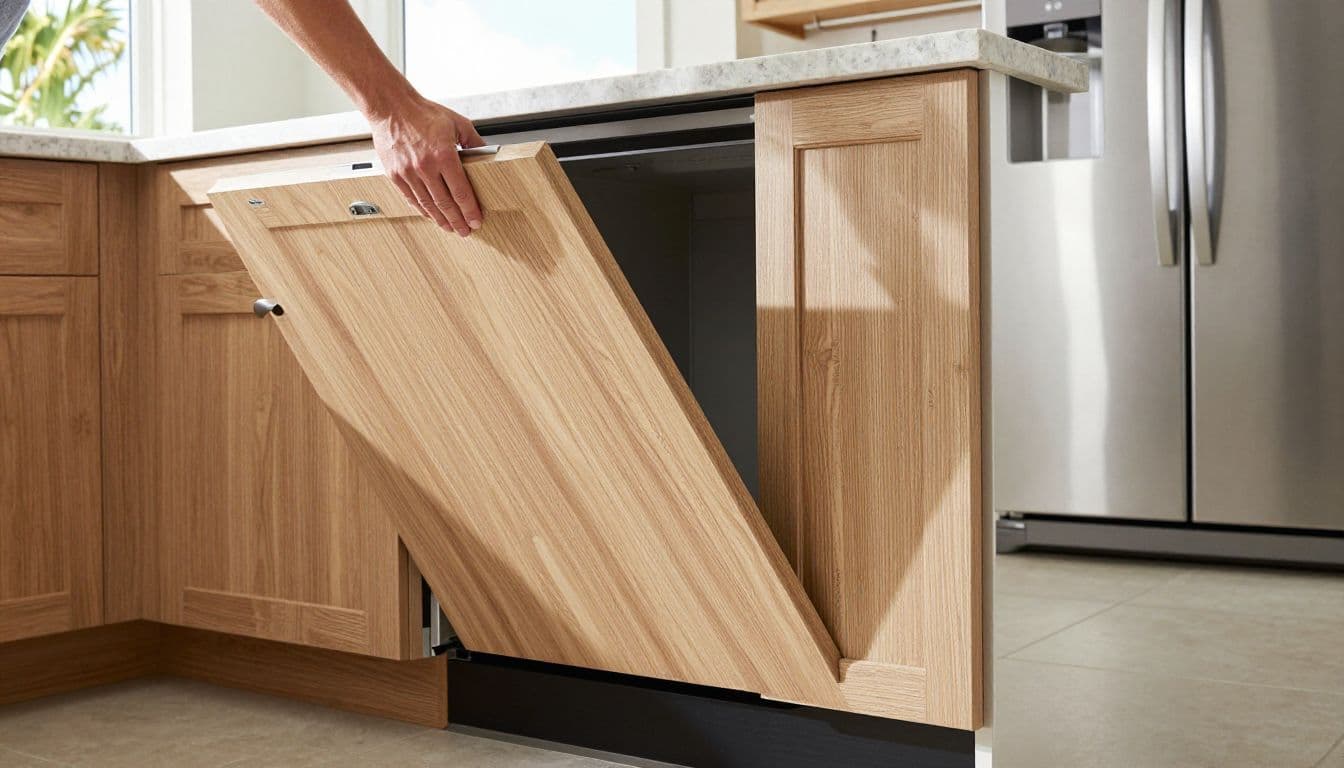
Look at the gaps around each panel from several angles. The reveals should look consistent, handles should align, and no door should scrape a neighboring cabinet or countertop edge.
Budget panels as cabinet components, not add-ons
The cost of appliance cabinet panels includes more than the visible front. Budget for the panel material, finish, mounting hardware, handles, fillers, specialty refrigerator surround cabinets, and labor for precise installation.
Integrated refrigeration often costs more than a freestanding refrigerator because the cabinet build is more involved. However, the finished result can suit a custom home or major remodel where every visible material needs to work together.
Custom cabinets give you more control
Custom cabinetry can solve difficult appliance conditions, such as a shallow wall, uneven ceiling, tight corner, or extra-tall refrigerator. It also allows the panel proportions to match wide drawers, inset doors, or a furniture-style pantry wall.
For a broader comparison, see custom vs. semi-custom kitchen cabinets. Semi-custom lines can work well when their available panel sizes and appliance options fit your selected models.
Order in the right sequence
Choose the appliances first, approve cabinet drawings second, and order the panels with the rest of the cabinetry. That sequence avoids trying to adapt a finished kitchen to an appliance that needs a different opening.
Custom cabinets in Southwest Florida commonly need eight to twelve weeks after approved plans. Review current Florida kitchen remodeling material lead times early, particularly if you want specialty panels or built-in refrigeration.
If your plans include integrated appliances, Get a Free Estimate for an onsite review of your kitchen layout, appliance selections, and cabinet options.
Clean and maintain panel fronts with care
Treat appliance panels like finished furniture, not appliance doors. Cooking oils, hand lotion, sunscreen, and salt residue can build up around handles, especially in active Florida homes.
A soft microfiber cloth with warm water and a small amount of mild dish soap handles most routine cleaning. Wring out the cloth well, wipe gently, then dry the panel and its edges. Avoid abrasive pads, bleach, ammonia-based cleaners, and steam cleaners unless the cabinet manufacturer approves them.
Catch small problems before they spread
Check dishwasher panel edges and refrigerator handles twice a year. Look for loose screws, chipped finish, swelling, rust spots, or a panel that no longer aligns with nearby doors.
Also inspect under the sink and around the dishwasher for slow leaks. Water damage often starts inside the cabinet box, where it stays hidden until the panel or floor begins to change shape. Fast repairs protect both the cabinetry and the appliance investment.
A Kitchen That Feels Built as One
The strongest appliance panel installations start with exact appliance specifications and end with careful alignment. Refrigerator fronts need ventilation and door clearance, while dishwasher panels need strong moisture protection and the right weight.
For Florida homes, appliance cabinet panels should combine a tailored appearance with materials and hardware built for daily use. When the panels, cabinets, and appliances are planned together, the kitchen feels complete for years to come.