Custom vs Semi-Custom Cabinets for Florida Kitchens
A Florida kitchen has to handle more than daily cooking. Humid air, sudden leaks, strong sunlight, and coastal salt can affect cabinet materials long after installation.
The right choice between custom and semi-custom cabinets depends on your kitchen's layout, storage needs, budget, and moisture conditions. Compare the options carefully before choosing a door style or finish.
Key Takeaways
- Custom cabinets fit unusual walls, exact dimensions, and highly specific storage plans.
- Semi-custom cabinets offer many style and size choices at a lower cost and often with a shorter lead time.
- Plywood construction, sealed edges, quality hardware, and good ventilation matter in Florida's climate.
- Custom storage can make small kitchens, galley layouts, and irregular rooms work harder.
- The best choice depends on the home's layout and how much flexibility the project requires.
Custom and Semi-Custom Cabinets: What You're Buying
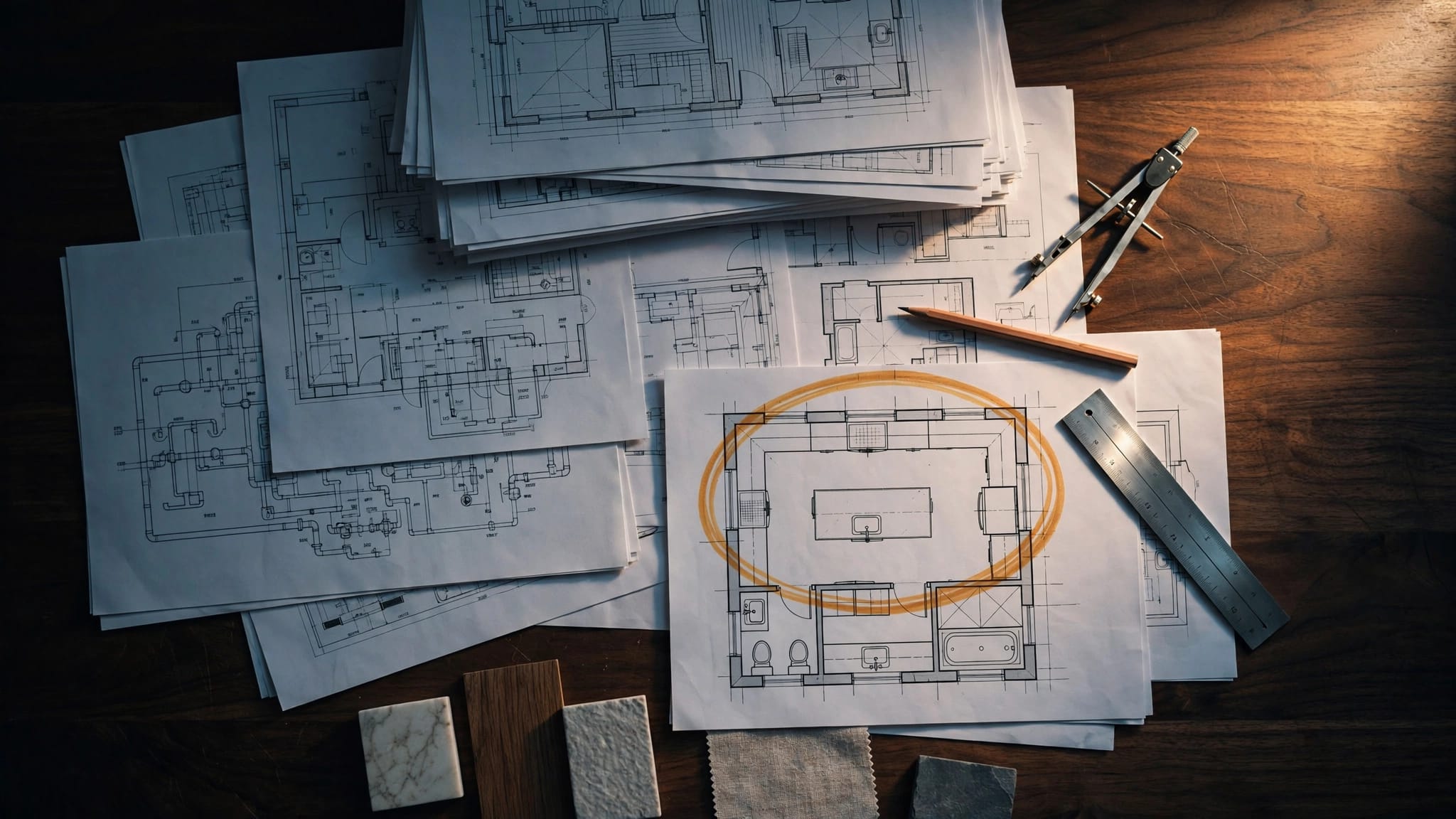
Custom cabinets are built for your kitchen rather than selected from a set product line. A designer can specify the cabinet width, height, depth, interior fittings, toe-kick height, and finish around the room's actual measurements.
That flexibility helps when you have a sloped wall, a deep corner, a window in an unusual location, or a ceiling that doesn't align with standard cabinet heights. Custom work also gives you more control over details such as appliance panels, furniture-style legs, curved ends, integrated trash storage, and full-height pantry sections.
Semi-custom cabinets begin with a manufacturer's standard collection. You usually choose from several door profiles, finishes, cabinet widths, depths, and interior accessories. Some companies also offer modifications, such as reduced-depth cabinets, finished ends, glass doors, or taller wall cabinets.
The result is a middle option. You get more choice than stock cabinets, but the cabinet sizes still follow the manufacturer's system. A designer works within those boundaries to create a practical layout.
| Feature | Custom cabinets | Semi-custom cabinets |
|---|---|---|
| Cabinet dimensions | Built to exact measurements | Selected from standard sizes, with some modifications |
| Design flexibility | Very high | Moderate to high |
| Unusual walls and corners | Easy to accommodate | May require fillers or compromises |
| Style and finish choices | Broad, depending on the cabinetmaker | Limited to the manufacturer's catalog |
| Lead time | Often longer | Usually shorter |
| Cost | Typically higher | Usually more controlled |
| Storage planning | Fully tailored | Uses available accessories and standard components |
Custom cabinets aren't automatically better, and semi-custom cabinets aren't a compromise in every kitchen. A straightforward L-shaped kitchen may look and function beautifully with semi-custom boxes. A room with tight clearances or unusual dimensions may justify custom construction because every inch matters.
Florida Climate Conditions Should Shape Cabinet Specifications
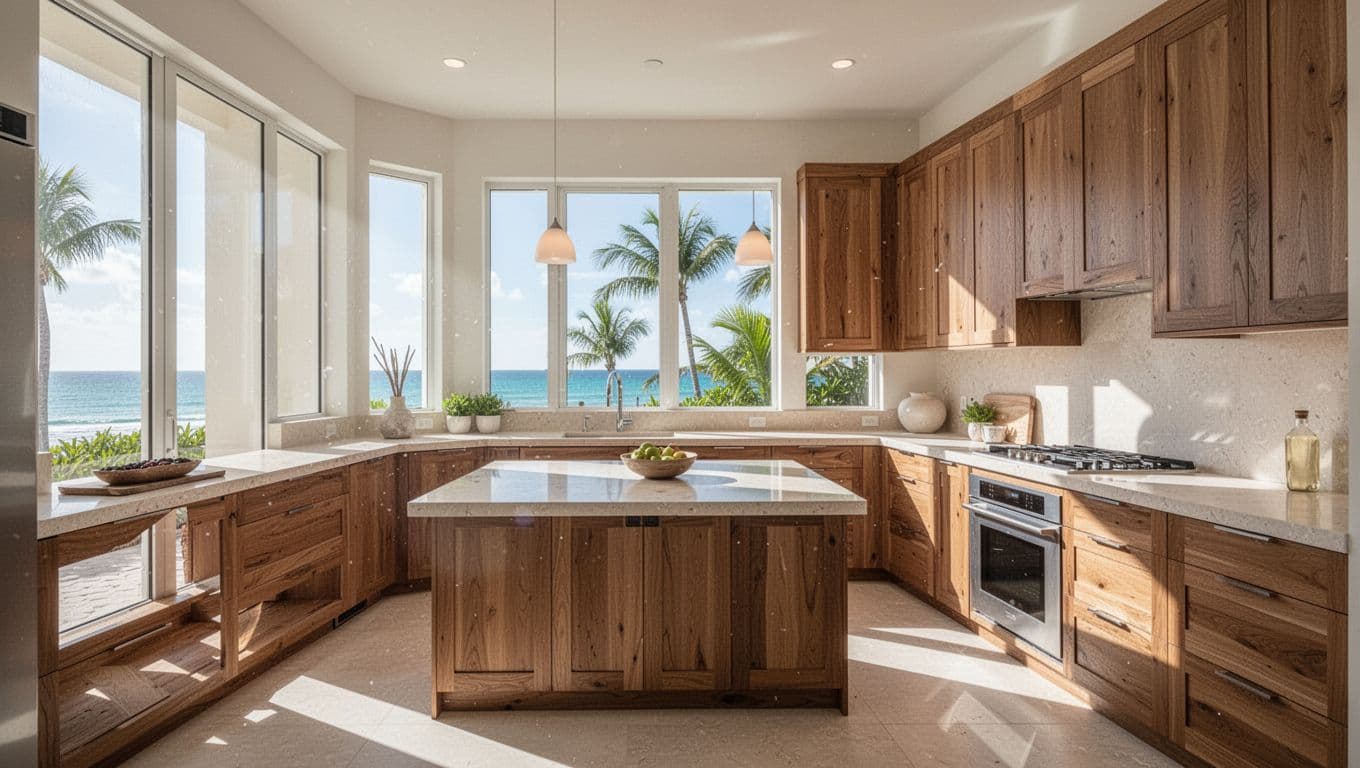
Humidity is a practical concern in Southwest Florida. Cabinet boxes and doors expand and contract as moisture levels change. A cabinet that looks sound in a showroom may perform differently in a home with poor air circulation or recurring indoor humidity.
Ask what materials make up the cabinet box, shelves, doors, and finished ends. Plywood cabinet construction is often a strong choice because it holds fasteners well and handles moisture exposure better than lower-grade particleboard. However, the material alone doesn't solve every problem. Unsealed edges, damaged sink-base floors, and standing water can harm almost any cabinet.
Moisture-resistant MDF can work well for painted doors because it has a smooth surface and doesn't show wood grain. It still needs a durable finish and careful edge protection. Solid wood doors also need room for natural movement, especially in a humid environment.
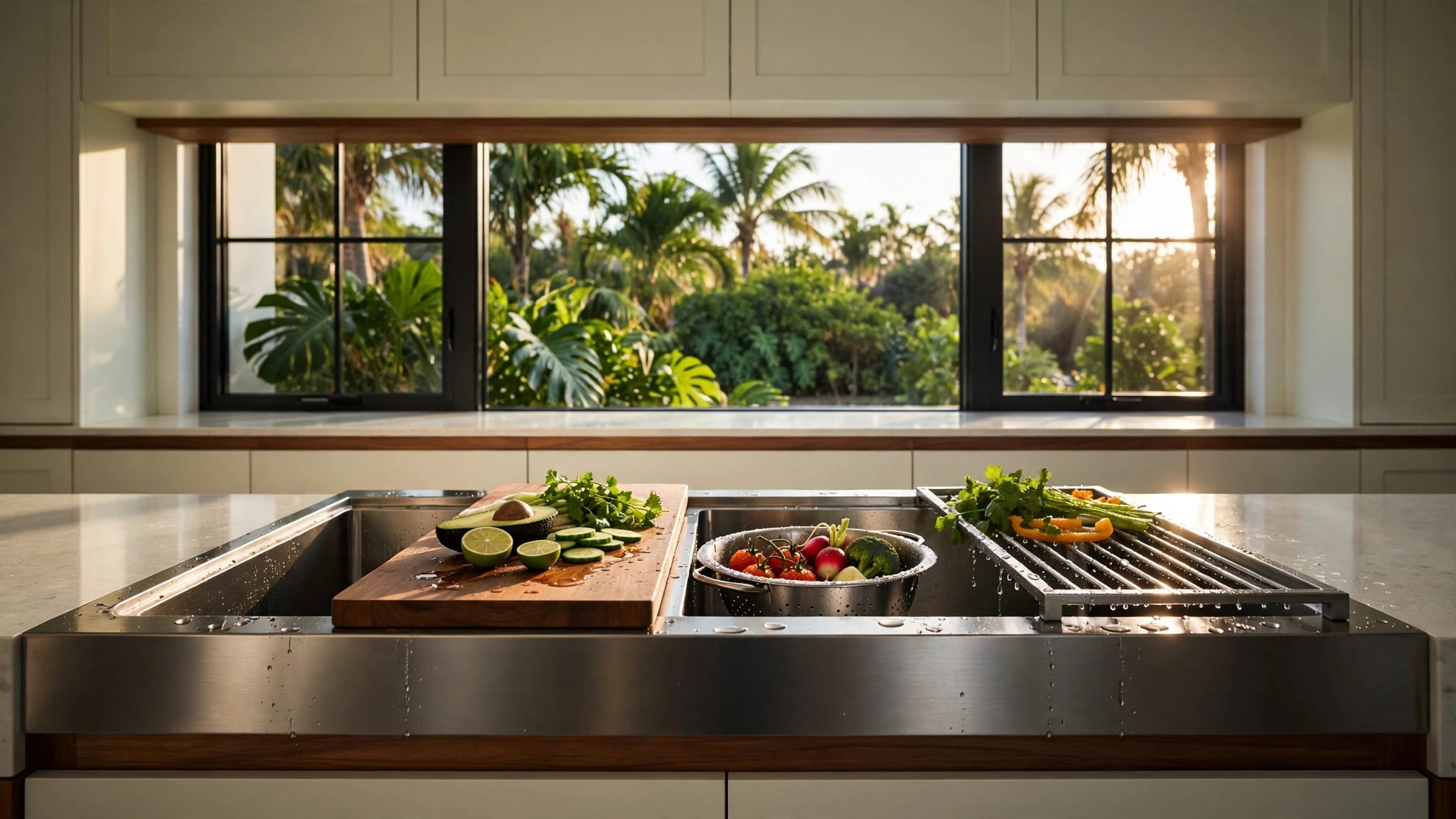
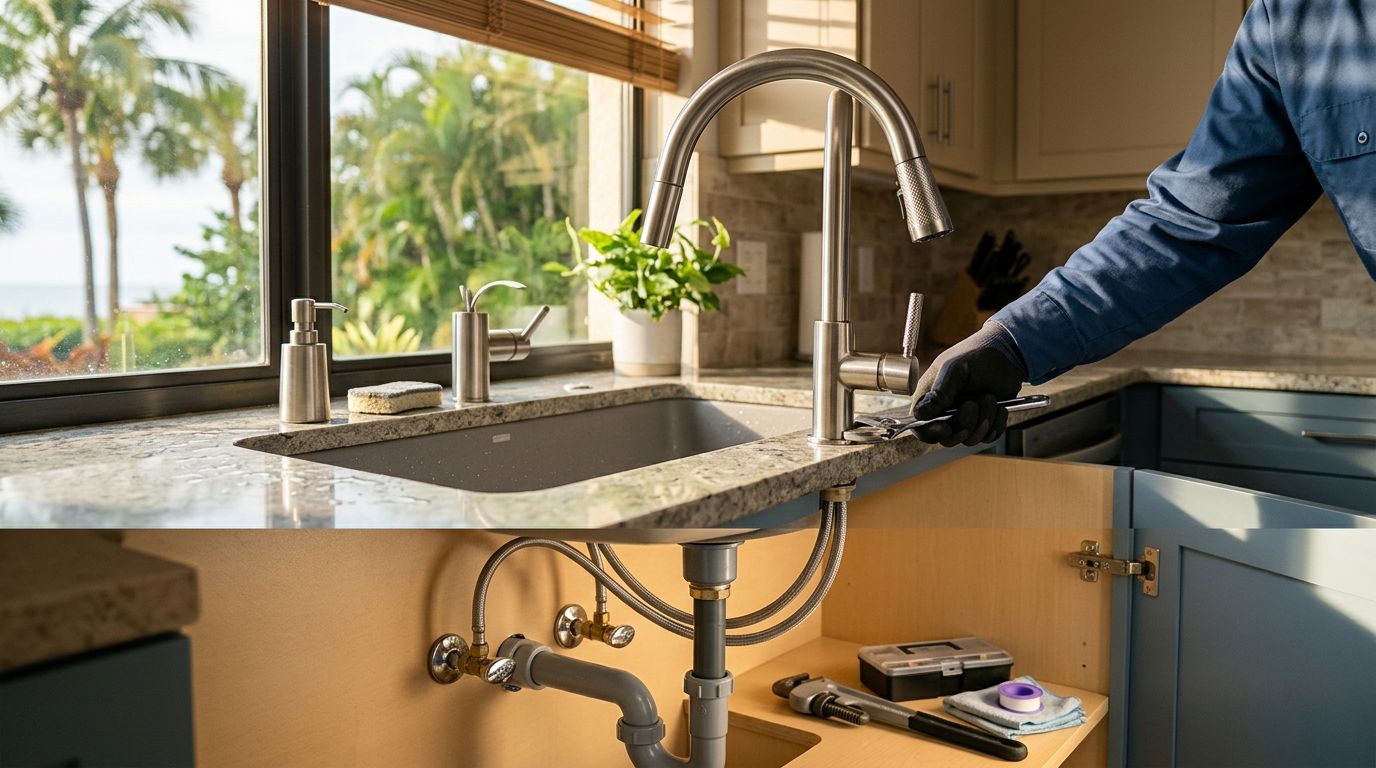
The sink cabinet deserves extra attention. Request a sealed or protected base, removable leak tray, and water-resistant finish around plumbing openings. A small supply-line leak can cause major damage when water reaches an unfinished cabinet edge.
Ventilation also protects cabinetry. Use a properly sized range hood, and duct it outdoors when the home's design and local requirements allow. Recirculating hoods remove some grease and odors, but they don't exhaust moisture from boiling or cooking. Your air-conditioning system should control indoor humidity, while bathroom and laundry ventilation helps keep moisture from spreading through the home.
Homes near the Gulf have another concern: salt air. Stainless or corrosion-resistant hinges, drawer slides, and fasteners are useful in coastal areas such as Sanibel, Naples, and parts of Cape Coral. Wipe salt residue from exposed hardware, and avoid leaving wet cloths or damp cleaning tools inside cabinets.
A cabinet quote should identify the box material, finish, edge treatment, hardware, and sink-base protection. The door color alone doesn't tell you how the cabinets will perform.
Storage and Layout: Where Each Option Fits
Storage problems often come from the room's shape, not the number of cabinets. Florida homes include compact condos, older ranch homes, open-plan kitchens, and large rooms with islands. Each layout creates different planning challenges.
A galley kitchen has limited aisle width, so cabinet depth and door swing matter. Semi-custom cabinets can work well when the walls are straight and the appliances fit standard openings. Custom cabinets become more useful when you need shallow storage on one side, a narrow pullout beside the range, or a precise appliance location.
L-shaped kitchens offer more flexibility, but corner space can still disappear. Semi-custom lines may provide blind-corner pullouts, lazy Susans, and drawer bases. Custom cabinetry can improve the fit around a window, align cabinets with a nonstandard wall, or use the corner for a storage system with exact clearances.
U-shaped kitchens need careful planning because three cabinet runs can make the room feel crowded. Custom depth changes may create better walking space without sacrificing the entire work area. In a larger kitchen, a peninsula can add seating and storage, but the layout must leave comfortable clearance around cabinet doors and appliances.
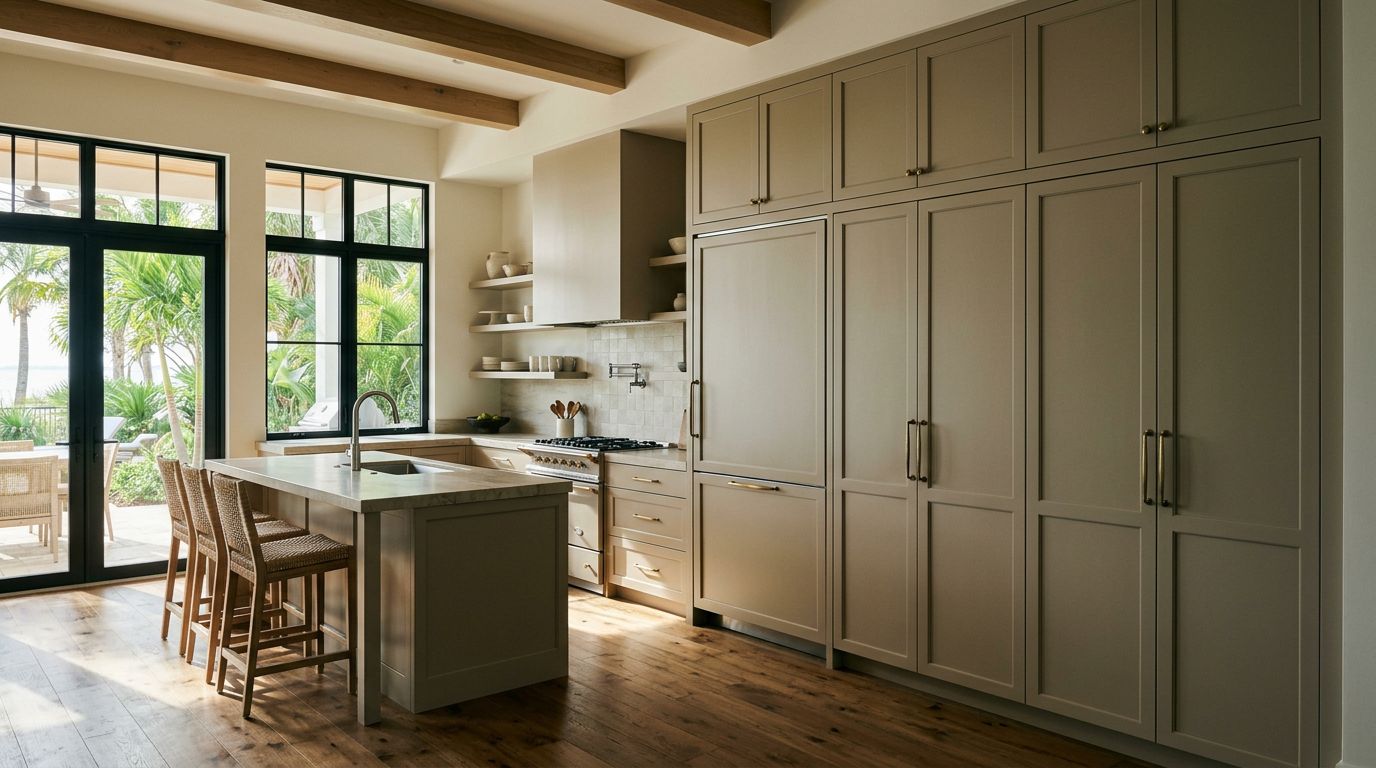
Island kitchens benefit from both cabinet types. Semi-custom cabinets can create a standard island with drawers, a microwave shelf, or seating overhang. Custom work makes sense when the island must conceal a structural post, match an unusual footprint, include a specific appliance, or provide deep storage without blocking traffic.
Custom cabinetry is also useful in homes with tall ceilings. You can plan stacked cabinets, closed storage above the refrigerator, and tall pantry doors that reach closer to the ceiling. That extra height can reduce countertop clutter, although upper storage should remain practical for everyday use.
For either option, plan storage around how you cook. Wide drawers often make pots and pans easier to reach than lower doors. Tray dividers can protect baking sheets, while a narrow vertical pullout can hold cutting boards and sheet pans. A dedicated trash and recycling pullout keeps containers out of the walking path.
Cost, Schedule, and Installation Tradeoffs
The price difference between custom and semi-custom cabinets depends on materials, finish, hardware, accessories, installation, and the amount of work required to prepare the room. Custom cabinets usually cost more because the shop builds unique components and spends more time on design and fabrication.
Semi-custom cabinets can control costs when your kitchen fits standard dimensions. Their repeatable manufacturing process may also make replacement doors or matching components easier to order later. However, fillers, trim, finished panels, and modifications can add to the original cabinet price.
Lead time matters when you're planning around a seasonal move, guests, or a temporary kitchen. Semi-custom cabinets often arrive sooner, but the actual schedule depends on the manufacturer, final measurements, shipping, permits, demolition, and countertop fabrication. Custom cabinets usually require more design approval and shop time before installation begins.
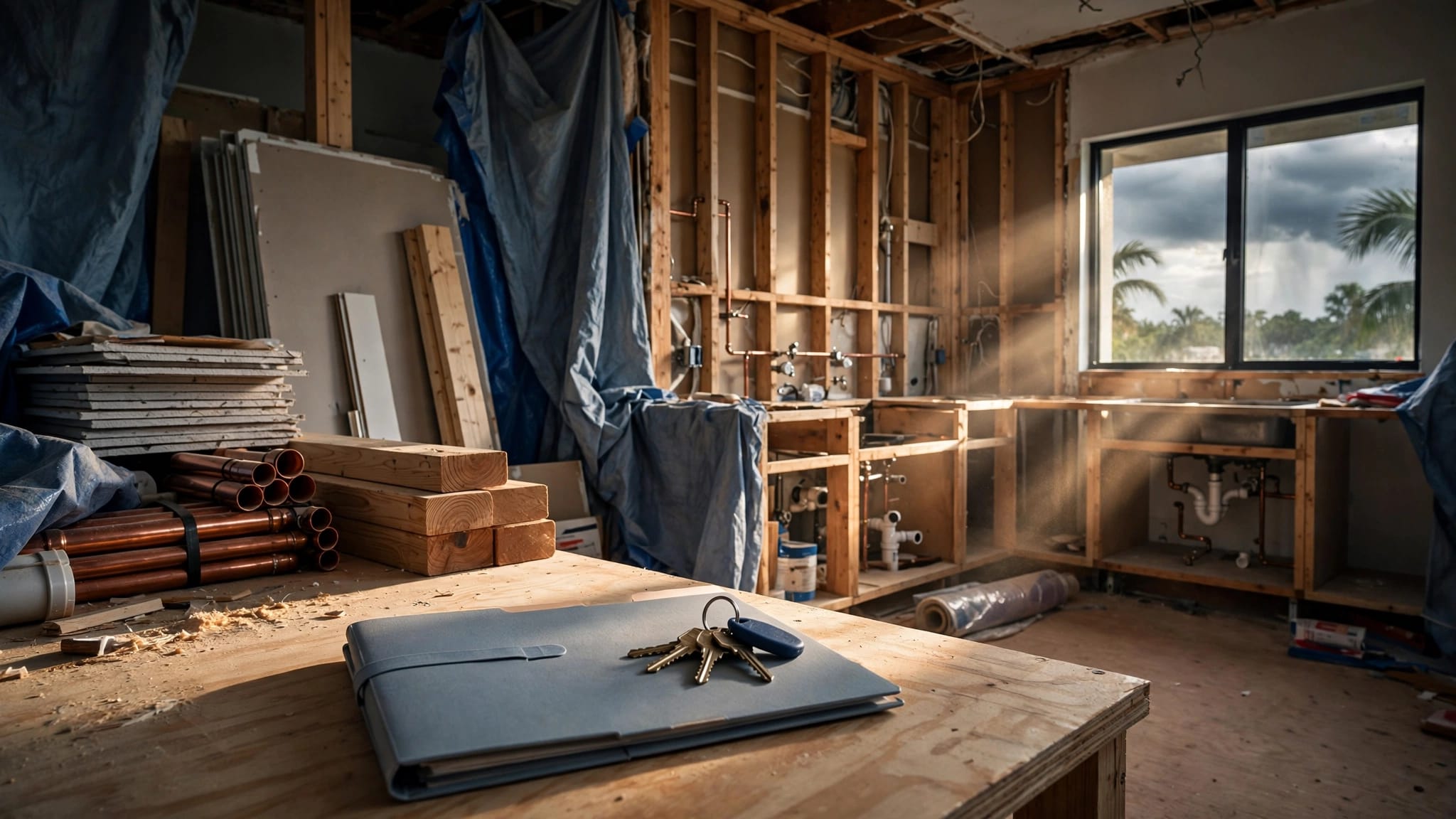
Installation quality affects both options. Walls may need leveling, floors may need repair, and plumbing or electrical locations may change. In an older Fort Myers or Naples home, the existing room can add more work than the cabinet style itself.
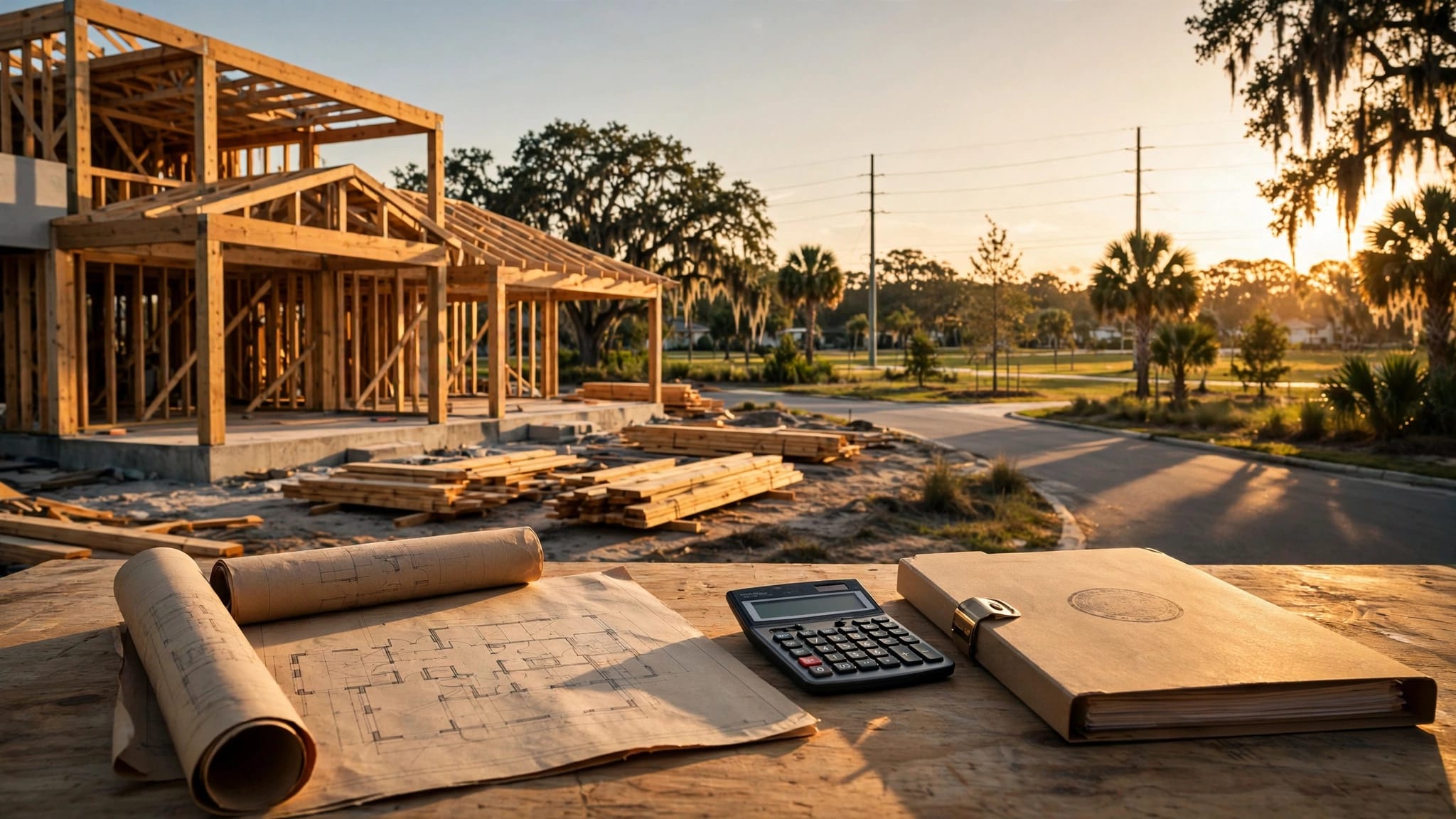
Cabinet decisions also affect the renovation schedule. Review the kitchen renovation timeline in Florida before ordering materials, especially if you plan to move plumbing, add an island, or change the appliance layout. A detailed schedule should account for design, measurements, cabinet delivery, installation, countertop templating, and final adjustments.
A lower initial price isn't always the lower project cost. A poor fit can require extra fillers, awkward trim, or storage accessories that reduce usable space. On the other hand, custom cabinets may add cost without delivering a meaningful benefit in a simple room.
How to Choose Cabinets for Your Florida Renovation
Start with the room rather than the catalog. Measure the walls, ceiling height, windows, doors, appliances, plumbing, electrical outlets, and air vents. A professional field measurement should confirm those details before cabinets go into production.
Next, identify the constraints that standard cabinets can't solve. Custom may be the better fit when you have:
- An irregular wall or unusual ceiling height
- A compact kitchen where every inch affects storage
- A detailed appliance plan with integrated panels
- A specific need for reduced-depth or extra-tall cabinets
- A desire for built-in furniture details or specialized storage
Semi-custom may suit you when the kitchen has standard walls and appliance openings. It also works well when you want a recognizable style, dependable options, and more predictable pricing. Many homeowners can achieve a personalized look by combining cabinet finishes, hardware, lighting, countertops, and backsplash materials.
Ask every cabinet provider for a written specification. It should show the cabinet box material, door construction, finish, shelf thickness, hardware brand or grade, warranty, delivery terms, and installation responsibilities. Confirm which parts receive finished panels, particularly at islands, exposed ends, and refrigerator surrounds.
Your contractor should also discuss moisture control before installation. Check for plumbing leaks, damp drywall, poor ventilation, and air-conditioning problems. Cabinets can only perform well when the room itself stays reasonably dry.
Finally, compare complete proposals rather than cabinet prices alone. A reliable kitchen remodeling plan should include design, demolition, electrical and plumbing changes, installation, trim, countertops, and final inspection. For homeowners in Cape Coral, Fort Myers, Naples, Punta Gorda, or Sanibel, professional kitchen remodeling services can help connect those decisions into one coordinated project.
When you're ready to compare options for your home, Get a Free Estimate for an onsite review of the kitchen, layout, and renovation scope.
Conclusion
The choice between custom and semi-custom kitchen cabinets comes down to fit, climate, storage, and budget. Custom cabinets make sense when the room has unusual dimensions or demands highly specific storage. Semi-custom cabinets can deliver a polished, durable kitchen when standard sizes suit the space.
Florida homeowners should look beyond color and door style. Plywood construction, sealed surfaces, protected sink bases, sound ventilation, and corrosion-resistant hardware matter just as much. The best cabinet plan fits the room and the way you live in it, while also preparing the kitchen for Florida's moisture and coastal air.