Undermount vs Top Mount Sinks for Florida Kitchens
Choosing between an undermount vs top mount sink can affect daily cleaning, countertop design, installation work, and your remodeling budget. Neither style works best for every Florida kitchen.
Humidity, salt air, frequent use, and the countertop material all deserve attention before you choose. Once you understand the tradeoffs, you can select a sink that fits both your home and the full remodel plan.
Undermount vs top mount: what changes at the counter
Both sink styles can provide years of service when installed correctly. The main difference is where the sink rim meets the countertop.
How an undermount sink works
An undermount sink attaches beneath the countertop. The fabricator cuts and finishes the opening, then the installer secures the sink with clips, brackets, adhesive, or a support system approved for the product.
Because the rim sits below the counter, you can sweep crumbs and spills directly into the basin. There is no raised lip around the opening to catch food or water. The result is a clean, furniture-like appearance that works well with quartz, granite, and solid-surface countertops.
However, the exposed countertop edge needs a smooth, durable finish. The sink also needs proper support and a continuous seal. A weak installation can allow moisture into the cabinet below or cause the sink to separate over time.
How a top-mount sink works
A top-mount sink, also called a drop-in or self-rimming sink, sits in a countertop opening. Its rim rests on top of the counter and covers the cut edge.
This design gives installers more flexibility. It works with laminate, tile, stone, solid surface, and many other countertop materials. The rim can also hide minor imperfections in an existing cutout, which may help when replacing a sink without replacing the entire counter.
The tradeoff is the raised edge. Water and debris can collect around the rim, especially if the caulk becomes dirty or starts to fail. Regular cleaning around that seam becomes part of kitchen maintenance.
| Factor | Undermount sink | Top-mount sink |
|---|---|---|
| Countertop edge | Must be finished and sealed | Covered by the sink rim |
| Cleaning | Easy to wipe into the basin | Requires cleaning around the rim |
| Countertop options | Best with solid, finished materials | Works with nearly all materials |
| Installation | More precise and support-dependent | Usually simpler |
| Replacement flexibility | Must match the cutout closely | More forgiving of existing openings |
| Appearance | Low-profile, custom look | Visible rim with many style options |
How Florida conditions affect sink maintenance
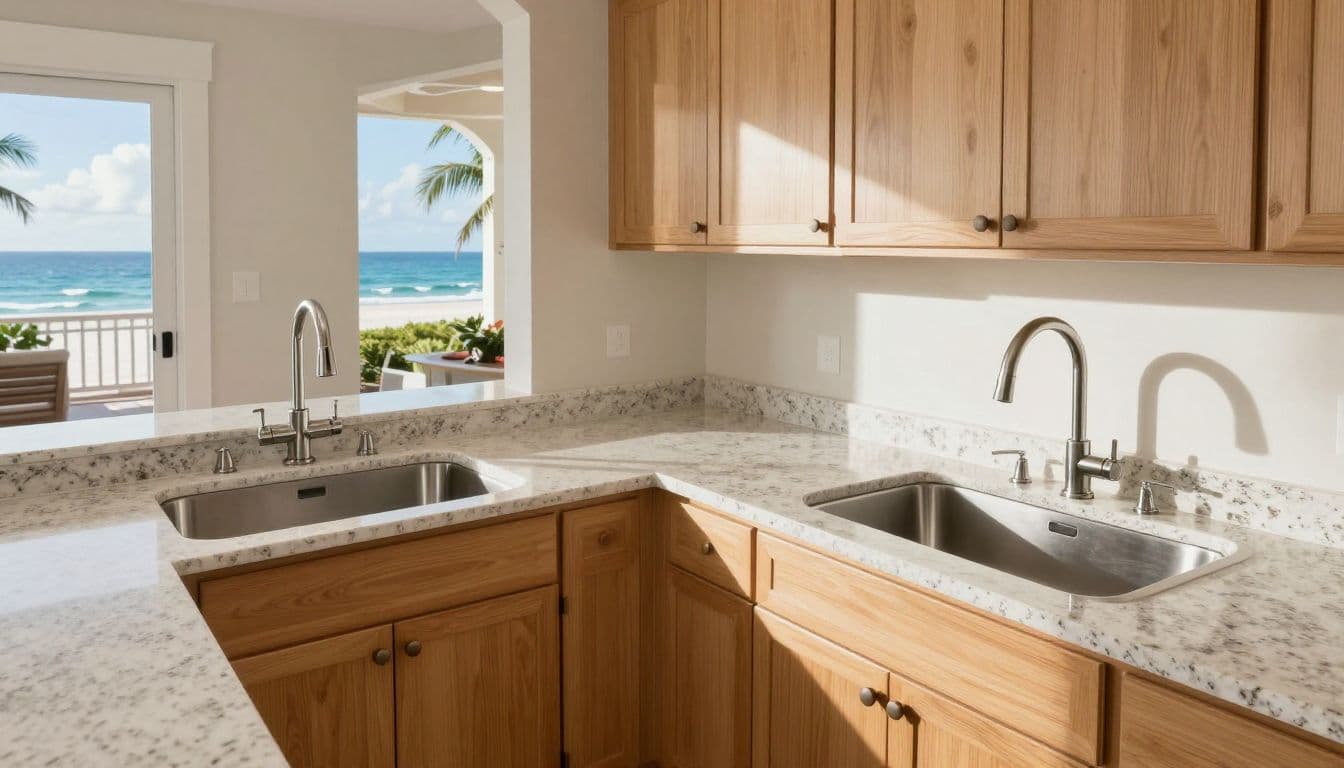
Florida's climate doesn't automatically favor one mounting style. Instead, it makes moisture control, ventilation, material quality, and routine care more important.
A sink installation sits in a high-use area. Small leaks or unsealed edges can cause cabinet swelling, mildew, or damage to flooring. Coastal homes also face salty air that can affect metal finishes.
Humidity and frequent cleaning
Warm, humid conditions can make damp seams stay wet longer. With an undermount sink, the seal between the sink and countertop needs careful inspection. With a top-mount sink, the caulk around the visible rim needs the same attention.
Frequent cleaning can wear down poor-quality caulk or leave abrasive residue on the sink surface. Use the cleaner recommended by the sink and countertop manufacturers. Avoid harsh scouring powders on stainless steel, and wipe the area dry when water gathers around the edge.
A properly installed sink should not depend on standing water to protect its seal. Ask your installer how the countertop edge will be finished, what sealant they will use, and how to maintain it.
Salt air and coastal homes
Salt air is more likely to affect the sink's metal, faucet, drain, and cabinet hardware than the mounting style itself. Stainless steel remains a common choice because it is practical and easy to clean, but products vary by grade and finish.
For a home near the Gulf, ask whether the sink uses 304 stainless steel or another grade. Some manufacturers offer 316 stainless steel for greater resistance to chloride exposure, although product availability and cost vary. Rinsing away salt residue and drying the surface can help prevent spotting and corrosion.
Match the sink to your countertop material
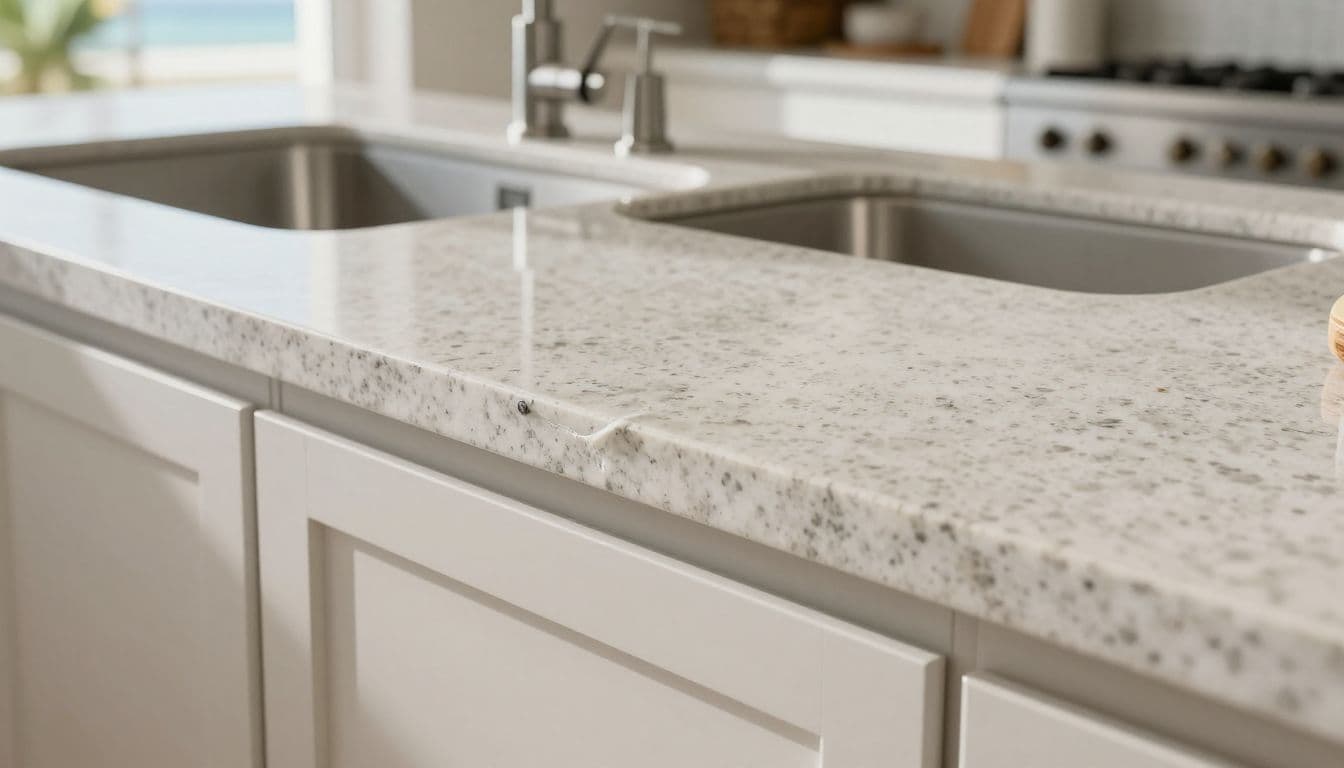
The countertop often determines which sink style makes practical and financial sense. Choose the slab and sink together rather than treating the sink as a final accessory.
Quartz, granite, and solid surface
Quartz and granite are strong candidates for undermount sinks because the cutout can receive a finished edge. Quartz is nonporous, while granite usually needs periodic sealing according to the stone and manufacturer's requirements.
Solid-surface materials can also support undermount installations. Some can include an integrated sink made from the same material, although that is a separate design choice with its own repair considerations.
Your fabricator will need the exact sink model before cutting the counter. A change in sink size after fabrication can create delays or require a new slab.
Laminate, tile, and existing counters
Top-mount sinks often make more sense with standard laminate countertops. The rim covers the cut edge, which helps protect the countertop core from moisture. Some specialized laminate systems support undermount installation, but they require product-specific fabrication and sealing.
Tile counters can accept either style, but the cutout and surrounding grout need careful planning. A top-mount rim can simplify the edge detail. An undermount sink creates a cleaner surface, yet the fabricator must finish the tile or substrate around the opening correctly.
Existing countertops add another question: does the current cutout match the replacement sink? If not, widening or reshaping the opening may be more expensive than choosing a sink that fits.
Compare installation, repairs, and total cost
Sink pricing is only one part of the decision. Labor, countertop fabrication, plumbing changes, cabinet clearance, disposal connections, and repairs can change the final amount.
For budget context, 2026 Estero kitchen remodel costs commonly fall between $15,000 and $65,000 for many projects, with full custom renovations costing more. A sink choice won't determine the entire budget, but it can affect fabrication and labor within that larger scope.
When undermount installation costs more
Undermount installation usually requires more precise measuring and fabrication. The counter edge must look finished, the sink needs reliable support, and the cabinet below may need room for clips, rails, or a support frame.
That extra work can be worthwhile when you're already ordering new stone countertops. In a full kitchen remodel, the added sink installation cost may be a smaller part of the total project. The low-profile design also fits homeowners who want a clean counter with fewer edges.
When top mount offers budget flexibility
Top-mount sinks can reduce fabrication demands, especially when the counter material is laminate or the project keeps the existing countertop. They also offer more flexibility if a future owner needs a replacement with a similar overall size.
Still, a lower installation cost doesn't make every top-mount sink a better value. A thin rim, poor caulk joint, or low-quality faucet can lead to maintenance problems. Compare the sink's gauge, finish, mounting instructions, warranty, and drain compatibility before choosing based on price alone.
When reviewing bids, use how to compare remodeling estimates to check whether demolition, countertop work, plumbing, permits, debris removal, and cleanup appear in each proposal. Then Get a Free Estimate for an onsite review of your kitchen's existing conditions.
Questions to ask your Florida installer
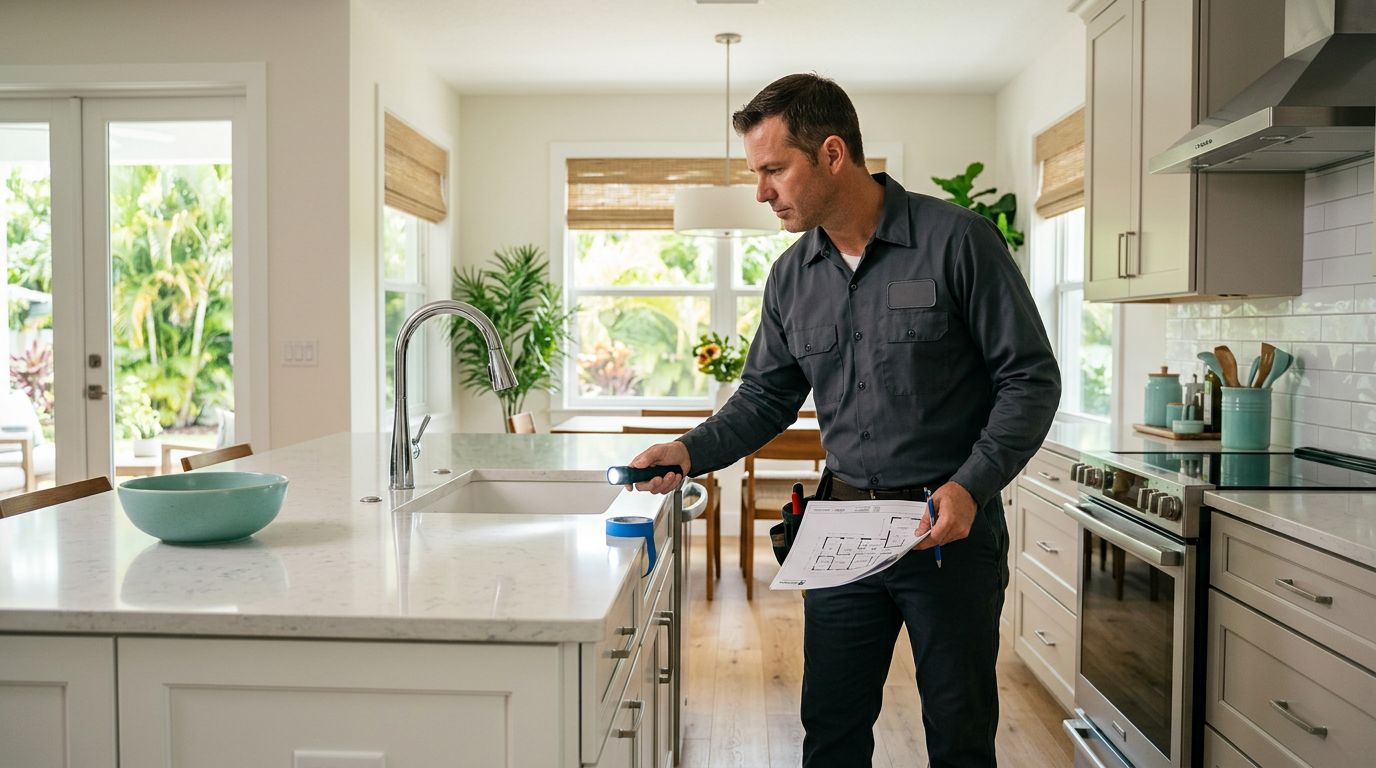
A good sink decision starts with the actual conditions in your kitchen. Before ordering materials, ask:
- Does my existing countertop support an undermount installation?
- Will the sink fit the current cabinet, drain location, garbage disposal, and plumbing?
- How will you finish and seal the countertop edge around the sink?
- What support system will hold an undermount sink, especially with a heavy cast-iron or fireclay model?
- Which sink material and stainless steel grade fit my home's coastal exposure?
- Does the sink model require a specific faucet-hole layout or countertop template?
- Will the project require a permit, inspection, or approval from my condominium or homeowners association?
- What does the installation warranty cover if the seal fails or the sink shifts?
Florida Building Code requirements provide a statewide baseline, but permit procedures and local requirements can vary by city and county. Condo associations, HOAs, insurance conditions, and flood-related project rules may add another layer. General remodeling advice can't replace a project-specific review by a qualified local contractor, fabricator, or building department.
A quick Florida sink decision guide
Use these points to narrow the choice:
- An undermount sink fits best when you want easy counter cleanup, have quartz, granite, or solid surface, and are already replacing the countertop.
- A top-mount sink fits best when you're keeping an existing counter, using standard laminate, need a simpler installation, or want more flexibility for future replacement.
- Choose based on materials as well as appearance when the home sits near the coast. Sink grade, faucet finish, sealant, and maintenance matter more than the rim style alone.
- Request both installation options when the layout is changing. The best value may depend on cabinet modifications, countertop fabrication, and plumbing access.
- Confirm the details in writing before ordering the sink. The proposal should name the sink model, countertop edge treatment, support method, plumbing work, warranty, and any permit responsibility.
If you prefer a smooth counter that wipes directly into the basin, undermount is often the stronger choice. If installation flexibility and a controlled budget matter more, top mount may be the better fit.
Conclusion
The right choice in the undermount vs top mount discussion depends on the whole kitchen, not a style trend. Consider the countertop, cabinet space, coastal exposure, cleaning habits, existing cutout, and installation budget together.
Undermount sinks suit many custom Florida kitchens with new stone countertops. Top-mount sinks remain practical for laminate, existing counters, simpler replacements, and projects that need cost control. A qualified local installer can confirm which option will perform well in your specific home, then provide a clear scope before work begins.