Tankless Water Heaters Florida Homeowners Should Compare
A remodel can expose a water heater problem that stayed hidden for years. The unit may occupy valuable storage space, struggle during busy mornings, or sit near the end of its service life.
Searches for tankless water heaters Florida homeowners can buy often lead to a simple question: is on-demand heating better than a traditional storage tank? The answer depends on your home's size, household demand, fuel source, water quality, utility rates, and remodel scope.
Florida's warm climate helps both systems, but it doesn't eliminate installation or maintenance concerns. Start with the home's actual hot-water needs, then compare the equipment and plumbing work required.
Start with household demand and available space
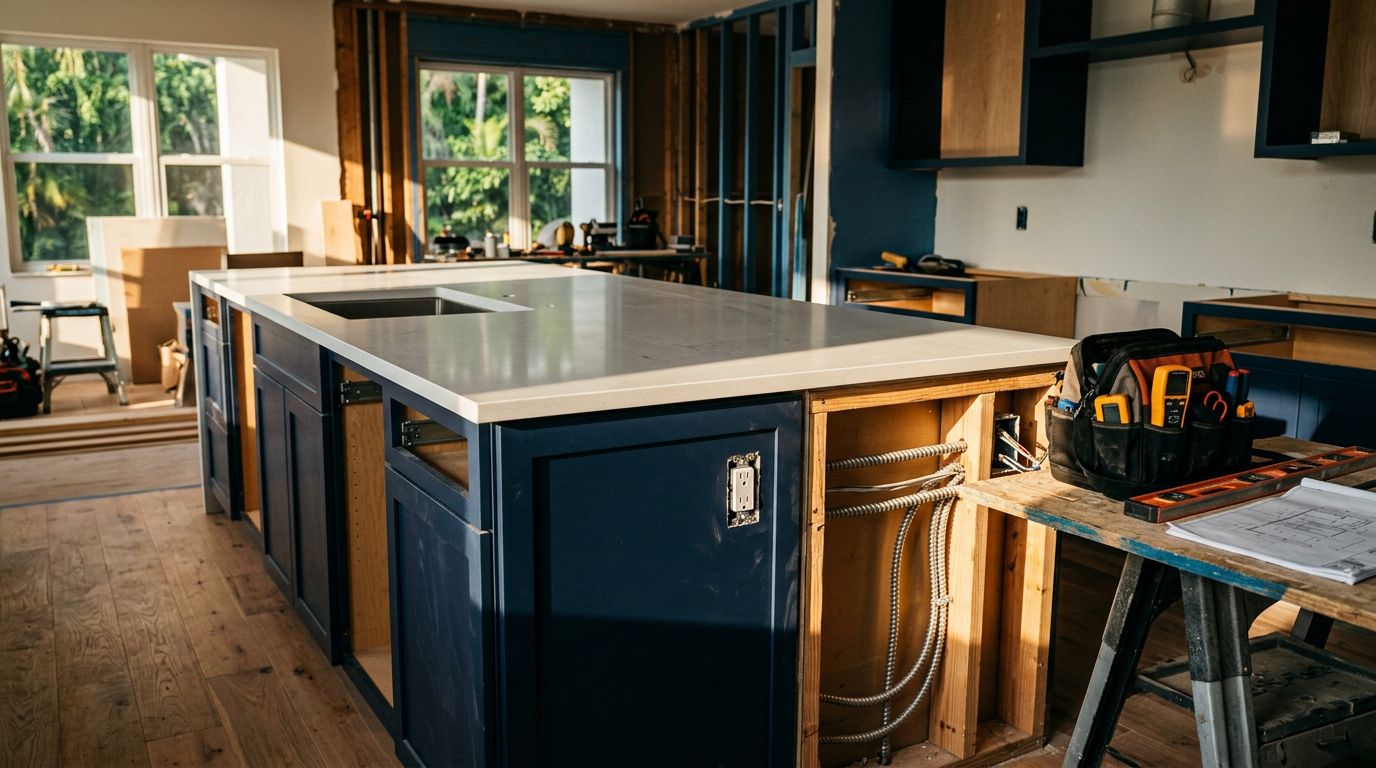
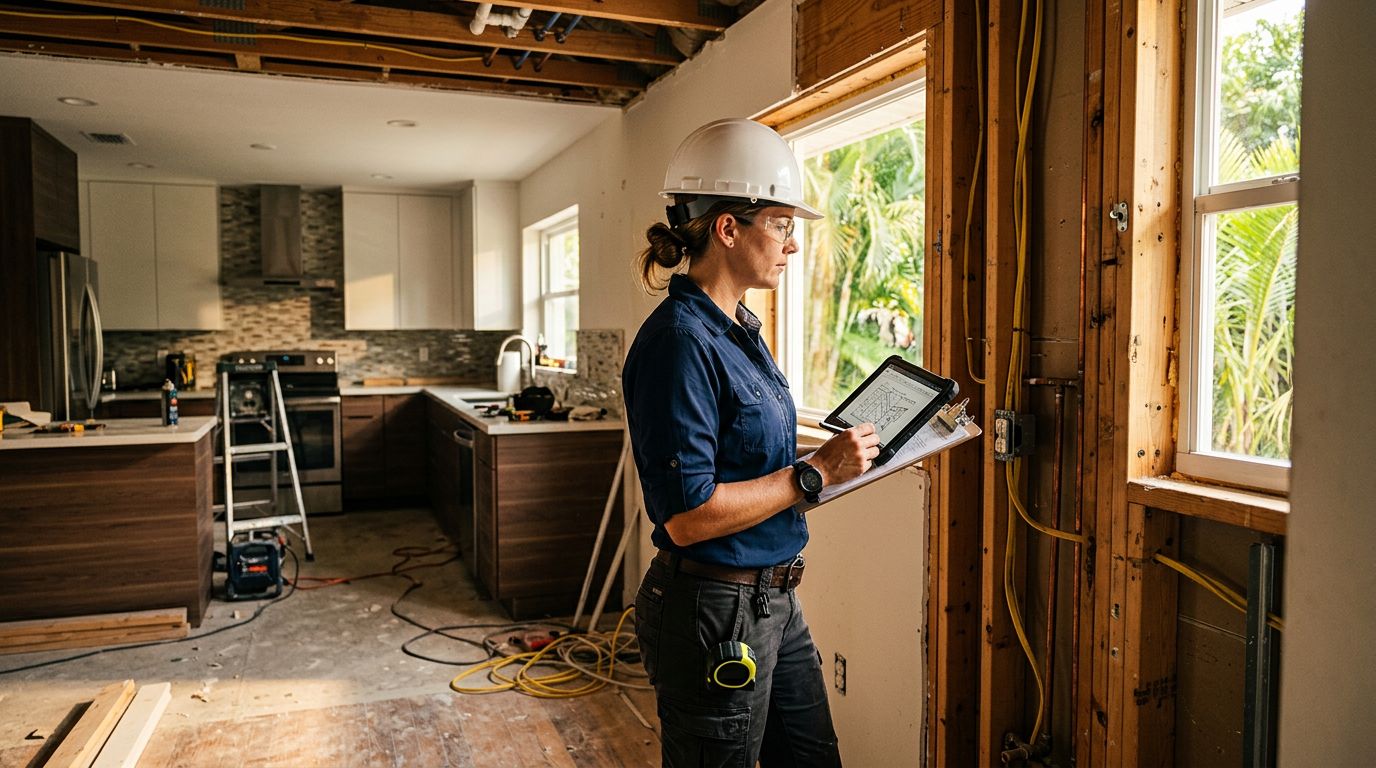
When walls are open during a renovation, you have more flexibility than you would during an emergency replacement. You can move the water heater, upgrade wiring, install new gas piping, or plan a larger mechanical area.
However, space alone shouldn't decide the purchase. A compact unit can still perform poorly if it can't meet peak demand.
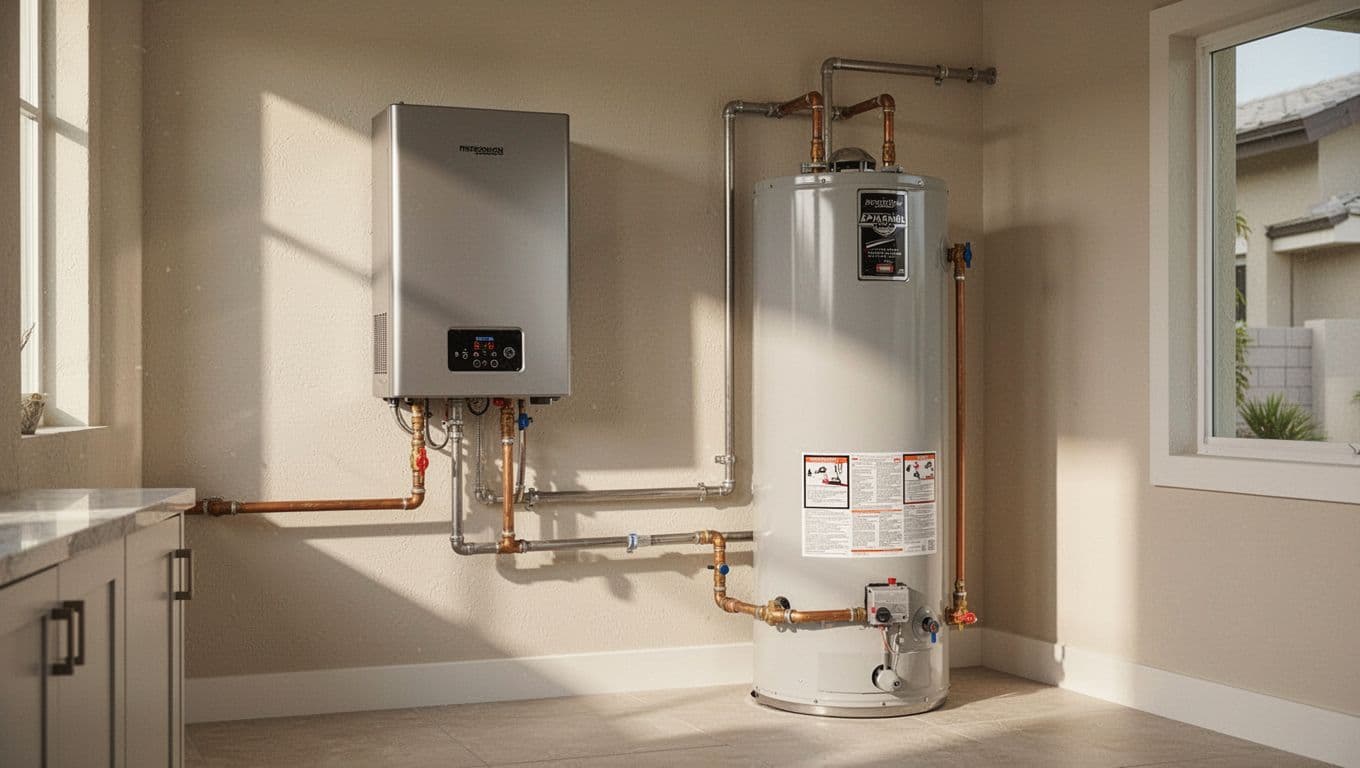
Tankless and traditional systems have different space and connection requirements.
A tankless unit frees floor space
Tankless heaters mount on a wall and heat water as it moves through the system. They don't store a large volume of hot water, so they can open up space in a garage, utility closet, laundry room, or bathroom addition.
That smaller footprint helps in compact Southwest Florida homes and condo-style layouts. It can also make room for shelving, a larger laundry area, or better access around other equipment.
Still, the unit needs proper clearances, service access, piping, drainage, and ventilation where applicable. A wall-mounted appliance isn't a reason to squeeze it into an inaccessible corner.
Storage tanks make capacity easy to understand
A traditional storage heater keeps a set volume of water hot. Its gallon capacity gives homeowners a straightforward way to compare equipment, although the tank can eventually run out during heavy use.
A family with several bathrooms may use hot water for showers, laundry, dishwashing, and a soaking tub within the same hour. A properly sized tank can handle much of that demand through stored capacity and recovery.
Tankless sizing works differently. The plumber must calculate the required flow rate and temperature rise, then account for fixtures running at the same time. Large homes may need multiple units or a recirculation system.
Comparing tankless water heaters Florida homeowners can choose
Tankless systems are appealing because they avoid heating a full tank when nobody needs hot water. They can also provide a continuous supply when the flow stays within the unit's rated capacity.
For tankless water heaters Florida homeowners install in existing homes, the surrounding infrastructure often matters more than the unit itself. An electric model may need substantial amperage. A gas model may need properly sized gas piping, new venting, and a condensate drain.
Tankless benefits are strongest in the right layout
An on-demand heater can be a good match for a smaller household, a seasonal property, or a remodel where floor space is limited. It also suits homeowners who want long showers without waiting for a storage tank to recover.
Because the unit only heats water during use, it avoids the standby heating that occurs inside a storage tank. That doesn't guarantee lower utility bills, because rates, usage habits, fuel type, incoming water temperature, and installation efficiency all affect the result.
Florida's warmer incoming water can reduce the temperature rise required for a shower or sink. As a result, a tankless heater may reach its rated flow more easily than it would in a colder climate.
Flow limits and power needs still matter
A tankless heater doesn't create unlimited hot water. If several fixtures demand more flow than the unit can heat, the water temperature may fall or the system may require a larger capacity.
Gas tankless units usually offer stronger flow for larger households, but they need an appropriate gas supply and venting route. Electric tankless models may require multiple circuits or a service upgrade, particularly in an older home with a smaller electrical panel.
Many gas models also depend on electricity for electronic controls and ignition. During an outage, a storage tank may still have heated water available, while a tankless unit may not operate.
Why traditional storage heaters still fit Florida homes
Storage tanks remain practical because they are familiar, widely available, and easy for plumbers to service. Replacement can also be simpler when the remodel keeps the existing fuel source, location, venting, and plumbing connections.
A conventional electric tank often fits homes without natural gas access. Gas storage heaters can work well where an existing gas line and approved venting are already in place.
Storage tanks suit predictable, moderate demand
A correctly sized tank provides a reserve for common household routines. It can support several short uses without requiring the heating system to respond to every faucet opening.
That reserve also helps when electrical service limits the use of a high-demand appliance. A traditional electric tank typically places fewer demands on the panel than an electric tankless heater.
The tradeoff is standby heat loss. The tank keeps water hot around the clock, even when the home is empty. This concern may matter more in a full-time residence than in a frequently vacant vacation home.
Florida conditions affect placement and maintenance
Warm utility rooms may reduce heat loss compared with colder environments, but Florida humidity still makes ventilation, drainage, and corrosion protection important. Coastal homes also need careful attention to exposed metal components and salt-laden air.
Storage heaters need space for the tank, service access, a drain pan where required, and a safe discharge route for relief-valve piping. A leak detection device or automatic shutoff may be a sensible addition during a remodel.
If the home sits in a flood-prone area, ask the plumber and local building department whether elevation, anchoring, or equipment-location rules apply.
Compare Florida water quality and utility costs
The cost comparison involves more than the purchase price. Include installation changes, maintenance, fuel availability, expected usage, rebates, and the condition of the home's electrical or gas service.
| Factor | Tankless system | Traditional storage system |
|---|---|---|
| Space | Uses wall space and leaves more floor area | Requires a dedicated floor footprint |
| Peak demand | Sized by flow rate and temperature rise | Sized by tank volume and recovery |
| Electrical needs | Electric models can require major capacity | Usually easier to match with existing service |
| Gas work | May require larger lines and specialized venting | Existing gas connections may simplify replacement |
| Maintenance | Heat exchanger may need periodic descaling | Tank may need flushing and anode inspection |
| Outage behavior | Usually needs power to operate | Retains available heated water until depleted |
Water quality can change the maintenance picture
Florida doesn't have one statewide water-hardness profile. Conditions vary by service area, treatment system, and whether the property uses municipal water or a private well.
Ask for local water-quality information before choosing equipment. Hard water can create mineral scale inside a tankless heat exchanger, which may reduce performance and require manufacturer-approved descaling.
Storage heaters have their own concerns. Sediment can collect at the bottom of the tank, while the anode rod protects the tank from corrosion and may need inspection or replacement. A water test can help identify filtration or softening needs before the new heater goes in.
Utility programs vary by location
Florida utilities don't offer one standard rebate for every water-heater type. Tallahassee Utilities has listed natural-gas rebates for both tank and tankless units, with different amounts for first-time installations and replacements. Florida Public Utilities materials also separate incentive categories by equipment type.
Some electric programs favor heat-pump water heaters instead of standard electric tanks or electric tankless models. Lakeland Electric has published a heat-pump water-heater rebate, while Kissimmee Utility Authority has listed a rebate based on a percentage of eligible heat-pump equipment costs.
Florida's HEAR program also includes potential assistance for eligible heat-pump water heaters, with published benefits of up to $1,750. Income rules, program funding, equipment requirements, and documentation can change. Check with your utility and program administrator before including an incentive in your budget.
Plan the installation before demolition starts
Water-heater selection affects plumbing, electrical, gas, framing, ventilation, and inspections. That makes it an early design decision, not an appliance choice to postpone until cabinets and tile are already ordered.
A coordinated plan can prevent an attractive remodel from ending with an exposed pipe, undersized circuit, or inaccessible service area.
Retrofitting an existing home takes careful review
A tankless conversion may require more work than replacing one storage tank with another. An electrician may need to evaluate panel capacity for an electric unit. A plumber may need to resize gas piping or install a new vent system for a gas model.
The water-heater location matters as well. Moving the unit can shorten hot-water runs, but it may increase drain, vent, gas, or electrical costs. A remote bathroom may also benefit from a dedicated recirculation plan, although pumps and controls add equipment and operating considerations.
During a bathroom remodeling project, discuss the heater before the walls close. The same applies to a kitchen remodel with a new dishwasher, sink location, or laundry area.
New construction offers more design freedom
Custom construction allows the plumbing layout, utility room, fuel source, and electrical service to work together from the beginning. A larger home might use more than one tankless unit, a central storage system, or a heat-pump water heater based on its design and utility plan.
A custom home builder in Fort Myers can coordinate those decisions with the mechanical trades before construction begins. For an existing home, Get a Free Estimate can help establish the work involved in a remodel that includes water-heater changes.
Questions to ask your licensed plumber
A product brochure can't tell you whether a system fits your home. Ask for a site-specific recommendation that includes the equipment, installation, service needs, and required approvals.
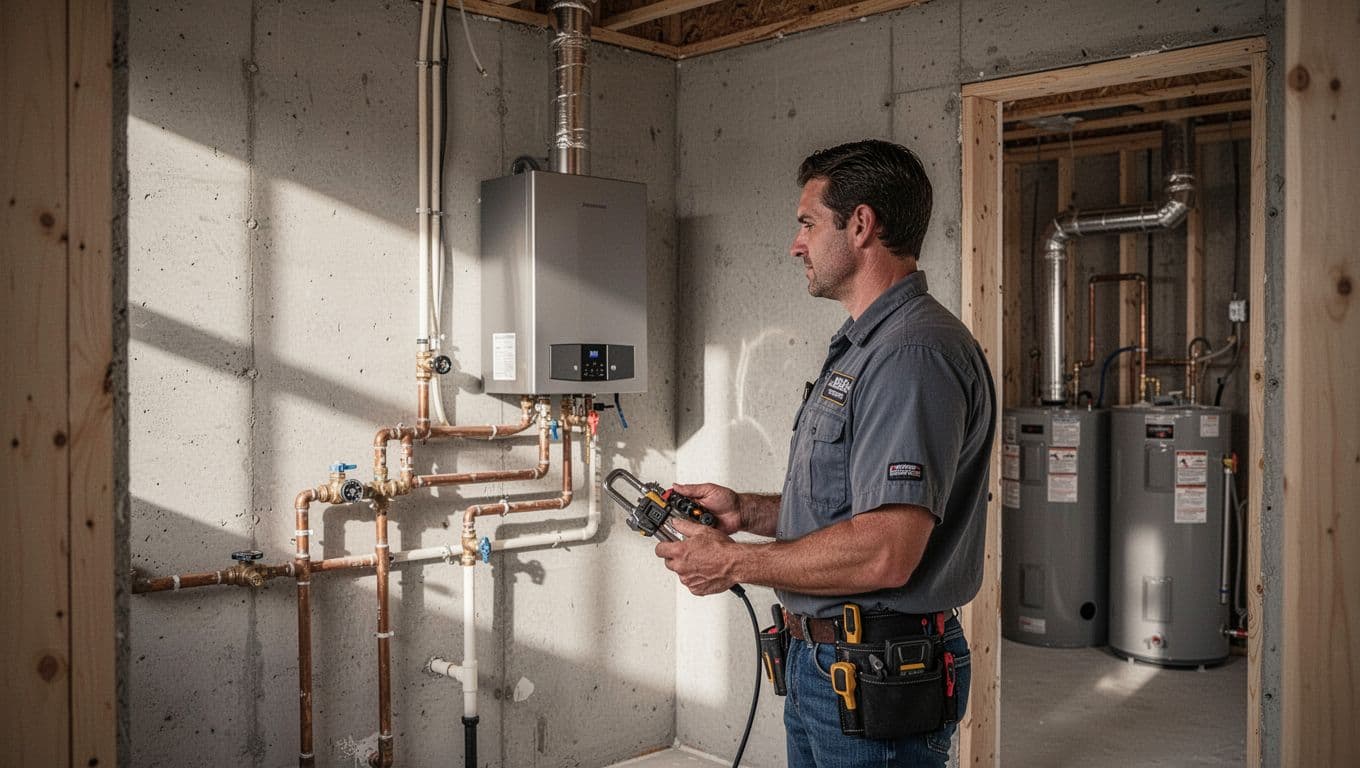
Before ordering the unit, ask:
- What is the home's peak hot-water demand when multiple showers, appliances, or tubs run together?
- What flow rate and temperature rise does the proposed tankless unit support?
- Can the existing electrical panel handle an electric tankless system without an unsafe overload?
- Is the current gas line large enough, and does the proposed unit need new venting or condensate drainage?
- Does the home use municipal water or a well, and should the water be tested for hardness or other treatment concerns?
- What maintenance does the manufacturer require, including flushing, descaling, tank draining, or anode inspection?
- Which permits, inspections, local amendments, and utility rebate documents apply in this municipality?
- Where will the equipment sit, and will it remain accessible for service after the remodel?
- How will the system perform during a power outage?
- Would a heat-pump storage heater fit the home's budget, electrical service, and available incentives better?
Florida's plumbing provisions govern both storage and tankless installations, but the enforced code edition and local procedures can vary. Current Florida code materials address potable-system materials, temperature control, relief protection, and storage-tank insulation. They also identify a 140 F maximum outlet temperature for tankless units used for domestic purposes.
Storage heaters operating above atmospheric pressure need approved temperature-and-pressure relief protection. Tanks also need permanent maximum working-pressure markings. Products connected to potable water systems must meet applicable lead-content requirements, including NSF 372 provisions. Your plumber should confirm the exact requirements for the selected model and jurisdiction.
Choose the system that fits the remodel
Tankless water heaters Florida homeowners consider can save space and provide a steady supply, but they may require more electrical, gas, venting, or maintenance planning. Traditional storage heaters offer familiar installation, reserve capacity, and broad fuel flexibility, although they need floor space and experience standby heat loss.
Florida's warm water supply can help tankless performance, while humidity, coastal air, local water quality, and utility programs still affect the long-term decision. The best choice is the one that matches the home's demand and the infrastructure behind the walls.
Ask for a written comparison that includes equipment, installation changes, maintenance, permits, rebates, and outage behavior. A clear scope now is more useful than a low appliance price that leaves essential work out of the remodel budget.