How to Verify a Florida Contractor License and Insurance
A polished proposal and friendly sales meeting don't prove that a builder is qualified to work on your home. Before you approve a kitchen remodel, bathroom renovation, or custom home, verify the Florida contractor license and confirm that insurance coverage is current.
Florida homeowners should check more than a license number. The name, business, qualifier, license category, expiration date, general liability policy, and workers' compensation status should all match the project. Use this process before signing, paying a deposit, or allowing work to begin.
Why a Florida contractor license check matters
A Florida contractor license shows that a contractor holds the required state or local credential for a particular type of construction work. It doesn't guarantee perfect workmanship, but it gives you a reliable starting point for checking identity, legal status, and authorization.
The license belongs to a qualified individual, while a business may operate under that individual's qualification. That distinction matters. A company can present a legitimate business name, yet the person connected to its license may no longer qualify the company.
For example, a contractor might advertise custom home construction but hold a license that doesn't match the work described in your agreement. A kitchen renovation may also involve structural changes, plumbing, electrical work, gas connections, or additions. The main contractor and each specialty subcontractor need the appropriate qualifications for their work.
Florida also distinguishes between state-certified and state-registered contractors. A state-certified contractor can generally work throughout Florida within the license category. A registered contractor may have authority tied to a local jurisdiction, so you may need to confirm the credential with the relevant county or city.
A current license is only one part of due diligence. Insurance protects against certain losses, injuries, and property damage that can occur during construction. Without proper coverage, a dispute or accident could become your financial problem.
How to verify a Florida contractor license
The Florida Department of Business and Professional Regulation, or DBPR, provides the official public license search through MyFloridaLicense. You can search by license number, individual name, or business name.
Follow these steps:
- Request the contractor's complete information. Ask for the legal business name, any trade name, license number, name of the qualifying contractor, and physical business address. Compare those details with the proposal and contract.
- Search by license number first. A number usually produces the clearest result. If the contractor doesn't provide one, search the individual's full name and the business name separately.
- Match the individual to the business. DBPR recommends checking the business record and then searching for the individual license. Confirm that the listed qualifier is the person connected to the company you plan to hire.
- Review the license status and expiration date. Look for a status of "Current, Active" and confirm that the expiration date has not passed. A license marked delinquent, suspended, revoked, or null and void needs an explanation before you proceed.
- Confirm the license type and category. The classification should fit the work in your contract. If your project includes a major addition, structural changes, or new construction, ask how the contractor's category covers that work.
- Save a copy of the record. Download or print the search result with the date you checked it. Keep it with your proposal, contract, insurance documents, and payment records.
A business name on a truck or proposal isn't enough. The DBPR record should connect the company to the individual who qualifies it.
The license record may also show related business information and required coverage details. Review every field carefully rather than stopping after seeing a license number.
Make sure the license covers your project
Ask the contractor to explain the license category in plain language. You don't need to become a licensing specialist, but you should understand whether the credential covers the contract's main responsibilities.
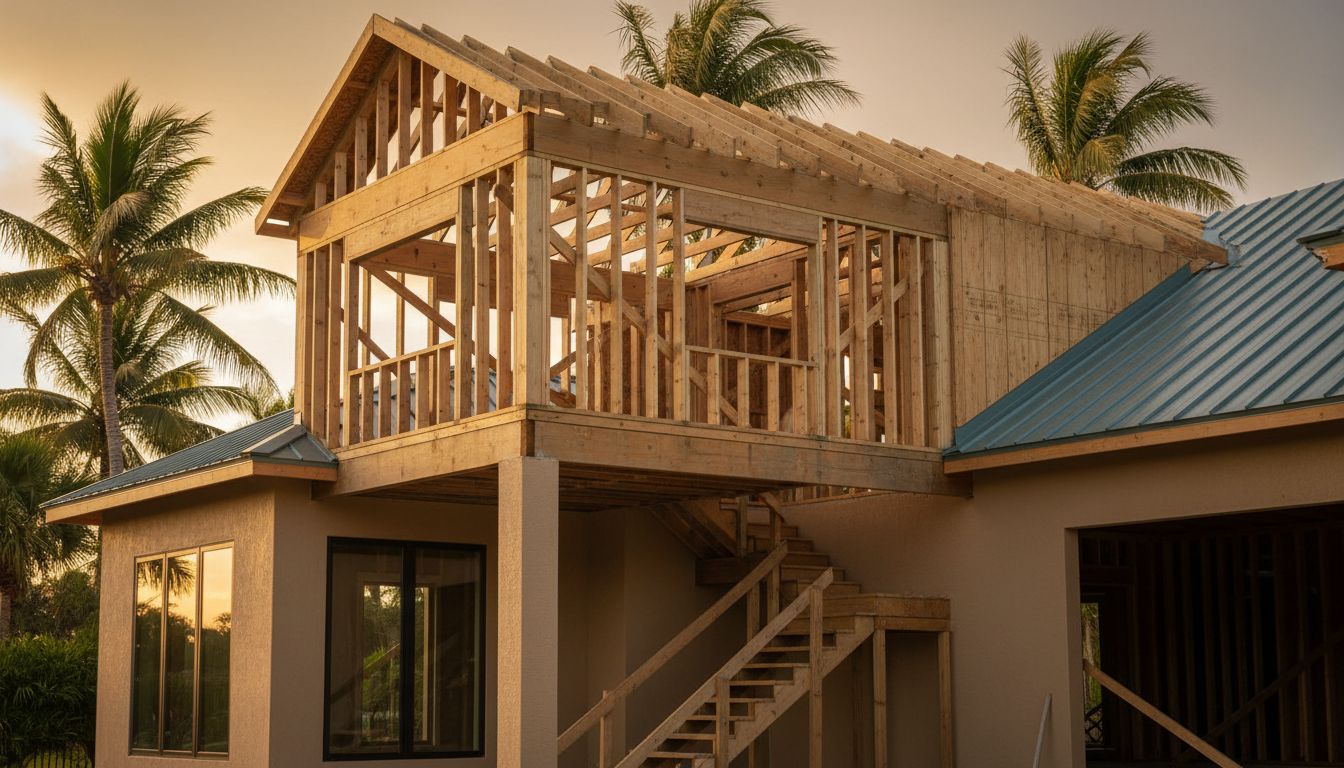
A bathroom remodel with new tile and fixtures differs from a project that moves plumbing, removes walls, changes electrical service, or expands the footprint. Likewise, a custom home requires a license category suited to new residential construction, along with properly licensed trades for specialized work.
If a contractor plans to hire subcontractors, ask who will handle plumbing, electrical, roofing, HVAC, and other regulated work. Verify those businesses when the work falls outside the main contractor's scope.
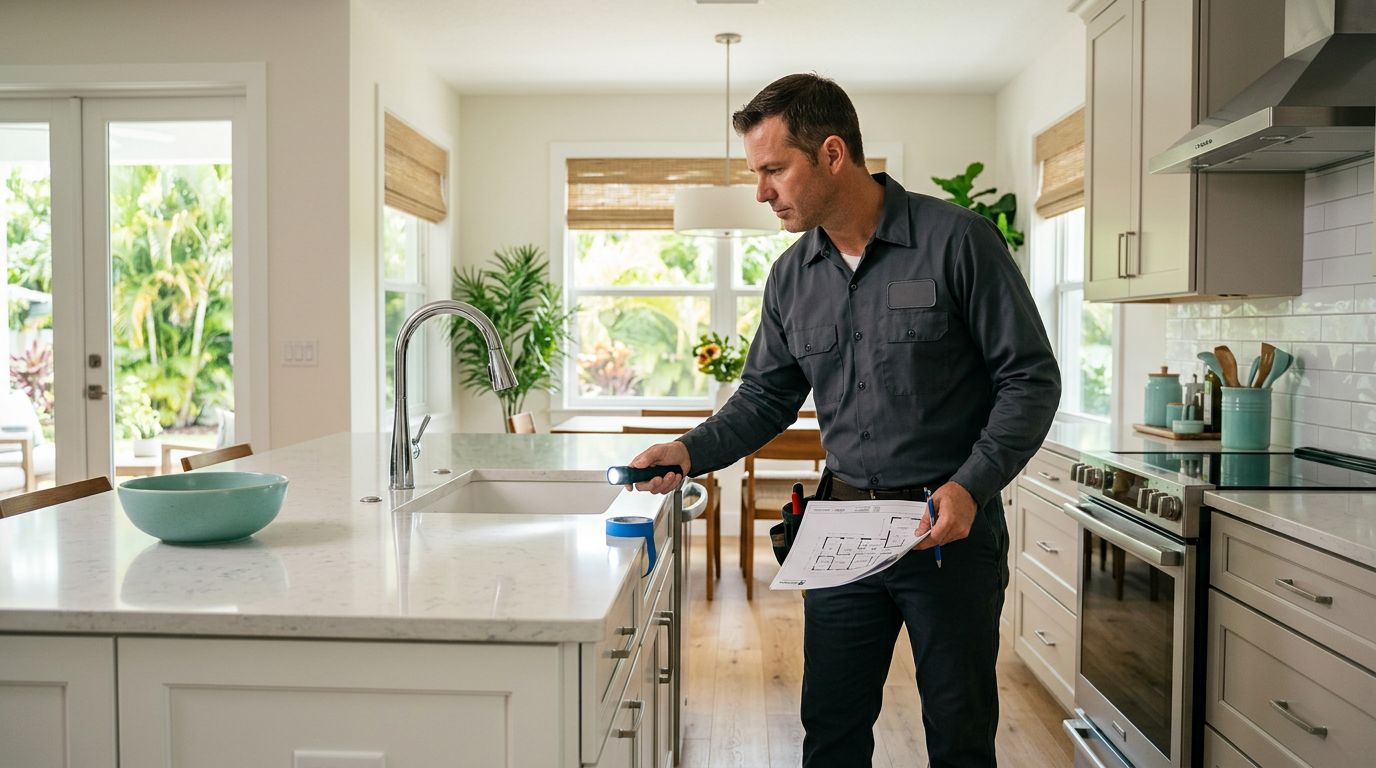
For a Southwest Florida kitchen project, you can also review the company's custom kitchen remodeling services while comparing the stated scope with the contractor's license classification. The project description should be detailed enough to show who handles design, permits, demolition, installation, and inspections.
How to verify contractor insurance in Florida
Ask for insurance documents before you sign the contract. At minimum, request proof of general liability insurance and workers' compensation coverage, when required.
General liability insurance may cover certain third-party bodily injury and property damage claims caused by covered operations. It doesn't cover every construction dispute, defective installation, or contract issue. The policy terms, exclusions, limits, and applicable endorsements control what the insurer will pay.
Workers' compensation is separate. It addresses job-related injuries for covered employees and can reduce the risk that an injured worker seeks payment from the homeowner. Florida construction businesses have specific workers' compensation rules, and the requirements can depend on the business structure and workforce. If a contractor claims an exemption, ask for documentation and verify the claim independently.
Review the certificate of insurance for:
- The contractor's legal business name
- The insurance company and agent
- Policy numbers
- General liability limits
- Policy effective and expiration dates
- Workers' compensation information, if shown
- Any project-specific or additional-insured information promised in your contract
Then contact the insurance agent or carrier using contact details you obtain independently. Don't rely only on a phone number printed on a document handed to you by the contractor. Ask the agent to confirm that the policy is issued to the same legal business and is active on the date of your call.
For workers' compensation, use the Florida Division of Workers' Compensation Proof of Coverage search when applicable. If the database doesn't show coverage, ask the contractor for a clear explanation and supporting documentation before work starts.
Why a certificate of insurance isn't enough
A certificate of insurance is useful, but it is not the policy itself. It usually reports that coverage existed or was represented as active when the certificate was issued. It doesn't guarantee that the policy remains active today.
A policy may later be canceled, expire, change carriers, or carry exclusions that the certificate doesn't explain. The certificate also doesn't change the policy's terms or create coverage for a person who isn't insured under the contract.
Treat a certificate as a starting document, not final proof. Independent confirmation from the insurer is the stronger check.
If your contract requires you to be an additional insured, ask the agent whether the contractor can provide the proper endorsement. A certificate that lists your name alone may not give you additional-insured rights.
Also ask how subcontractors are covered. Your contractor's insurance documents may not prove that every subcontractor has workers' compensation or liability coverage. Request certificates for major subcontractors when the project involves several trades or higher-risk work.
Confirm coverage stays active during construction
Insurance verification shouldn't happen once and disappear into a project folder. A long kitchen remodel, room addition, or custom home can continue for months, and policies can expire during that time.
Before work begins, record the policy expiration dates. For a longer project, request updated certificates before those dates. You can also ask the insurer to notify you if the policy is canceled, although notification terms depend on the policy and your status.
Add these checks to your project schedule:
- Confirm the license is still active before the contract is signed.
- Verify insurance immediately before the first day of work.
- Check updated coverage if the project continues past a policy expiration date.
- Recheck coverage after a change in contractor, business name, or major subcontractor.
- Keep copies of every updated certificate and written confirmation.
The same process applies when the contractor changes midway through the job. A new company, replacement qualifier, or additional trade can change the license and insurance picture.
Clear contracts help, too. The agreement should identify the legal contractor, license number, scope of work, payment schedule, permit responsibilities, insurance expectations, and subcontractor responsibilities. When comparing bids, a detailed remodeling estimate guide can help you spot missing work that may otherwise appear later as an extra charge.
Warning signs that deserve a pause
Some problems are easy to spot. Others look minor until they create a serious dispute.
Pause the project and ask questions if:
- The license search returns no matching individual or business.
- The listed qualifier doesn't know about your project or no longer works with the company.
- The license is inactive, expired, suspended, or outside the project scope.
- The contractor refuses to provide a license number or insurance certificate.
- The business name on the certificate differs from the contract without a clear explanation.
- The agent cannot confirm active coverage independently.
- The contractor pressures you to pay before verification.
- The contractor says workers' compensation is unnecessary but won't provide documentation.
- The proposal leaves permits, specialty trades, or insurance responsibilities unclear.
A mismatch doesn't always prove fraud. Businesses change names, use DBAs, and update qualifiers. Still, the contractor should resolve the discrepancy with documents, not a verbal promise.
If you can't confirm the record, contact DBPR's Customer Contact Center at 850-487-1395. For a registered contractor, check with the city or county that issued the local registration or Certificate of Competency.
Conclusion
Checking a Florida contractor license means matching the license to the individual, business, expiration date, status, and actual project scope. Insurance requires the same care. Read the certificate, then confirm general liability and workers' compensation coverage directly with the insurer or the appropriate Florida coverage database.
Keep those records current through the final inspection and payment. For a remodeling or custom construction project, you can also Get a Free Estimate after confirming who will perform the work and how the project will be protected. A few careful checks before construction can prevent much larger problems later.