Whole House Rewiring Costs in Southwest Florida for 2026
A full rewire can feel like a hidden expense until the walls come open. In Southwest Florida, the price often lands higher than people expect because older homes, coastal conditions, and permit work can add real labor and material costs.
If you have been searching for home rewiring cost Florida , the short answer is this: most whole-house rewires in 2026 run between $10,000 and $30,000 in Southwest Florida. The final number depends on the house itself, not just the square footage.
What a whole house rewire costs in 2026
For many homeowners, the first question is simple: what does it cost by home size? The ranges below give a practical starting point for Southwest Florida homes in 2026.
| Home size | Typical 2026 rewiring cost | Common project type |
|---|---|---|
| Small home | $5,000 to $10,000 | Fewer circuits, easier access, limited repairs |
| Mid-size home | $10,000 to $20,000 | Standard whole-house rewire with moderate patching |
| Large home | $20,000 to $30,000+ | More circuits, more labor, more drywall work |
That spread is wide for a reason. A 1,400-square-foot home with open attic access is a different job than a 2,800-square-foot home with finished walls, multiple bathrooms, and a crowded electrical panel.
A useful rough guide is $5 to $17 per square foot . Homes at the lower end usually have simple access and few surprises. Homes at the higher end usually need panel changes, wall repair, or more than one inspection visit.
The cheapest quote is not always the lowest real cost. A low bid can leave out drywall repair, panel upgrades, or permit work.
What pushes the price up in Southwest Florida
Southwest Florida homes deal with a few extra issues that matter during a rewire. Older housing stock is part of it. So are weather, humidity, salt air, and renovation history.
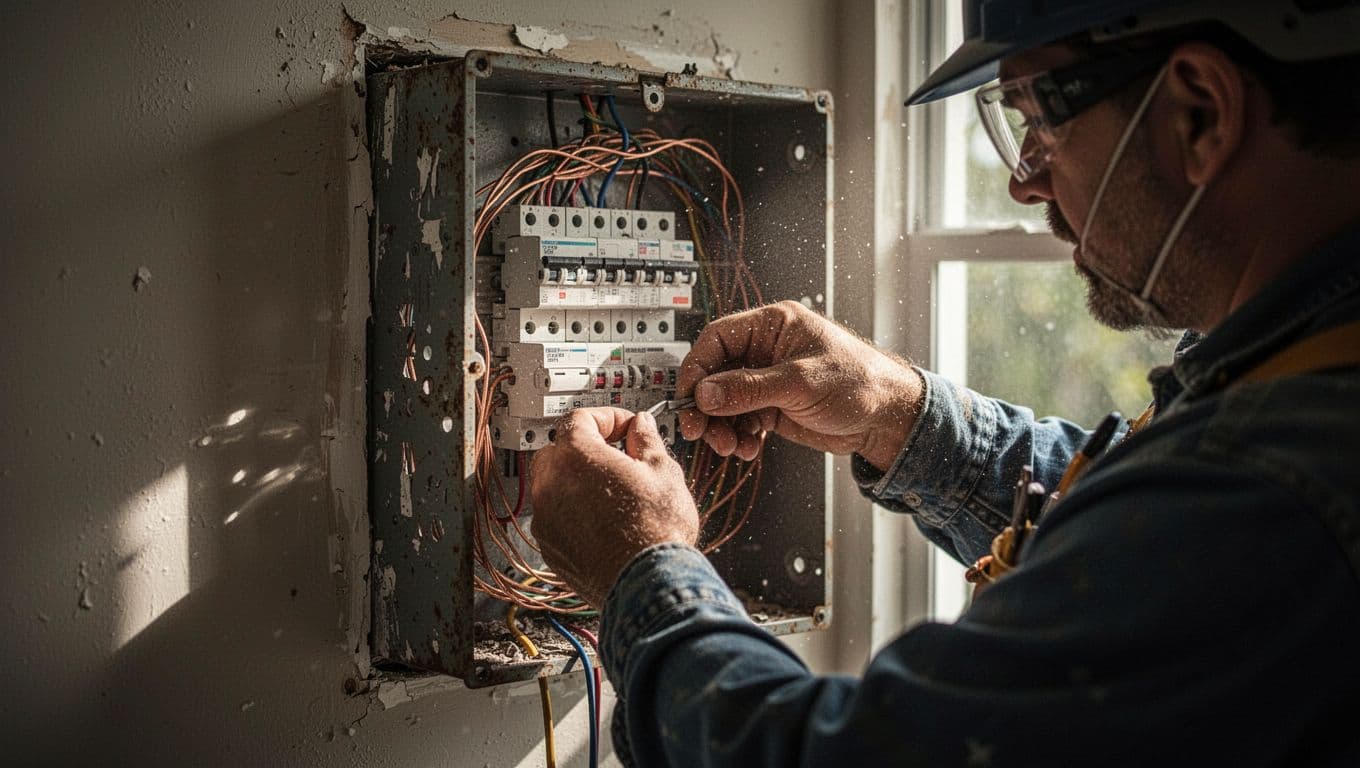
The biggest price drivers are easy to spot once you know what to look for:
- Home size matters because more rooms mean more wire, outlets, switches, and labor.
- Age of the wiring matters because older systems often hide brittle insulation or outdated layouts.
- Accessibility matters because open attic spaces and unfinished walls save time.
- Occupancy status matters because a vacant home is easier to rewire than one you live in every day.
- Drywall repair matters because closed walls need patching, texture work, and paint.
- Panel upgrades matter because older panels may not support modern load demands.
- Permit requirements matter because Southwest Florida counties want work checked and approved before it is closed up.
Coastal homes can also show more wear around service equipment. Salt air does not help metal parts, and storm prep often pushes homeowners to upgrade more than one part of the system at once.
A rewire is not only about new wire. It often becomes a broader reset for the electrical system.
Older homes, aluminum wiring, and knotty surprises behind the walls
Many Southwest Florida neighborhoods have homes built before modern electrical needs took over. That includes houses with older breaker panels, undersized circuits, and wiring that was never meant to support today's kitchens, baths, HVAC, and electronics.
Aluminum branch wiring deserves special attention. Some homes from the 1960s and 1970s still have it, and it can require repair methods or full replacement depending on its condition and the rest of the system.
Knob-and-tube wiring is less common, but remnants can still appear in very old houses or in sections that were changed over time. When it turns up, it usually means more inspection, more labor, and a higher budget.
Remodeling jobs create their own cost pattern. A kitchen or bath renovation often opens the door for a rewire because walls are already exposed. That can make the work more efficient, but it can also reveal old circuits that need to be changed right away.
For homeowners planning a renovation, timing matters. If the electrical work happens during a kitchen remodel timeline in Southwest Florida, the electrician can work before cabinets, tile, and paint lock everything in place.
Partial rewires vs full rewires
Not every house needs a full replacement. Some homes only need a partial rewire, which might focus on a kitchen, bath, addition, or problem circuit. That can save money, but it only makes sense when the rest of the system is in good shape.
A partial rewire is often used when:
- one area has unsafe wiring,
- a remodel changes the layout,
- a new appliance load needs a dedicated circuit,
- or the rest of the home already meets code.
A full rewire makes more sense when the system is spread thin. If the house has repeated breaker trips, old two-prong outlets, brittle insulation, or a panel that cannot support modern demand, patching one area at a time can become expensive fast.
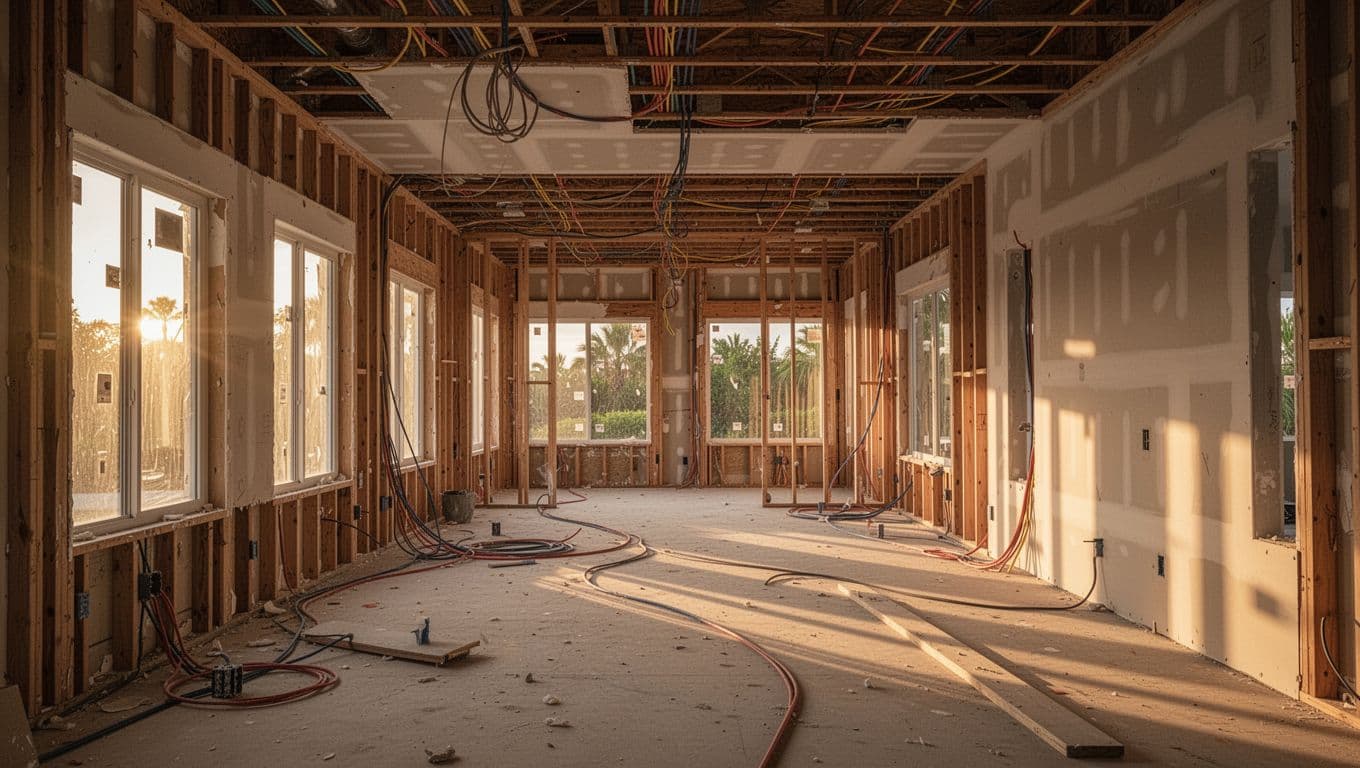
The choice often comes down to the age and condition of the whole system. A small partial rewire may cost a few thousand dollars. A full-home project can climb fast once walls, permits, and panel work enter the picture.
A good electrician will tell you where the line falls. If they recommend a full rewire, ask what is unsafe, what is outdated, and what can wait.
Why permits and licensed electricians matter
Electrical work in Southwest Florida is not a place to cut corners. The code exists for a reason, and rewiring touches fire safety, shock risk, and long-term reliability.
Licensed electricians understand the local permit process, inspection steps, and load requirements. They also know how to size circuits for modern kitchens, baths, laundry rooms, garages, and outdoor areas. That matters in homes that are adding new appliances or upgrading for storm prep.
Storm resilience is part of the conversation here too. Many homeowners want better surge protection, stronger service equipment, or room for a generator connection. A rewire gives you a chance to address those needs while the walls are already open.
Permits can add time and cost, but they also protect the project. Inspections catch mistakes before they get buried behind drywall. That is better than finding a problem after paint and trim are already finished.
Working with a licensed pro also helps when insurance or resale comes into play. Buyers in Cape Coral, Fort Myers, Naples, Punta Gorda, and Sanibel often ask about electrical updates. A properly documented rewire can answer a lot of those questions.
Getting an accurate quote for your home
No online estimate can replace an on-site look. The real number depends on how the house is built, how the wires are routed, and what the walls are hiding.
A solid quote should account for:
- square footage,
- number of rooms and circuits,
- panel condition,
- attic and crawlspace access,
- drywall repair,
- permit fees,
- and whether you plan to live in the home during the work.
If your project is part of a remodel or custom build, it helps to get the electrical estimate early. That keeps the scope clear before cabinets, flooring, and finishes go in. It also reduces the chance of surprise change orders later.
If you are comparing bids, ask each contractor the same questions. Does the price include patching? Is the panel included? Will the crew handle permits and inspections? Are new devices, breakers, and trim work part of the number?
For homeowners ready to get a real number, the next step is simple. Get a Free Estimate and compare the quote against the scope of work, not just the bottom line.
Conclusion
A Southwest Florida rewire in 2026 usually falls between $10,000 and $30,000 , but the range only tells part of the story. The real cost depends on access, age of the wiring, panel upgrades, drywall repair, occupancy, and local permit requirements.
Older homes, coastal wear, and remodel-driven updates can all push the price higher. A licensed electrician can tell you whether your house needs a partial update or a full reset, and that answer matters far more than a guess from a chart.
When wiring gets old, the safest plan is the clearest one. Start with an on-site quote, confirm the scope, and treat the electrical system like the backbone of the home it is.