Shower Niche vs Corner Shelf for Florida Bathrooms
A shower niche or corner shelf can shape how comfortable and clean your bathroom feels every day. The right choice depends on your shower size, storage needs, cleaning habits, and the way moisture moves through your Florida home.
A recessed niche gives you built-in storage with a finished, custom look. A corner shelf usually costs less, takes up less wall space, and works well when a niche would require major framing changes. Before choosing, compare installation, waterproofing, maintenance, and long-term value.
Key Takeaways
- A shower niche offers a cleaner built-in appearance and more usable storage.
- A corner shelf usually creates less disruption during a bathroom remodel.
- Proper waterproofing matters more than the storage style in Florida's humid climate.
- Porcelain tile, solid-surface shelves, and corrosion-resistant hardware are practical material choices.
- Choose a niche for a custom remodel, or a corner shelf when budget and schedule matter most.
How a Shower Niche Works in a Florida Bathroom
A shower niche is a recessed opening built into the shower wall. The installer frames or cuts the opening, adds a waterproofing system, and finishes the interior with tile or another approved surface. Many homeowners use niches for shampoo bottles, soap, razors, and other daily items.
Because the niche sits inside the wall, it keeps bottles off the shower floor. It also removes the bulky look of a hanging caddy. A wide horizontal niche can hold several products, while a smaller vertical niche may fit a narrow shower wall.
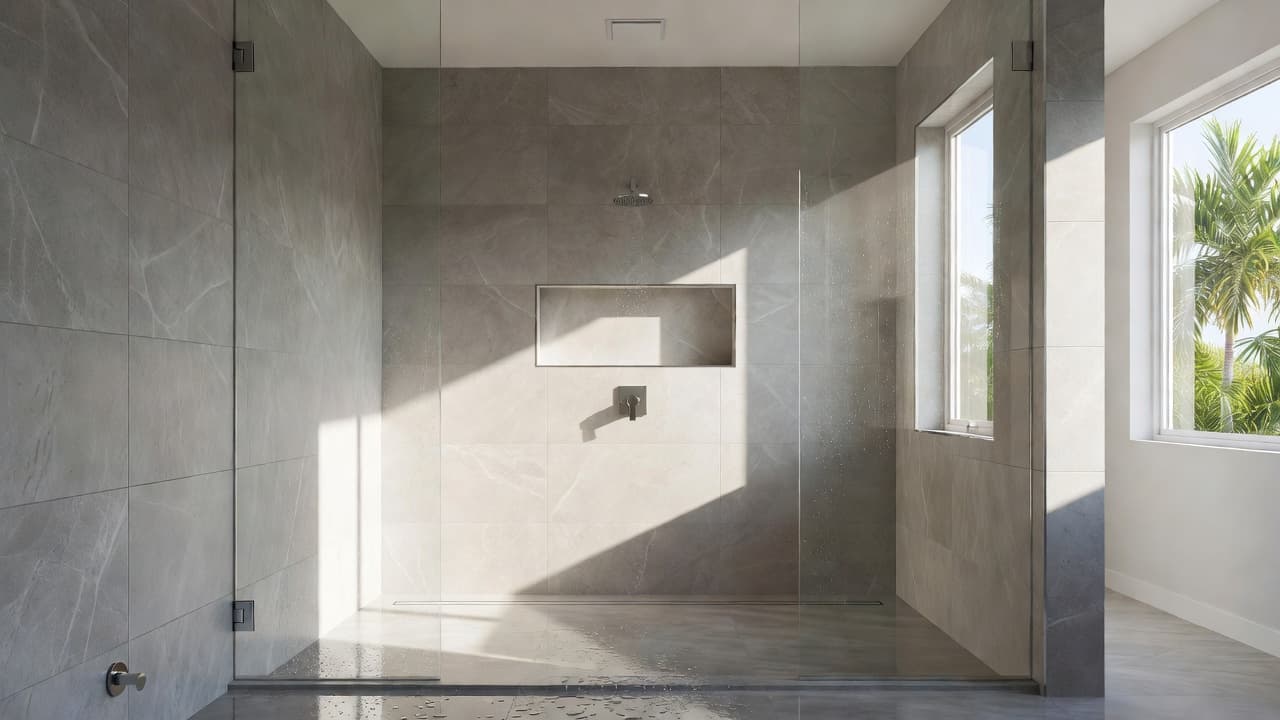
The main advantage is visual continuity. When the niche uses the same porcelain tile as the surrounding wall, it looks intentional and permanent. Contrasting tile, mosaic tile, or a quartz shelf can create a focal point without adding another fixture.
However, a niche requires more planning than a shelf. The contractor must check wall framing, plumbing lines, electrical wiring, shower valve placement, tile layout, and finished dimensions. A niche placed too low collects more water and becomes harder to use. One placed behind the showerhead may receive constant spray and hold moisture.
Waterproofing also deserves close attention. Tile and grout resist water, but they aren't the waterproof barrier behind the wall. A quality installation uses a compatible membrane or waterproof backer system, sealed corners, and properly treated penetrations. Products such as Schluter-KERDI and wedi are examples of systems contractors may specify, although the complete assembly must follow the manufacturer's instructions.
A niche works especially well when you are already rebuilding the shower walls. If the remodel includes new plumbing, a larger shower footprint, or custom tile work, the added planning can fit naturally into the project. Homeowners considering custom bathroom design and construction can review niche placement during the early design stage.
When a Corner Shelf Makes More Sense
A corner shelf sits where two shower walls meet. It can be built into the tile installation, attached as a surface-mounted shelf, or installed as a prefabricated corner unit. Triangular shelves are common because they use space that would otherwise remain empty.
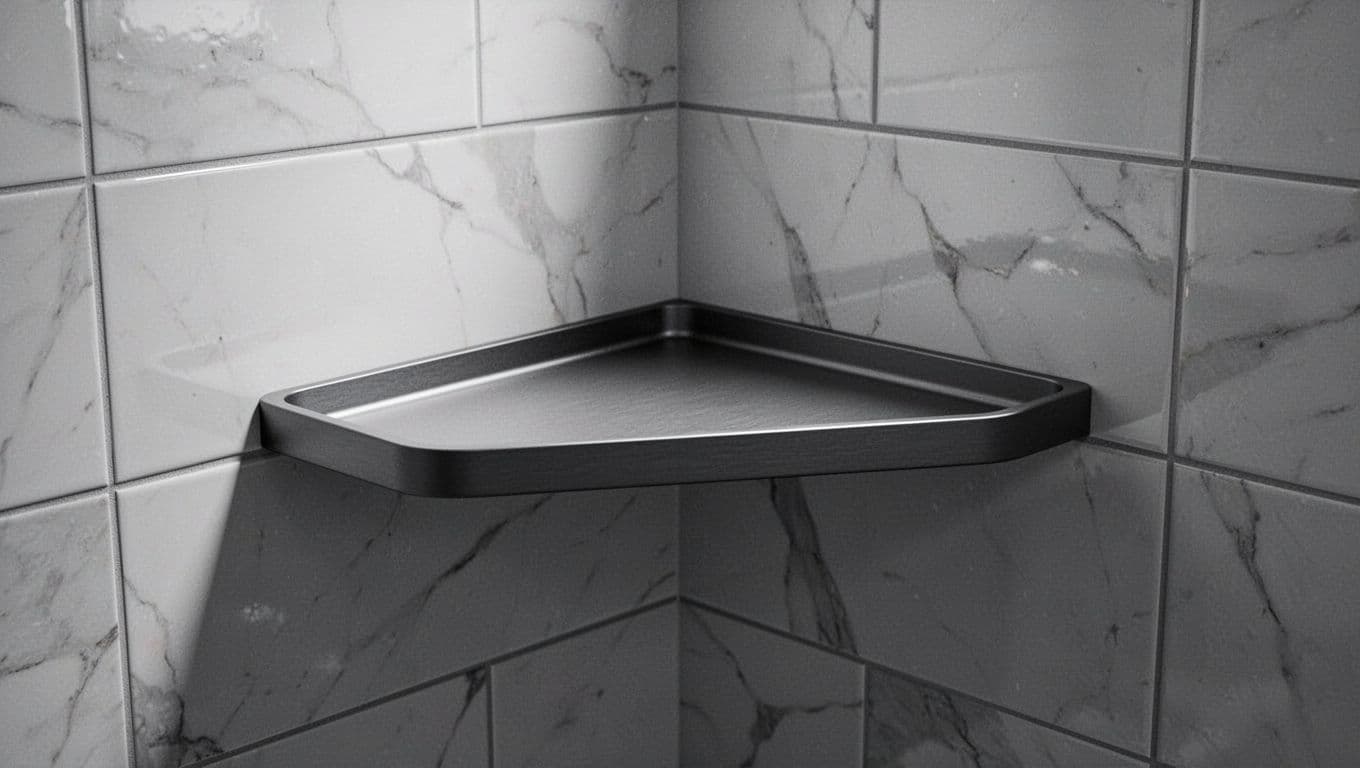
The biggest benefit is simpler installation. A surface-mounted shelf doesn't require a large opening in the wall, so it can work well in an existing shower. During a full remodel, a tiled corner shelf still needs careful waterproofing, but the installer doesn't need to create a separate cavity.
Corner shelves are also flexible. You can add one after the shower is complete, replace it later, or install two at different heights. That makes them useful in shared bathrooms where one person needs lower storage and another prefers a higher shelf.
The tradeoff is capacity. A triangular shelf typically holds fewer large bottles than a wide niche. Bottles may also be more visible, which can make the shower look busier. A shelf with a narrow lip can allow containers to slide, while a poorly sloped shelf may hold standing water.
The mounting method affects durability. Drilling into finished tile can damage the waterproofing layer if the installer doesn't seal the fasteners correctly. Adhesive shelves avoid some drilling, but they need a clean, dry surface and a product rated for wet areas. Cheap metal units can corrode, especially in coastal Southwest Florida homes where salt air adds another source of wear.
For a quick update, a quality surface-mounted corner shelf is often the practical answer. It can add storage without changing the shower's basic structure. For a new shower, a built-in corner shelf offers a middle ground between a recessed niche and a temporary caddy.
Florida Moisture Makes Waterproofing the First Decision
Florida bathrooms face heavy humidity, frequent air-conditioning cycles, and long periods when wet surfaces dry slowly. Southwest Florida homes also deal with strong coastal moisture in areas such as Cape Coral, Fort Myers, Naples, Punta Gorda, and Sanibel. Those conditions don't make a niche or shelf unsafe, but they make installation quality more important.
The storage feature must connect to the shower's full waterproofing plan. A contractor should protect the wall assembly, seal changes in plane, slope horizontal surfaces toward the drain, and use compatible sealants at joints and penetrations. The shelf or niche should never create a pocket where water can sit behind the tile.
Cement backer board is useful in wet areas, but standard cement board alone isn't a complete waterproofing system. The installer still needs a properly selected membrane or surface treatment. Manufacturers also set requirements for seams, fasteners, corners, and transitions, so mixing unrelated products can create problems.
Material selection matters too. Porcelain tile has low water absorption and is a common choice for shower walls. Solid-surface materials, quartz, and properly sealed stone can create durable niche shelves. Natural stone needs more care because some varieties absorb moisture or react poorly to certain cleaners.
Ventilation helps the entire bathroom dry faster. Use the exhaust fan during showers and leave it running after bathing, based on the fan manufacturer's guidance. A fan that vents outdoors is preferable to one that releases damp air into an attic or wall cavity. Keep grout lines clean, repair cracked caulk, and remove bottles that hide mildew-prone areas.
A beautiful niche can't compensate for a wet wall assembly. Waterproofing should be approved before the first tile is installed.
Ask who will install the waterproofing, which system they plan to use, and how they will test or inspect the work. A clear answer matters more than whether the design includes a niche or shelf.
Shower Niche vs Corner Shelf: A Practical Comparison
The best option depends on the scope of your remodel. A homeowner replacing the entire shower has more design freedom than someone updating tile around existing plumbing.
| Factor | Shower niche | Corner shelf |
|---|---|---|
| Appearance | Built-in and visually integrated | More visible, with a lighter footprint |
| Storage | Usually holds more products | Best for a smaller number of bottles |
| Wall changes | May require framing and utility checks | Usually requires less structural work |
| Cleaning | Fewer exposed brackets, but more corners | Easy to access, though edges collect residue |
| Waterproofing | Needs careful cavity protection | Needs sealed joints or mounting points |
| Best fit | Custom remodel or new construction | Existing shower or simpler renovation |
| Design flexibility | Custom width, height, tile, and trim | Easy to add, move, or replace |
Choose a niche when you want storage that looks permanent and matches a carefully planned tile layout. It also makes sense for a large walk-in shower, a primary bathroom renovation, or a custom home where wall dimensions can be set around the design.
Choose a corner shelf when the shower is narrow, the wall contains plumbing, or the project needs to stay within a tighter budget. A shelf can also suit homeowners who prefer to keep shampoo and soap in one easy-to-reach location instead of spreading them across a long niche.
Placement should match the users. The shelf or niche needs to be reachable without bending or stretching, yet high enough to stay clear of the shower floor. Keep it away from the direct spray when possible. In a tub-shower combination, check that the location works for both standing and bathing.
The choice can affect scheduling, especially when tile, framing, or plumbing changes are involved. For planning help, review realistic Southwest Florida bathroom remodeling project timelines before setting a move-in date.
A Simple Decision Guide for Homeowners
Use your current project scope as the starting point. If you are building a new shower or removing the walls, the niche can deliver more storage and a stronger custom finish. If the walls are staying in place, a corner shelf may provide the function you need with fewer complications.
Your budget also matters, but compare complete installation costs rather than the shelf price alone. A niche may involve framing, waterproofing, additional trim, more tile cuts, and extra labor. A corner shelf may cost less to install, yet a premium solid-surface or metal unit can raise the total.
Review these questions before making a final selection:
- Will the shower walls be opened during the remodel?
- Does the wall have enough depth for a useful niche?
- Are plumbing lines or electrical wires located behind the proposed opening?
- How many bottles must the storage feature hold?
- Will children, older adults, or anyone with limited mobility use the shower?
- Can the contractor explain the waterproofing details in plain language?
- Will the selected material tolerate humidity, cleaners, and daily water exposure?
For a household with several bath products, a wide niche with a solid shelf can reduce clutter. For a guest bathroom, a single corner shelf may be enough. In a coastal home, choose stainless steel or another corrosion-resistant finish for exposed hardware.
A site visit can settle questions that photos and measurements can't answer. The contractor can inspect wall conditions, locate utilities, review ventilation, and coordinate storage with the tile pattern. Homeowners planning a larger remodeling or construction project can Get a Free Estimate for an onsite discussion with the Sozio Building Company team.
Conclusion
The shower niche vs corner shelf decision comes down to the project's structure, storage needs, and design goals. A niche provides more capacity and a custom built-in appearance, while a corner shelf offers simpler installation and flexible placement.
Florida's humidity makes waterproofing and material selection the priority for either option. Plan the storage feature with the shower walls, ventilation, tile layout, and waterproofing system, and your choice will work well long after the remodel is complete.