Should You Replace Ductwork During a Southwest Florida Remodel?
A remodel opens walls, ceilings, and sometimes the attic, which is exactly where duct problems hide. In Southwest Florida, that matters more than many homeowners realize. High humidity, long cooling seasons, and attic heat can turn a small duct issue into a comfort problem that never quite goes away.
If your rooms feel uneven, your AC runs longer than it should, or certain areas of the house smell stale, the duct system may be part of the story. You do not always need a full replacement, but a remodel gives you a rare chance to fix weak spots while access is easy.
Why Southwest Florida puts ductwork under more stress
Hot attics are hard on duct systems. When the attic stays hot for much of the year, any leak or thin insulation around the ducts has a bigger effect on indoor comfort. That loss adds up fast during a cooling season that never really feels short.
Humidity creates another problem. If ducts leak or the system is out of balance, humid attic air can mix with conditioned air in ways that affect comfort and can leave some rooms feeling clammy. Poorly sealed duct joints can also pull dust and attic debris into the system.
Older flex duct is a common weak point in local homes. It can sag, get crushed, or lose performance when it was installed with tight bends or too much slack. Once that happens, the system may still move air, but it does it poorly.
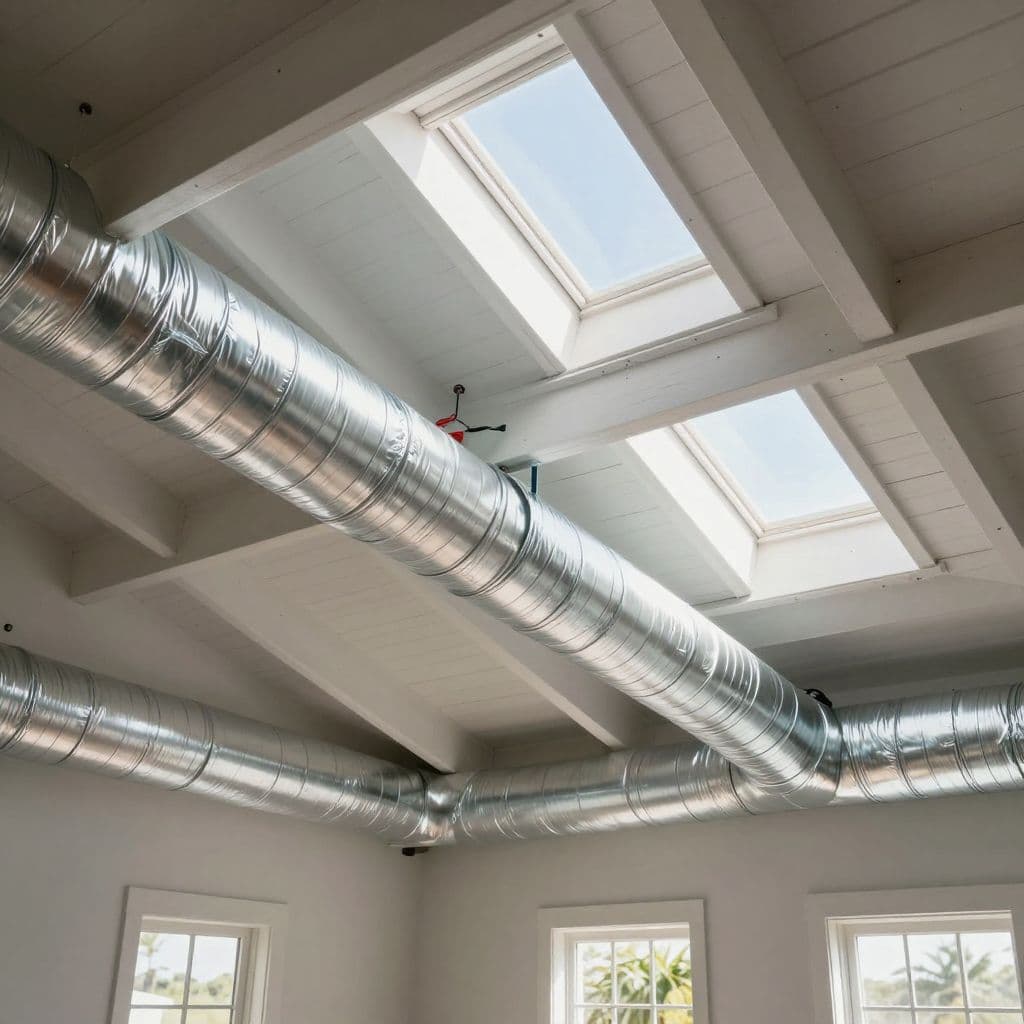
A remodel is the moment to look closely at what you cannot usually see. If the ducts are buried under insulation, buried behind drywall, or routed in a way that no longer fits the house, the project may be telling you it is time for a change.
If the walls are already open, duct replacement is often easier than fixing the same problems later through finished surfaces.
Signs duct replacement may be smarter than repair
Small duct issues can often be repaired. However, some warning signs point to a bigger problem that patching will not solve for long.
- The ducts have several taped repairs or patch jobs already.
- Some rooms are always too hot or too cold.
- The duct runs sit in a hot attic with weak or damaged insulation.
- Flex duct is sagging, crushed, or poorly supported.
- The remodel changes room layout, ceiling height, or vent locations.
- You are already opening walls or ceilings for plumbing, electrical, or framing work.
One isolated leak is different from a system that has aged into a collection of weak spots. If the ductwork has been patched in several places, the system may be losing air in more than one area, which makes each repair less useful.
It also matters how the ducts were installed in the first place. A run that is too long, too narrow, or routed around a bad layout can keep underperforming even after the leaks are sealed. In that case, replacement helps because it corrects the route, not just the hole.
Repair or replace? A practical comparison
The best choice often comes down to access, age, and how many problems you are dealing with. A repair can be fine when the issue is isolated and the rest of the system is sound. Full ductwork replacement makes more sense when the problems are widespread or the remodel already gives you open access.
| Situation | Repair usually works | Full replacement makes more sense |
|---|---|---|
| One loose connection | Yes | No |
| A short damaged flex run | Often | Maybe, if the duct is old or buried |
| Several leaks in different rooms | Sometimes | Yes |
| Crushed, sagging, or undersized runs | Rarely | Yes |
| Remodel opens ceilings or walls anyway | Yes, if the system is otherwise sound | Often, because access is already open |
The table makes one thing clear. The more damage you find, the less value another quick fix delivers. If you are already paying to open up finished areas, it is worth asking whether the duct system should be rebuilt while the structure is exposed.
What new ductwork can improve during a remodel
Better ductwork can change how a home feels day to day. The first difference many homeowners notice is comfort. Rooms stop swinging between too warm and too cold, and the system can move air more evenly across the house.
Efficiency is the next gain. Duct leaks waste cooled air before it reaches the rooms that need it. In a Southwest Florida home, that lost air matters because the AC works hard for so many months. Better sealing, better insulation, and cleaner routing can help the system deliver more of what it produces.
Air quality can improve too. Leaky return paths can pull dust from the attic or crawl spaces into the system. A tighter duct network keeps the air going where it should. That does not replace filtration, but it does remove one source of contamination.
Moisture control matters just as much. Poorly sealed ducts and bad insulation can create warm surfaces where condensation develops. Over time, that can invite mold or leave materials around the system damp. A well-planned replacement reduces that risk.
The long-term cost piece is simple. Replacement costs more up front, but repeated repairs, wasted cooling, and extra drywall work can become more expensive over time. If the system is already old and the remodel is substantial, replacement may be the cleaner financial choice.
A new duct system does not fix every HVAC problem, but it can stop hidden air loss from working against the rest of the house.
How to talk about ductwork in remodeling bids
Ductwork should be part of the remodel conversation early, not after the drywall is back on. That means asking what the contractor is opening, what the HVAC company is changing, and who is responsible for sealing and testing the finished work.
When you compare bids, look past the total. One estimate may include demolition, new duct runs, insulation, and finish repairs. Another may only cover the visible mechanical work. If you want a good framework, how to compare remodeling estimates in Southwest Florida is a useful place to start because it helps you line up scope, not just price.
If your remodel changes walls, ceilings, or room sizes, the project structure matters too. Design-build vs general contractor for home remodeling explains how those roles differ when the mechanical work needs to fit the construction plan.
Ask these questions before you sign anything:
- Will the duct layout stay the same, or will it be reworked?
- Who checks for leaks, sizing, and insulation quality?
- Does the bid include sealing, balancing, and cleanup?
- What finish repairs are included after the ducts are replaced?
If you want one team to look at the remodel and the duct system together, Get a Free Estimate before framing or drywall work starts.
Conclusion
During a Southwest Florida remodel, ductwork deserves the same attention as cabinets, tile, and paint. The attic heat, humidity, and long cooling season make hidden duct problems show up faster and cost more over time.
Repair is enough when the issue is small, isolated, and the rest of the system is in good shape. Full replacement makes more sense when the ducts are old, poorly sealed, badly routed, or already exposed during the remodel.
A smart remodel fixes what the finished walls would otherwise hide. If the duct system is part of the problem, this is the right time to handle it.