Subfloor Repair Costs in Southwest Florida for 2026
Water damage rarely starts with a dramatic collapse. It usually shows up as a soft spot near a sink, a swollen seam by the tub, or a floor that feels a little off after heavy rain.
In Southwest Florida, subfloor repair cost depends on much more than square footage. Humidity, plumbing leaks, hurricane-driven water, and the mix of slab and raised-floor homes all shape the final bill.
A small patch and a full tear-out can look similar from above. Once the finish floor comes up, the real scope becomes clear. That is where prices start to move.
What homeowners in Southwest Florida can expect to pay in 2026
For standard plywood replacement, many local repairs land around $2 to $4 per square foot in 2026. That works for straightforward work with decent access and no framing damage. Small jobs often cost more on the total invoice because cleanup, hauling, and setup do not shrink with the damaged area.
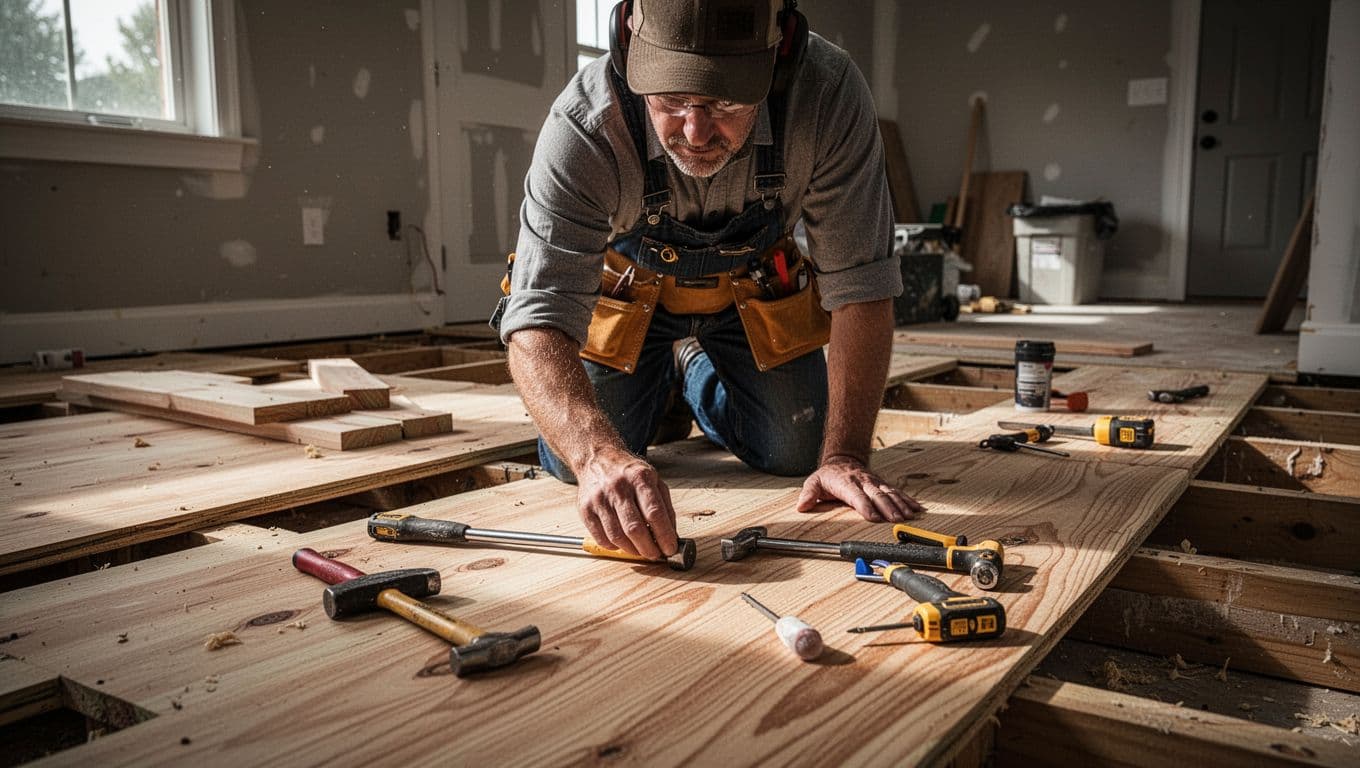
If the damage spreads beyond one room, the estimate changes fast. A good quote should reflect access, material type, drying time, and whether the finish floor has to come out too.
| Repair scope | Estimated 2026 cost in Southwest Florida | What usually drives the price |
|---|---|---|
| Small localized patch | $500 to $1,200 | Minimal tear-out, easy access, no framing damage |
| Standard plywood replacement | $1,200 to $3,500 | Most common job, finish-floor removal, cleanup |
| Larger repair or multi-room area | $3,500 to $7,500+ | More demolition, drying time, flooring match |
| Joist or structural repair | $4,500 to $10,000+ | Rotten framing, crawlspace access, added labor |
| Moisture barrier or treatment | Add $0.50 to $1.00/sqft, or a few hundred dollars | Helps limit repeat damage |
Small subfloor jobs are priced by access and cleanup as much as by square footage.
That table is a planning guide, not a final bid. A simple square-foot math formula can miss the parts that matter most, like hauling debris out of a tight hallway or matching tile after the repair is done. If the damage reaches joists, the project stops being a surface fix and becomes a deeper structural repair.
Why local homes get different repair quotes
Two homes can have the same damaged area and very different prices. Southwest Florida has a mix of older coastal housing, slab homes, raised-floor homes, and repeated remodels. Each one changes how much labor the repair needs.
Raised-floor homes need more labor than many people expect
Raised-floor construction is common in older coastal neighborhoods and in homes with crawlspace access. That access helps in some cases, because crews can reach the underside of the floor. It also creates new problems, because moisture can sit under the house for a long time before anyone notices.
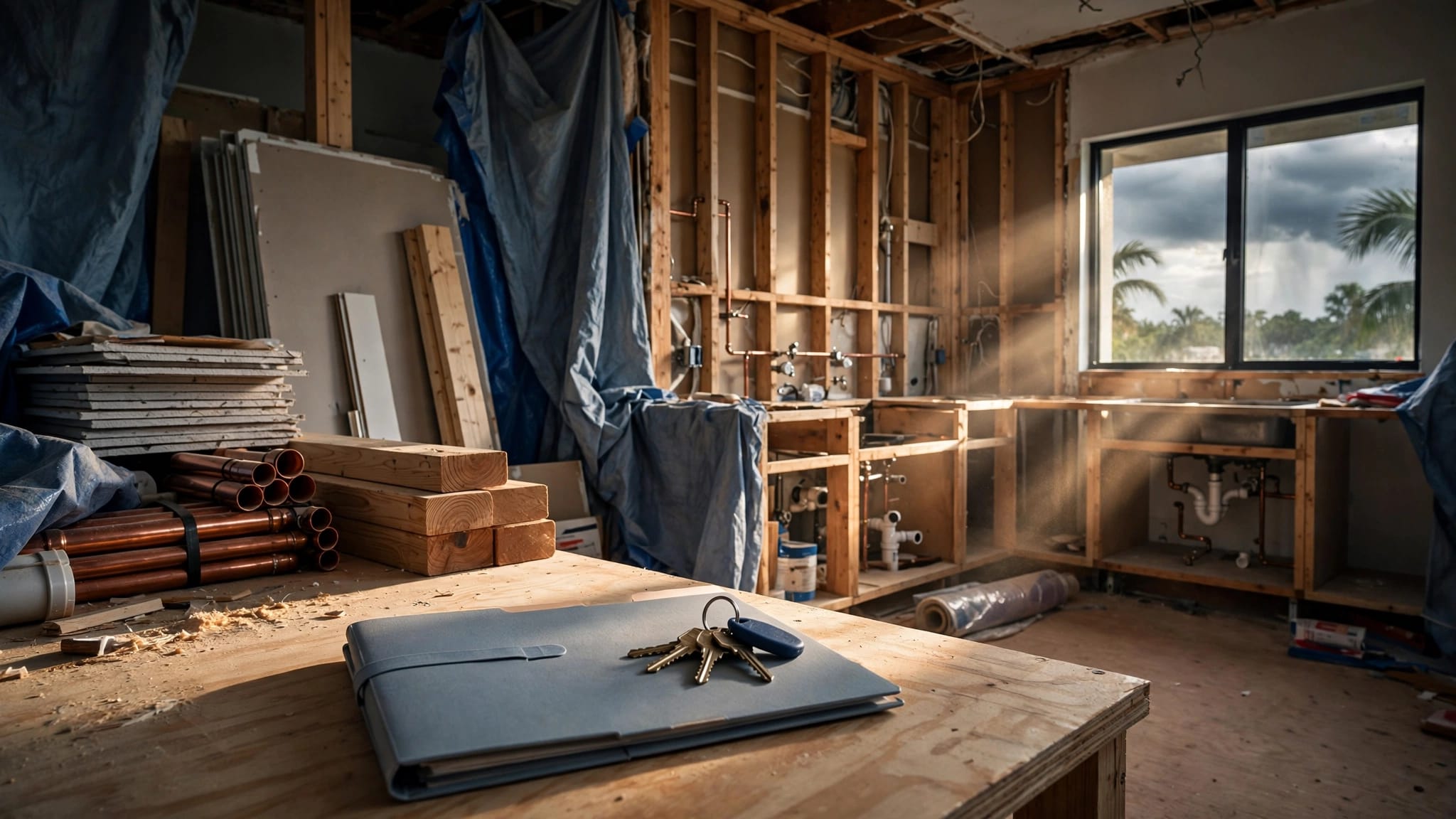
A slow plumbing leak under a vanity or dishwasher can soften the plywood and damage the framing. By the time the floor feels spongy, the repair may include more than new sheets of wood. It may also need sistered joists, drying time, and a moisture check before the floor goes back down.
Slab homes change the repair method
Homes on concrete slabs do not offer the same underfloor access. In those homes, the work often happens from above, which means more finish-floor removal and more care around tile, engineered wood, or glued-down flooring. The labor can take longer even when the damaged area looks small.
If the issue is a concrete crack or a slab-related problem, the pricing follows a different path. The repair may be a patch, a leveling fix, or a floor system adjustment instead of a typical wood subfloor replacement. That is one reason quotes in Southwest Florida can look far apart even when the photos seem similar.
Storm water and humidity leave hidden damage
Hurricane-season water, wind-driven rain, and trapped humidity are a hard mix for subfloors. A floor can stay wet for days after a leak, especially in rooms with poor airflow. Once the wood swells, it rarely goes back to normal.
A bathroom remodel often uncovers this kind of damage around tubs and shower pans. Bathroom remodeling services usually reveal soft spots before new tile goes in. Kitchens do the same near sinks, dishwashers, and refrigerators, so kitchen remodeling services often uncover repairs only after the old floor comes up.
Common add-ons that raise the final bill
The plywood is only part of the story. Tear-out, drying, disposal, and finish-floor matching often shape the final number just as much as the subfloor itself.
When the repair is tied to a larger project, custom room addition services can also bring framing, subfloor work, and new finishes into one schedule. That matters because a bigger scope can reduce repeat labor, but it can also reveal more damage once the walls or floor are opened.
Here are the add-ons that most often change the estimate:
- Tear-out and disposal can add a few hundred dollars, especially if tile, mortar, or wet insulation has to be removed.
- Drying and mildew treatment may add $150 to $600 when the area has been wet long enough to smell musty.
- Joist repair can add $300 to $1,500 or more if the framing has softened or split.
- Floor matching and reinstall often costs more than the repair itself when hardwood or tile has to blend with an existing room.
- Moisture barriers and underlayment can add $0.50 to $1.00 per square foot, which is small on paper and useful in humid rooms.
The finish floor matters too. Tile usually takes more labor to remove and reset than vinyl. Hardwood often needs careful blending, sanding, or replacement boards. Even when the damaged spot is small, the surrounding floor may dictate most of the labor cost.
Signs you need more than a surface fix
A subfloor problem usually gives hints before it fails outright. The trick is catching those hints early.
Look for these signs:
- Soft or bouncy spots underfoot
- Cupped wood, lifted vinyl, or loose tile
- Squeaks that show up in one small area
- A musty smell after rain or after using the shower
- Staining near sinks, toilets, tubs, or appliances
- Doors that rub after a leak or storm
A floor can still look fine while the wood underneath is breaking down. By the time the surface buckles, the repair often involves more than one trade. That is why a local inspection matters before the damage spreads into nearby rooms.
If the floor feels soft now, the damage may already be reaching the framing.
If you see those warning signs, Get a Free Estimate before a small patch turns into a larger tear-out.
Conclusion
For 2026, the most common subfloor repair cost in Southwest Florida starts around $2 to $4 per square foot for simple plywood replacement. That number helps with planning, but it does not tell the whole story.
Moisture, access, slab versus raised-floor construction, and framing damage all change the final bill. A dry, easy patch is one thing. A storm-soaked floor with rotten joists is another.
The clearest quote is the one that breaks out demolition, drying, materials, and finish-floor work in plain language. When a floor starts to feel soft, the cheapest repair is usually the one you make early.