Naples Condo Flooring Rules Before You Remodel
A condo floor upgrade can look simple until the paperwork shows up. In Naples, the flooring rules in your condo association's governing documents often matter more than the city or county permit process.
That means the right answer is not always in a building code book. It may be in the declaration, the rules and regulations, or a board-approved alteration form. If you skip that step, a project that should feel exciting can turn into a tear-out, a fine, or both.
Why condo association rules matter more than city code
City and county rules still matter, especially if your remodel touches plumbing, electrical, or other permitted work. However, condo flooring changes usually start with the association. The board or management company wants to control noise, protect neighboring units, and keep common areas in good shape.
That is why Naples condo flooring rules often read like a checklist of building protection. One building may allow tile with the right underlayment. Another may allow only carpet in certain units. A third may allow hard flooring only on upper floors, or only after a sound test is approved.
Before you buy materials, read the governing documents and ask for the flooring policy in writing. Look for terms like architectural review, material alterations, or interior improvements. Those sections usually explain what needs approval, who signs off, and what documents you must submit.
The safest assumption is simple, if the board has not approved it in writing, don't start.
These rules vary by building, and this article is general information, not legal advice.
Sound ratings and underlayment are usually the biggest issue
Most condo disputes start with noise. Hard flooring can carry footsteps, dropped objects, and chair movement into the unit below. Because of that, many boards require a minimum IIC or STC sound rating, plus a specific underlayment assembly.
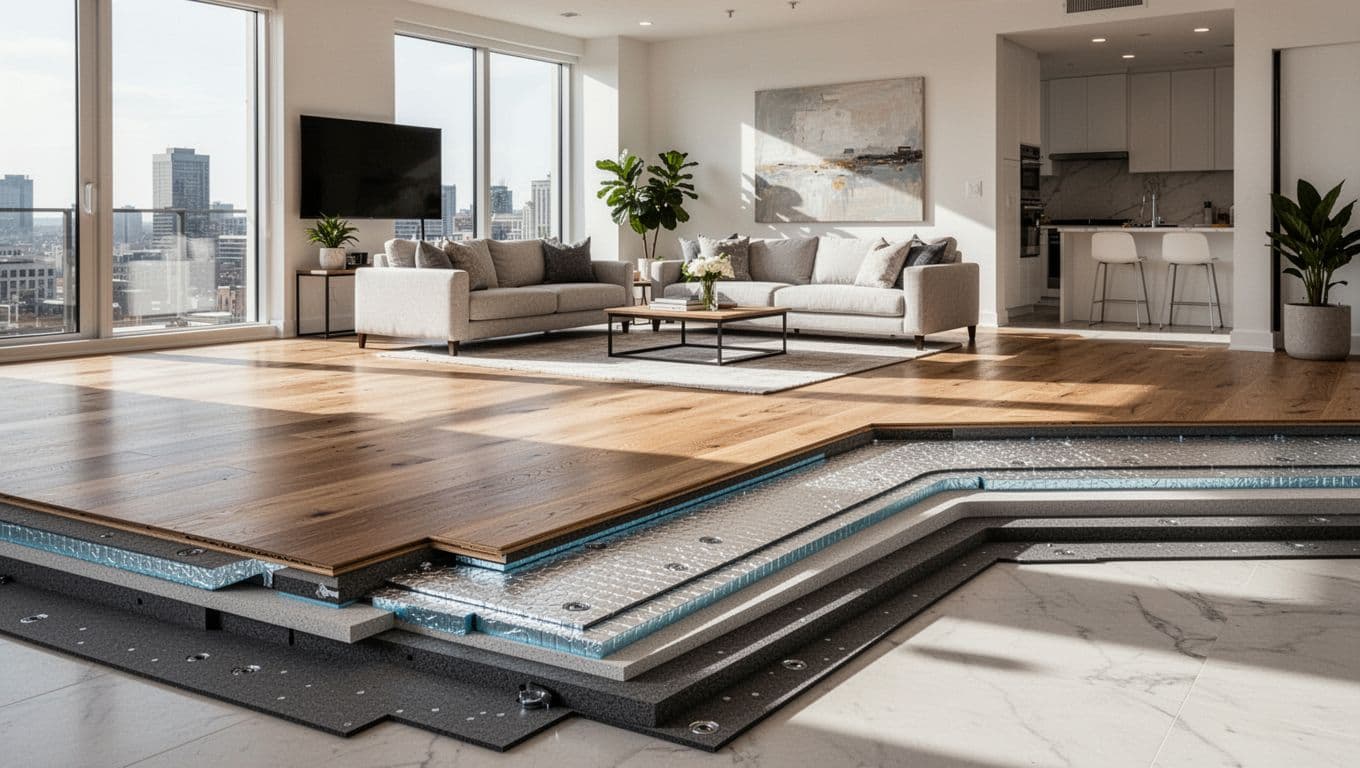
The rating by itself is not enough. Many associations want the exact flooring, underlayment, adhesive, and installation method tested as a system. Some even name approved brands. Others require a perimeter isolation strip so sound does not move through the edges of the room.
Here is a quick look at what boards often ask for:
| Common requirement | What it usually means |
|---|---|
| Minimum IIC/STC rating | The floor assembly must meet a sound test threshold |
| Approved underlayment | You may need a specific product or thickness |
| Hard-surface limits | Tile, wood, and laminate may be restricted in some units |
| Carpet-only areas | Bedrooms or entire units may need carpet instead of hard flooring |
Some older buildings, or units in sensitive locations, can be stricter. In those cases, the board may ban hard-surface flooring entirely. Others may allow it only in kitchens and baths, not in living rooms or bedrooms.
If your remodel includes a bath update, the same rules can affect tile transitions and waterproofing. Bathroom remodeling services often need the same board review, especially when floor height changes or sound control details come into play.
Getting approval before work starts
Approval usually comes before demolition, not after. A good submittal package saves time and keeps your project moving. Most Naples condo boards want the scope of work, product specs, contractor information, and a signed application form.

A strong packet often includes:
- A written scope that says exactly what floor will change.
- The flooring product data sheet and sound rating documentation.
- The underlayment specification and installation method.
- Proof that the contractor is licensed and insured.
- Any required deposit or signed agreement for common-area protection.
The management company may also want a certificate of insurance that names the condo association as an additional insured. Some buildings ask for a contractor license number on the form. Others want product samples before they approve color or material changes.
If your contractor says the board usually does not care, ask for the rule anyway. Written approval matters more than verbal comfort. A phone conversation does not protect you if a neighbor complains later.
A larger remodel can raise the stakes. If your flooring change is part of a full kitchen update, kitchen remodeling services should be planned around the same approval packet so the board sees one clean scope instead of separate surprises.
Work hours, elevators, and common-area protection
Even after approval, the work itself can be tightly controlled. Many Naples condos limit construction to weekday hours, often around 8 a.m. to 5 p.m. Some buildings forbid weekend work. Others add seasonal rules, which can make major interior projects harder during peak months.
That matters because a flooring project is noisy. Removal, leveling, cuts, and hauling all create disruption. Boards often protect residents by restricting when crews can enter, where they can park, and how they move materials through the building.
Common rules include elevator reservations, padded elevator walls, floor protection in hallways, and covered paths from the unit to the exit. Some associations want debris hauled out the same day. Others require a set route through the building so dirt never touches finished common areas.
Licensed and insured contractors are a big part of this section too. Associations want crews who know condo procedures and can follow them without extra supervision. That reduces complaints and makes it easier for management to track the work.
If your building has strict quiet hours, plan your demolition and installation around them. A crew that respects the schedule will usually finish faster than one that has to stop and restart every day.
What to confirm before you buy flooring
Before you place an order, ask for the exact written requirements. A small mismatch can cost a lot if the board rejects the product after delivery.
- Ask whether hard-surface flooring is allowed in your unit.
- Confirm the minimum sound rating, if the board uses one.
- Get the approved underlayment model or thickness in writing.
- Check whether the building requires carpet in bedrooms or other rooms.
- Verify work hours, holiday limits, and any seasonal restrictions.
- Confirm that your contractor is licensed, insured, and accepted by the association.
These questions take a few minutes. They can save you weeks of delay.
The best time to ask is before you sign a material order or schedule demolition. If the board wants a specific underlayment or a stricter sound assembly, you want that answer early. If your remodel includes a bath, kitchen, or full-unit update, line up the flooring rules before every trade gets scheduled.
If you want help planning the remodel itself, Get a Free Estimate and talk through the scope before anything is ordered.
A better way to keep the project on track
Condo flooring work goes smoother when you treat approval like part of the build, not a delay before the build. Start with the association documents, confirm the sound rules, and get written approval before materials arrive. Then make sure your contractor understands the work hours, elevator rules, and common-area protection requirements.
That simple order matters. A floor can look perfect and still cause trouble if the board never signed off on the assembly. In Naples condos, the paper trail is part of the remodel.
When you know the rules first, you can choose materials with confidence and avoid expensive surprises later.