Home Office Addition Costs in Southwest Florida for 2026
Work-from-home space is no longer a cheap afterthought. In Southwest Florida, the home office addition cost can climb quickly because wind rules, moisture control, permitting, and labor all show up before the paint color does.
If you want a room that feels quiet, bright, and comfortable year-round, the budget has to match local building realities. A solid plan keeps the project from turning into a chain of change orders and delays.
This guide breaks down realistic 2026 price ranges so you can plan with your eyes open.
Key Takeaways
- Southwest Florida office additions cost more than many inland projects because storm-rated construction is part of the baseline.
- Mid-range custom conditioned space often falls around 200 to 350 per square foot in 2026, while luxury coastal work can reach 350 to 500+ per square foot.
- Small additions carry heavy fixed costs, so plans, permits, foundation work, HVAC tie-ins, and impact-rated openings matter as much as flooring or cabinets.
- Material prices, labor availability, and municipal permitting can move your budget more than most homeowners expect.
- A 7% contingency is a smart starting point, and final pricing always depends on site conditions and design choices.
What a Realistic 2026 Budget Looks Like
For a small conditioned office addition in Southwest Florida, the numbers move faster than many people expect. A simple room can look modest on paper, but the finished project has to cover structure, utilities, finishes, and code compliance.
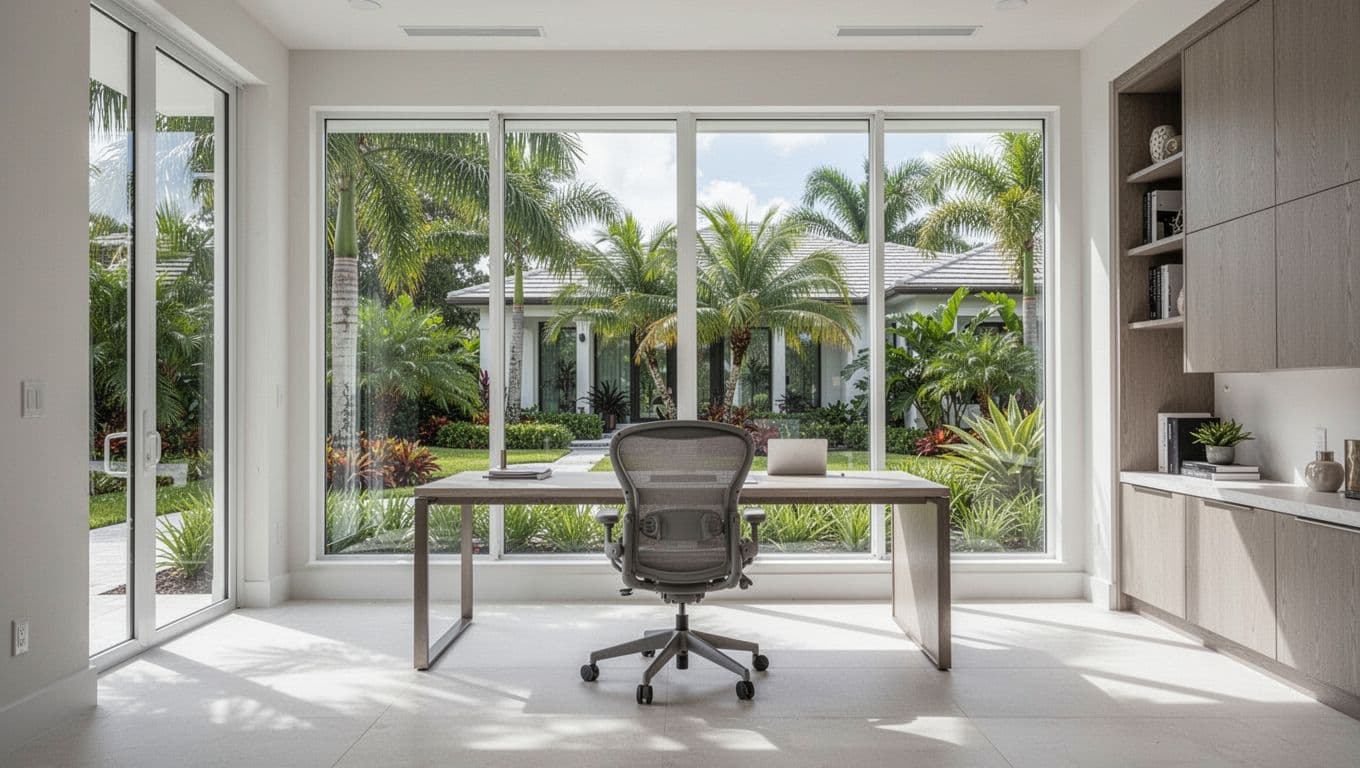
The best way to think about the home office addition cost is by finish level and complexity, not just square footage. A 150-square-foot office with a simple layout can cost less than a larger room with tall ceilings, custom millwork, and premium windows.
| Finish level | Typical 2026 project range | What it usually includes |
|---|---|---|
| Basic | 45,000 to 80,000 | Simple footprint, standard drywall, basic flooring, code-compliant windows or doors, standard electrical |
| Mid-range | 80,000 to 150,000 | Better windows, improved HVAC tie-in, built-in desk wall, better sound control, tile or engineered wood |
| High-end | 150,000 to 300,000+ | Custom millwork, taller ceilings, premium impact glazing, acoustic upgrades, designer finishes |
The jump from basic to high-end is driven less by room size and more by structure, glazing, and finish work. In other words, a clean rectangle with simple connections costs less than a room that tries to be a statement piece.
In Southwest Florida, the cheapest office addition is the one that is planned for wind, moisture, and permitting from day one.
Why Southwest Florida Changes the Price
Southwest Florida does not price additions like a mild inland market. Wind protection, humidity, and labor availability all pull the number upward before the first sheet of drywall goes up.
Impact-rated openings are part of the baseline here, not a luxury upgrade. Roof tie-down requirements, stronger wall assemblies, and storm-minded construction details affect both material and labor costs.
Material prices have also stayed active in 2026. Wood is up 8.2% year over year, drywall and insulation are up 6.2%, steel is up 5.1%, and concrete is up 4.7%. On top of that, tariffs on metal and lumber products have added pressure to bids.
Labor matters just as much. Coastal markets like Cape Coral, Fort Myers, Naples, Punta Gorda, and Sanibel tend to keep skilled crews busy, so the schedule and the estimate both feel the strain. That is one reason local projects often carry a baseline escalation of around 4% to 6% in 2026.
Humidity also changes the spec. Builders often need better insulation, smarter air sealing, and more careful HVAC planning so the office does not feel damp or overworked in summer. That kind of detail is easy to miss during budgeting and hard to fix later.
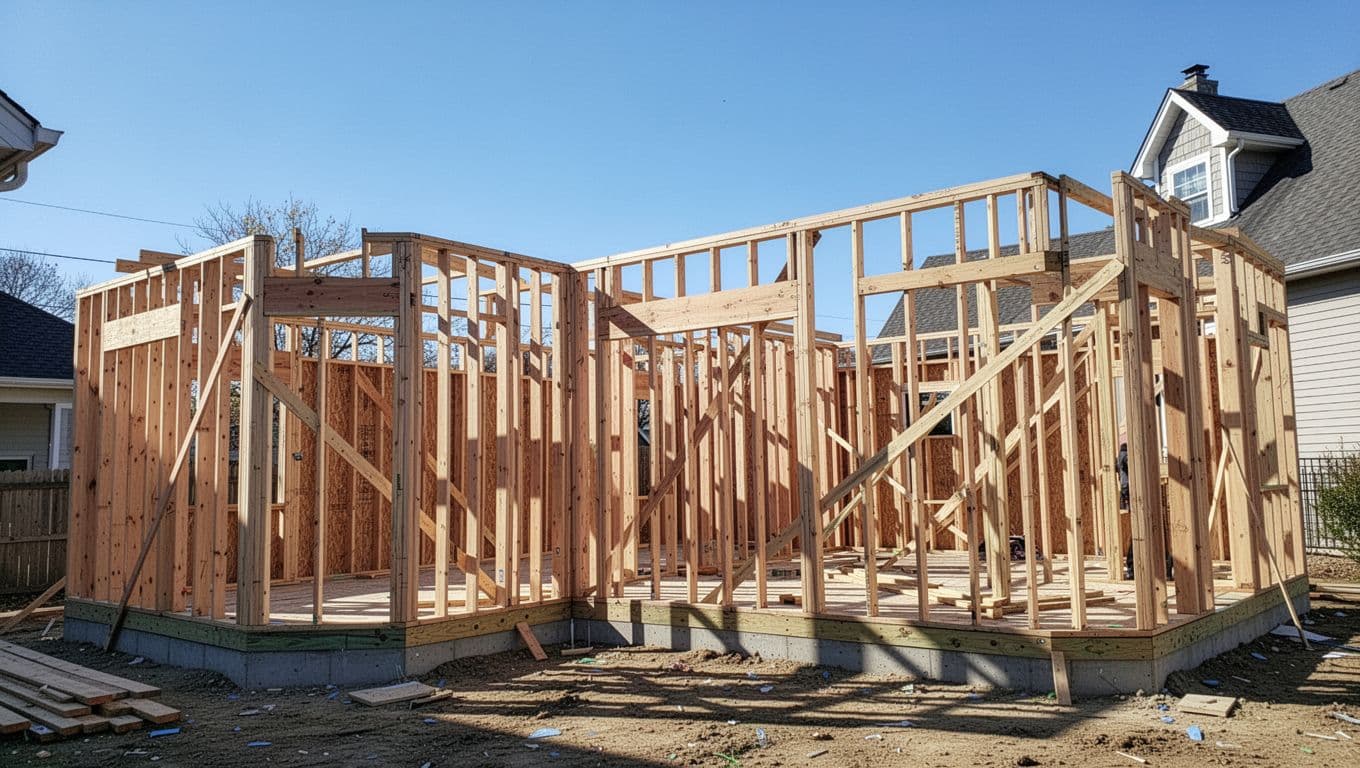
A simple build can move fast when the footprint is clear and the utility runs are short. By contrast, bump-outs, steep roof tie-ins, and tight lots raise the price because every trade spends more time on the job.
Basic, Mid-Range, and High-End Office Finishes
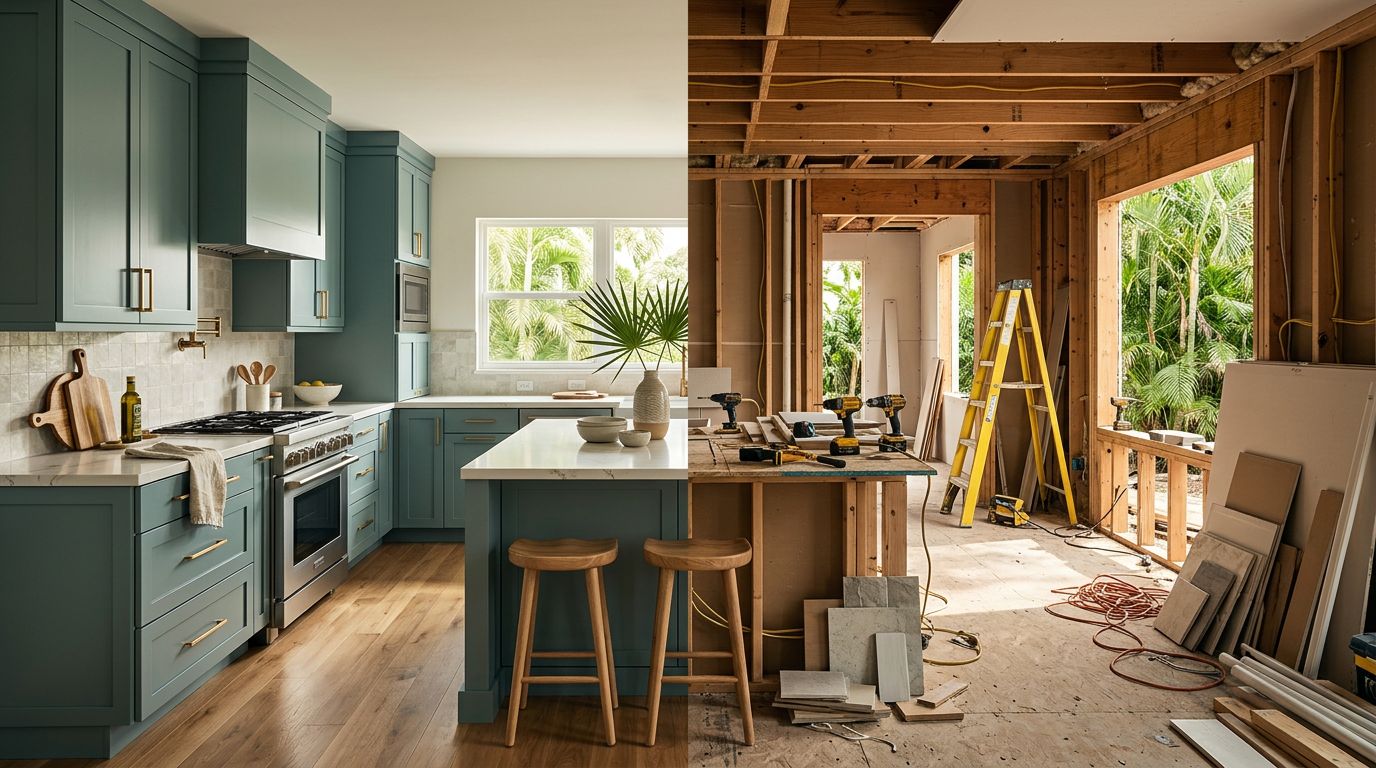
Finish level changes the price faster than paint color ever will. The same room can feel practical, polished, or fully custom depending on the window package, storage, and surface choices.
If you are comparing quotes, this is where the budget often splits. A contractor may be pricing the same walls and roof, but the interior spec can change the number by a wide margin. If the office needs a larger footprint or a reworked layout, professional home addition services make the scope easier to price from the start.
| Finish level | Common features | Cost pressure points |
|---|---|---|
| Basic | Drywall, standard trim, simple lighting, modest flooring, limited built-ins | Lower material cost, fewer custom labor hours |
| Mid-range | Custom desk wall, upgraded lighting, better insulation, engineered wood or tile, quiet HVAC delivery | More electrical work, more finish labor, better product selections |
| High-end | Custom cabinetry, sound attenuation, 10-foot to 12-foot ceilings, large impact windows, layered lighting, premium flooring | More structural work, more trim and millwork, more time on site |
Ceiling height makes a real difference. Taller ceilings need more framing, more drywall, and more finishing time. Large-format tile also pushes labor higher because the layout has to be tighter and the installation takes longer.
Custom millwork has the same effect. Full-height cabinets, integrated shelving, and built-in desks look clean, but they take careful measurement and more shop time. That is why a high-end office often costs more than homeowners expect, even when the room is not large.
Permits, Plans, and Site Conditions That Change the Final Price
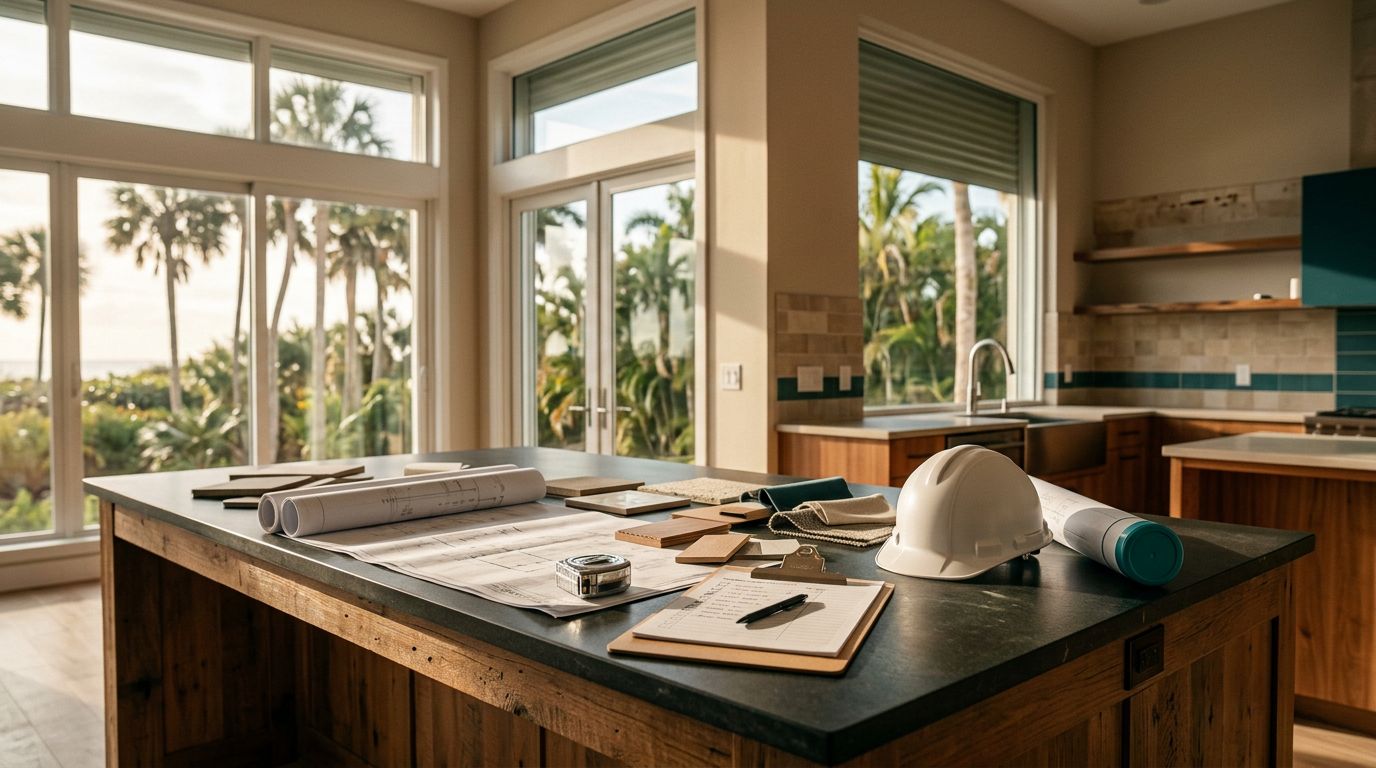
Soft costs can surprise people because they happen before the visible part of the project starts. Plan sets, engineering, and permits all matter, and they are not the same in every municipality.
For Southwest Florida in 2026, simple renovation or small addition plan costs often fall around 3,000 to 8,000. A room addition or second-story plan set can run 10,000 to 25,000 or more. Coastal custom work with heavier engineering can reach 15,000 to 30,000+.
That range makes sense once you factor in wind loads, structural details, and local review. The more complex the roof tie-in or foundation work, the more time the design team spends getting the project ready for approval.
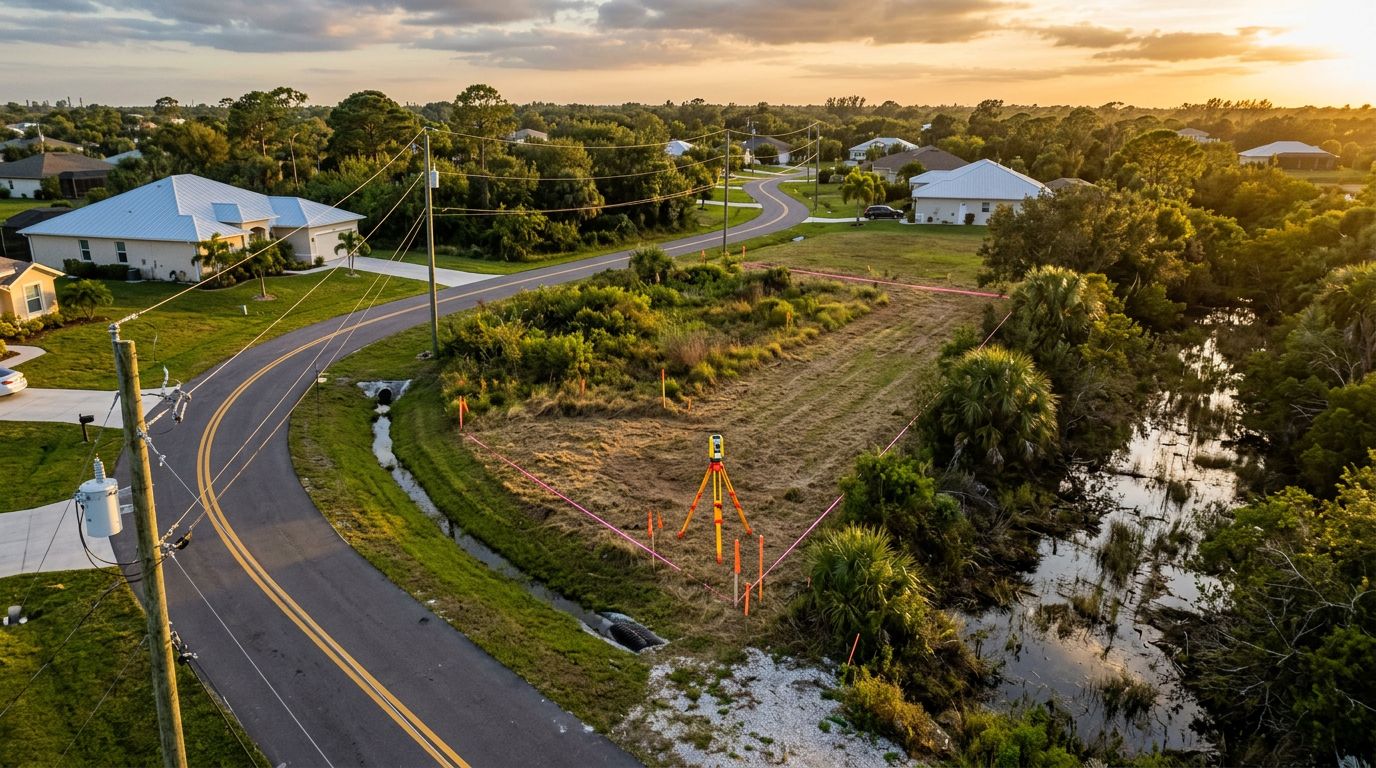
Site conditions can push the price in quieter ways. Tight access, drainage issues, utility reroutes, or an awkward addition shape all add labor. A simple slab tie-in is one thing, but a site that needs extra prep or stormwater planning is another.
If the office is part of a larger remodel, the addition may also need to line up with nearby rooms, existing roof lines, or a future bath or storage area. That is where a realistic budget helps most. It lets you decide whether the office stays simple or becomes a broader home upgrade.
A 7% contingency is a smart floor for this kind of work. That buffer helps cover the small surprises that show up once walls open and the field crew starts tying the new space into the old one.
If you want a number tied to your property, Get a Free Estimate and ask for an onsite review of the footprint, access, and finish level.
Conclusion
A Southwest Florida office addition is priced by more than square footage. Wind-rated construction, moisture control, labor, and permitting all shape the final number.
The most accurate budget starts with the structure, then adds the finishes you actually want. If you plan for those costs up front, the project feels far more predictable and the finished room works better for daily use.
A clear budget today prevents a noisy surprise later, and that matters when the room is meant to help you focus.