Vented vs Ventless Range Hoods for Florida Kitchens
A Florida kitchen can heat up fast. Humidity, strong sunlight, and long cooking sessions leave steam and odors hanging around longer than most homeowners want.
That is why vented vs ventless range hoods matters so much here. The right choice can keep cabinets cleaner, make the room feel cooler, and fit the realities of your home.
Why Florida kitchens need better ventilation
Florida homes deal with more than cooking smoke. They also deal with moisture, and that extra damp air can linger after boiling, sautéing, or frying.
In an open-plan kitchen, that air spreads fast. It moves into the dining area, the living room, and even nearby hallways. As a result, a weak hood can leave the whole house feeling heavy.
A hood choice also affects the rest of the remodel. In a full kitchen remodeling project, the hood should be planned before cabinets and soffits are set. That keeps you from forcing a compromise later.
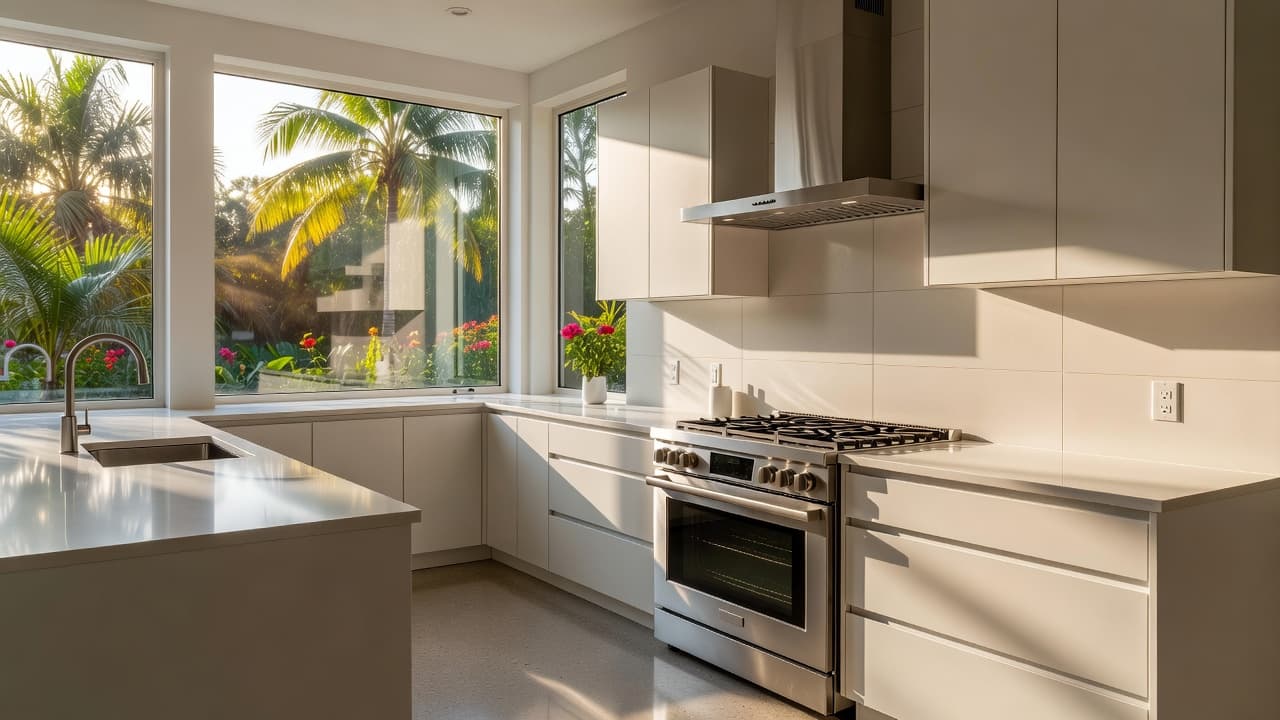
Older homes and condos make the decision harder. Some have no easy route to the exterior. Others have HOA rules, tight ceiling spaces, or structural limits that shape what you can install.
How vented range hoods help in humid homes
A vented range hood pulls air from above the cooktop and sends it outside. That means it removes smoke, grease, heat, and much of the steam created during cooking.
That matters in Florida. When a hood moves hot air out of the room, the kitchen feels more comfortable right away. It also helps protect paint, cabinets, and backsplashes from grease film.
For homeowners who cook often, vented is usually the stronger performer. It works well for searing, frying, blackening fish, and other meals that create strong odors.
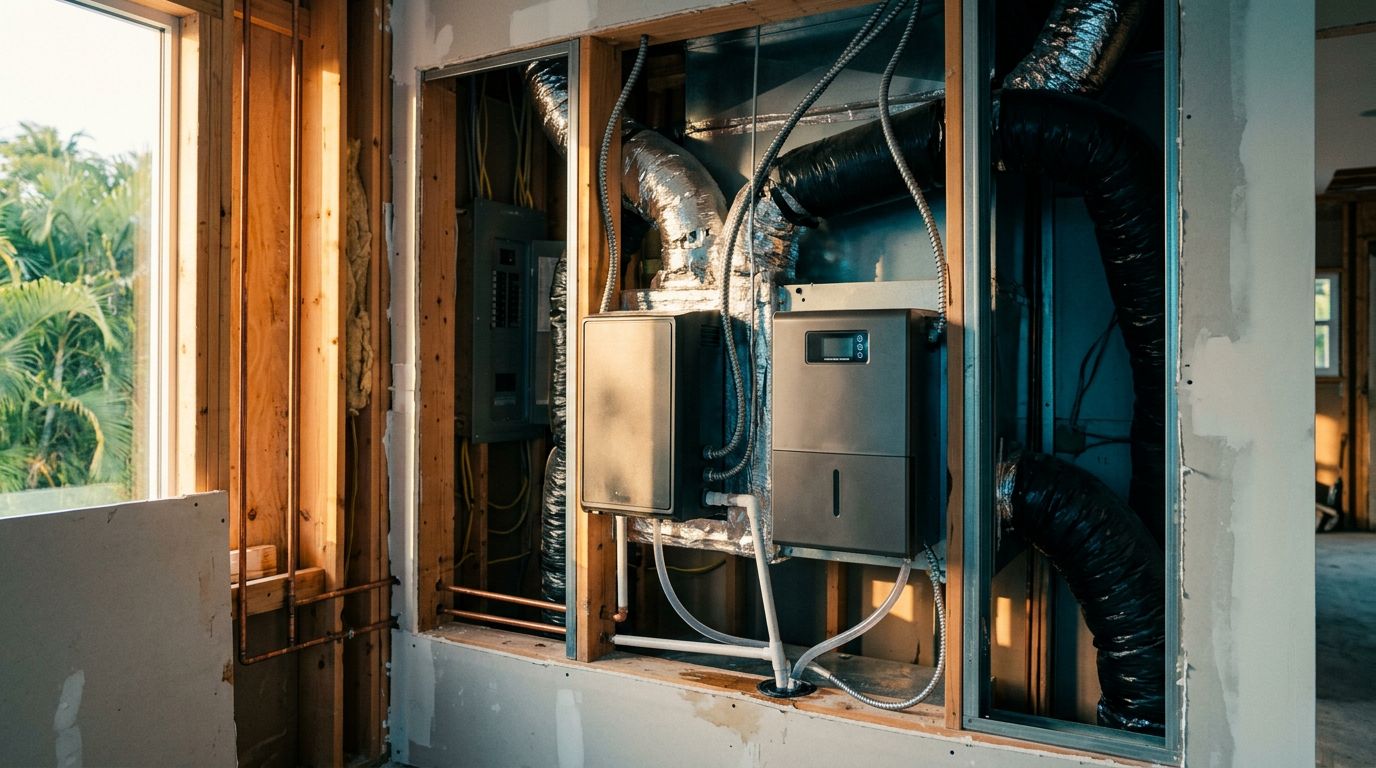
The tradeoff is installation. A vented hood needs a clear path to the outside, through a wall, roof, or sometimes a long duct run. That can add cost and planning time.
If ductwork has to cross an attic or ceiling, planning your kitchen remodeling schedule helps keep the project realistic. In some homes, the hood choice affects trim details, cabinet heights, and even the order of construction.
In Florida, a hood that removes heat and moisture usually gives you the biggest comfort boost.
For higher-capacity vented systems, your contractor may also need to think about air replacement and local code. That is one more reason to plan early.
Where ventless range hoods fit better
A ventless hood, also called a recirculating hood, does not send air outside. It pulls air through grease and charcoal filters, then sends it back into the room.
That setup can be a smart solution in condos, older homes, and spaces where exterior ducting is difficult. It also works when a homeowner wants a simpler install or a lower upfront cost.
Ventless models are often chosen when layout is tight. Island cooktops, upper-floor kitchens, and units with strict building limits can make exterior venting hard. In those cases, ventless may be the practical answer.
Still, it has limits. A ventless hood can help with odors and grease, but it does not remove heat and humidity as well as a vented one. In a Florida kitchen, that difference shows up quickly after heavy cooking.
Filter upkeep matters too. Grease filters need cleaning, and charcoal filters need replacement on schedule. Skip that maintenance, and performance drops.
If the hood upgrade is part of a larger budget, budgeting for your kitchen renovation helps you compare the real cost of venting, cabinetry changes, and electrical work.
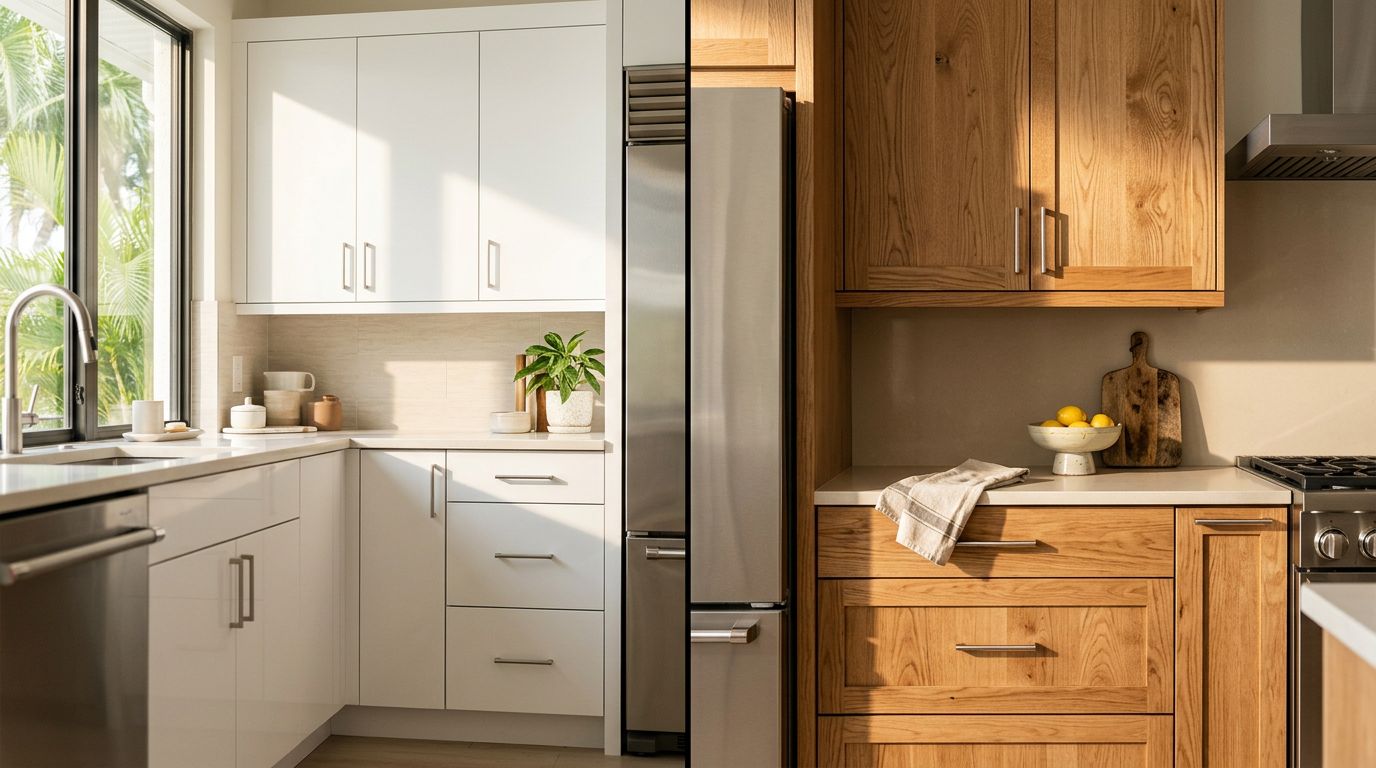
Vented vs ventless range hoods side by side
A quick comparison makes the choice easier.
| Factor | Vented hood | Ventless hood |
|---|---|---|
| Heat removal | Sends hot air outside | Keeps heat in the kitchen |
| Moisture control | Better at moving steam out | Helps less with humidity |
| Odor and grease | Stronger capture and exhaust | Uses filters, but some odor stays |
| Installation | Needs duct path outside | Easier when ducting is hard |
| Best fit | Frequent cooking, remodels with exterior access | Condos, older homes, light cooking |
The table makes one thing clear. If comfort and air removal matter most, vented usually wins. If outside ducting is hard or impossible, ventless gives you a workable option.
How to choose the right hood for your remodel
The best choice depends on how you live, how you cook, and how your home is built.
Start with the layout. If your range sits near an exterior wall, vented may be easier than you expect. If the cooktop is on an interior wall or island, ducting can become expensive fast.
Then look at your cooking habits. If you cook daily, fry often, or use strong spices, vented is usually the better match. If you mostly reheat, simmer, or make lighter meals, ventless may be enough.
Budget matters too. A hood by itself may seem simple, but ductwork, cabinet changes, patching, and paint repairs can raise the cost. That is where the hood choice becomes part of the whole remodel, not a separate purchase.
For many Florida homeowners, the decision comes down to this:
- Choose vented when you want the best removal of heat, smoke, grease, and moisture.
- Choose ventless when exterior ducting is blocked, restricted, or too costly.
- Check the rules first because local building code requirements, HOA or condo restrictions, and manufacturer guidance should always be verified before installation.
A vented hood often makes sense in single-family homes with room for ducting. A ventless hood may fit better in condos, townhomes, or older kitchens where structural limits get in the way.
If your kitchen update is tied to a bigger renovation, a contractor can help you sort out the hood before framing, cabinets, and finishes move ahead. That saves time and avoids rework later.
Choosing the better fit for Florida living
The right answer depends on your home, not just the hood itself. If you have a path to the outside and you cook often, vented is usually the stronger long-term choice.
If your layout blocks ducting, your building has restrictions, or you cook lightly, ventless can still do the job. It is a practical fix when a full vented system is not realistic.
Either way, the decision should be made early in the remodel. That keeps the kitchen comfortable, keeps the project on track, and helps you avoid surprises after the cabinets are in.
If you are planning a kitchen upgrade and want help sorting through the options, Get a Free Estimate.